

China CNC Milling Machine: Precision Manufacturing and Innovation Trends
2026-07-21
The landscape of modern manufacturing is being reshaped by relentless precision and smart innovation, and nowhere is this more apparent than in China’s CNC milling machine sector. From intricate aerospace components to delicate medical devices, the demand for micron-level accuracy and adaptive automation has propelled Chinese manufacturers to the forefront of global competition. Among them, WINNRUI CNC stands out by blending time-tested engineering with cutting-edge advancements like real-time process monitoring and energy-efficient spindles. This post dives into how China’s CNC milling technology is redefining what’s possible, and why the machines rolling off factory floors today are not just tools, but strategic assets for forward-thinking workshops worldwide.
The Evolution of Chinese CNC Milling Precision
The journey of Chinese CNC milling precision is a story of rapid transformation. In the early days, domestic machines often struggled with tolerances that were more characteristic of manual machining, typically hovering around ±0.02 mm. The industry relied heavily on imported components and know-how, and the concept of true high-precision milling was still nascent. Yet, even then, a relentless drive to improve was evident, with small workshops iterating endlessly on spindle designs and feedback systems, laying the groundwork for what was to come.
As the domestic electronics and automotive sectors exploded in the 2000s, so did the demand for tighter tolerances. Chinese manufacturers began integrating linear motor drives and high-resolution glass scales, pushing repeatability to the ±5 micron range. Notably, a culture of meticulous thermal compensation emerged—engineers would map machine growth down to the micron, a practice once exclusive to top-tier European builders. This period saw the birth of a new generation of five-axis mills that could hold angular accuracies previously unattainable outside of specialized research labs, all while being manufactured at competitive price points.
Today, the frontier of Chinese CNC milling precision has moved into the sub-micron realm for select applications. Using hydrostatic guideways and in-house developed CNC controllers with advanced look-ahead algorithms, top domestic brands now target ±1 µm in controlled environments. The real differentiator lies in the integration of real-time metrology feedback loops, where laser interferometers dynamically correct tool paths during cutting. This synergy of software and hardware, nurtured by a fiercely innovative ecosystem, has not only closed the gap with global leaders but in some niche areas, redefined what's possible, making precision a moving target that keeps advancing.
Integrating Smart Technologies for Smarter Production
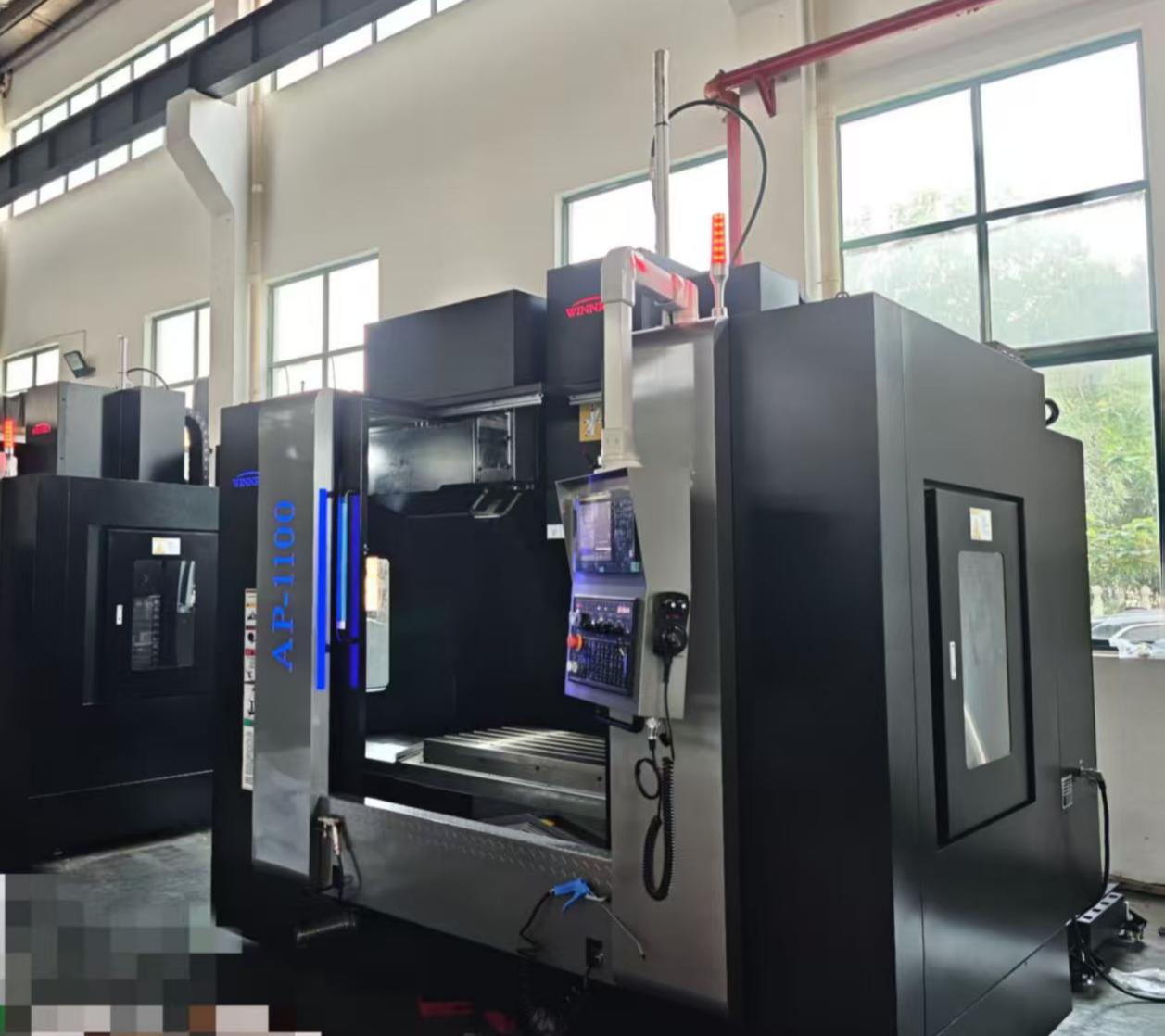
Modern manufacturing floors are shedding their rigid, linear past. By weaving together robotics, IoT sensors, and adaptive AI, factories are evolving into living ecosystems where machines communicate, learn, and adjust in real time. This shift isn't about replacing human judgment but amplifying it—allowing teams to move from reactive troubleshooting to proactive orchestration.
What makes the integration truly transformative is how seamlessly data flows across the production chain. A vibration anomaly detected in a motor doesn't just trigger an alert; it's cross-referenced with maintenance logs, supply timelines, and energy consumption patterns before the system autonomously schedules a repair during the next planned downtime window. Such interconnected intelligence removes guesswork, slashes waste, and keeps lines humming without constant intervention.
The real competitive edge comes from connecting traditionally siloed departments. When product design, inventory, and shop floor systems all pull from the same real-time dataset, cycle times compress remarkably. Engineers can simulate changes in a virtual twin before touching physical equipment, and procurement teams automatically reorder materials based on live demand signals. It's production that thinks ahead, not just reacts.
Breakthroughs in High-Speed and Multi-Axis Machining
Modern machine shops are pushing spindles to speeds once deemed impractical, with advanced ceramics and hybrid bearings enabling sustained operation above 40,000 RPM. This raw velocity, however, only tells part of the story. The real leap comes from tighter integration between the control system and the drive mechanics, allowing for acceleration rates that shave critical seconds off every toolpath change. The result is not just faster cycle times, but a surface finish quality that often eliminates secondary polishing steps.
On the multi-axis front, simultaneous 5-axis and even 6-axis configurations are reshaping what can be done in a single setup. By tilting the tool or the part mid-program, shops achieve undercuts and complex contours without the accumulated error of multiple fixtures. More importantly, the software has caught up—intelligent kinematic modeling now predicts and compensates for the subtle flex in a long tool holder or the thermal drift in a ball screw, ensuring that the digital twin behaves exactly like the physical cut.
Perhaps the most overlooked breakthrough is in chip management at extreme speeds. Through-tool coolant delivery at 70 bar and above, paired with micron-level filtration, prevents recutting and heat buildup that can ruin a high-value aerospace component. Together, these advances turn what was once a niche capability into a reliable, lights-out manufacturing reality.
Driving Forces Behind China’s CNC Innovation Boom
China’s CNC sector didn’t just stumble into its current wave of innovation—it was propelled by a deliberate mesh of government strategy and industrial urgency. The “Made in China 2025” blueprint lit a fire under high-end manufacturing, channeling billions into R&D for smart CNC systems, precision components, and multi-axis machining. Provincial governments followed suit with subsidies, tax breaks, and specialized industrial parks that clustered machine tool builders, software firms, and academic labs into tight-knit ecosystems. This top-down push lowered risk for private players and accelerated the shift from reverse-engineering foreign designs to building genuinely proprietary technology, especially in areas like high-speed spindles and error-compensation algorithms.
Equally critical is the immense domestic demand pull. China’s sprawling electronics, automotive, and aerospace supply chains consume vast quantities of machined parts, but they increasingly require tolerances and surface finishes that older, imported machines couldn’t deliver cost-effectively. Local smartphone giants, EV makers, and medical device firms started demanding faster turnarounds and tighter quality control, which foreign vendors were often too slow or too expensive to meet. This opened a gap for agile Chinese CNC manufacturers to climb the value ladder—co-developing machines with their biggest customers, iterating rapidly, and tailoring control interfaces to the workflows of factory floors across Guangdong, Jiangsu, and Zhejiang.
A third, often overlooked accelerator is the talent transfusion from adjacent tech fields. As software, sensor fusion, and real-time data processing became central to next-gen CNC, China’s deep bench of engineers from the internet, gaming, and robotics sectors migrated into industrial automation. They brought with them a bias for modularity, openness, and rapid software iteration—shifting machine tool brains from closed, proprietary architectures to Linux-based, AI-augmented controllers that can predict tool wear and self-optimize. Coupled with a venture capital scene now willing to bet on deep-tech hardware, these cross-pollinating skill sets are compressing innovation cycles that used to take a decade down to just two or three years.
From Prototyping to Mass Production: Versatility in Action
Moving seamlessly from an early concept to full-scale manufacturing is one of the toughest transitions in product development. It demands a workflow that can adapt without losing fidelity—one where the same core tools and materials used for rapid iteration also handle the rigors of high-volume output. This isn’t just about scaling up; it’s about preserving the design’s intent across every single unit, whether you’re building five or fifty thousand.
The real magic happens when prototyping feeds directly into production without a messy handoff. Instead of re-engineering for manufacturability at the last minute, you validate processes early, using the very same equipment that will churn out final parts. Tweaks to geometry, tolerance, or material flow happen in parallel, so the line between “test” and “real” blurs. That’s versatility in action—a pipeline where what you learn on day one directly shapes what ships on day one hundred.
In practice, this means a single platform can spit out a one-off proof of concept in the morning and run a night shift of consumer-ready goods without retooling. It’s the kind of flexibility that turns fast-changing market demands from a liability into an advantage. When your process is this adaptable, ramping up doesn’t mean starting over—it means turning the dial and keeping the quality exactly where you intended it.
The Road Ahead: Sustainable and Autonomous Milling
The shift toward sustainability in milling isn't just about using less energy or reducing waste—it's a fundamental reimagining of how we process materials. Sawmills and grain mills alike are adopting closed-loop systems where byproducts like sawdust or husks become fuel for the machinery itself. Combined with regenerative braking and smart power management, these mills can operate off-grid for extended periods, slashing both carbon footprint and operational costs. The road ahead points to a future where milling facilities function more like self-sufficient ecosystems than traditional factories.
Autonomous milling takes this efficiency further by removing human limitations from the equation. Sensor-laden cutting heads and grinding plates adjust in real-time to material density and moisture, optimizing throughput without manual intervention. Fleets of small, driverless log carriers in forestry mills, or AI-guided sifters in flour production, coordinate seamlessly to eliminate bottlenecks. The real breakthrough, however, lies in predictive maintenance: with each machine learning its own wear patterns, breakdowns become rare events rather than regular interruptions, extending equipment life and eliminating the waste of rushed repairs.
What’s often overlooked is how these technologies reshape the very purpose of milling. Instead of converting raw materials into uniform products, tomorrow’s mills might customize output on the fly—producing engineered wood composites tailored to structural loads, or flour blends optimized for specific baking conditions. This level of precision means less material ends up as waste, and every log or grain is used to its fullest potential. The road isn't just about making milling cleaner or more hands-off; it's about turning an ancient craft into a flexible, responsive, and regenerative part of modern industry.
FAQ
China's CNC milling machines now commonly achieve micron-level tolerances through a blend of improved mechanical design, high-quality linear guides, and advanced servo systems. Many factories have adopted temperature-controlled machining environments and in-process probing to maintain tight specs over long production runs. This focus on stability and repeatability has allowed Chinese builders to move beyond simple 3-axis work into complex 5-axis simultaneous machining with surface finishes often comparable to those from established German or Japanese brands.
There's a clear shift toward smart manufacturing ecosystems where milling machines communicate with central MES platforms for predictive maintenance and adaptive toolpaths. Startups and large firms alike are exploring additive-subtractive hybrid units, built-in laser scanning for in-situ quality checks, and AI-driven chatter suppression. Battery component machining is also pushing the envelope—new machines are designed to handle large aluminum trays with minimal vibration, often using polymer-concrete frames instead of traditional cast iron.
Direct-drive rotary tables, linear motors on X/Y axes, and HSK-A63 spindles capable of 24,000 rpm are becoming standard on high-end domestic models. A notable trend is the integration of ultrasonic-assisted vibration turning and milling for hard-to-machine materials like silicon carbide composites used in semiconductor equipment. Additionally, many builders now embed real-time thermal compensation and proprietary CNC kernels, reducing dependency on imported controllers like Siemens or Fanuc.
It's not just about labor costs anymore. Domestic supply chains for key components such as ball screws, spindle bearings, and even multi-axis servo drives have matured significantly. By producing these in-house or through local partnerships, Chinese machine tool builders cut procurement lead times and costs. They also design machines with modularity in mind—a base platform can be configured from a simple 3-axis mill to a full 5-axis cell with a pallet changer, allowing buyers to scale capabilities without replacing the entire machine.
Automation is deeply embedded. Many factories deploy collaborative robots or gantry loaders to tend machines, reducing idle time between cycles. Pallet pooling systems with RFID-tagged fixtures allow lights-out machining for diverse batches without manual intervention. More recently, vision-guided robotic part picking and automated deburring cells are being bolted onto milling centers, creating micro production lines that can run unattended for hours or even days at a time.
One compelling case is the machining of large integral structural frames for electric vehicles—some Chinese builders have developed bridge-type mills with moving column designs that span over 8 meters yet maintain positioning accuracy within a few microns. Another example is the use of cryogenic cooling in titanium milling for aerospace applications, where liquid nitrogen delivered through the spindle reduces tool wear dramatically. Several domestic firms have also pioneered user-friendly conversational programming interfaces tailored for shop-floor operators who may not have formal CAM training.
Conclusion
China's CNC milling sector has undergone a remarkable transformation, evolving from basic machining to a powerhouse of precision manufacturing. Early focus on tight tolerances and repeatability has given way to advanced capabilities in high-speed and multi-axis machining, enabling the production of complex geometries for aerospace, automotive, and medical industries. This progression is fueled by a robust innovation ecosystem where government initiatives, private investment, and academic research converge, driving relentless refinement of machine design and control systems. The integration of smart technologies, such as IoT sensors and real-time data analytics, has further elevated production intelligence, allowing predictive maintenance and adaptive process control that minimize downtime and boost efficiency.
The versatility of modern Chinese CNC mills shines across the entire manufacturing spectrum, seamlessly transitioning from rapid prototyping to full-scale mass production without sacrificing quality. Today, these machines not only meet global standards but often set new benchmarks for cost-effectiveness and flexibility. Looking ahead, the trajectory points toward sustainable and autonomous milling, with a rising emphasis on energy-saving components, dry machining techniques, and AI-driven decision-making. As China continues to refine its technological edge, the CNC milling industry is poised to play a pivotal role in the next chapter of smart, green manufacturing, blending innovation with practical scalability to reshape global production paradigms.
Contact Us
Contact Person: Tim
Email: [email protected]
Tel/WhatsApp: +86 15522553731
Website: https://www.winnrui-cnc.com/