

China Halogenated Aromatic Intermediate Unlocking Growth Opportunities in Specialty Chemicals
2026-11-03
China’s halogenated aromatic intermediate sector is quietly rewriting the rules of specialty chemicals. As global demand for high-purity building blocks surges, domestic producers are turning a niche chemistry into a strategic advantage—yet few outside the industry realize how deep this shift runs. From agrochemical actives to advanced electronic materials, the molecules flowing out of Chinese facilities are becoming impossible to ignore. At the center of this momentum, DSL Chemicals has been refining its production know-how, turning complex halogenation steps into scalable, cost-competitive realities. This post unpacks the forces unlocking fresh growth in the specialty chemicals space—and why halogenated aromatics are no longer just an intermediate story, but a frontier of new possibility.
The Quiet Rise of China's Halogenated Aromatic Intermediates in Specialty Markets
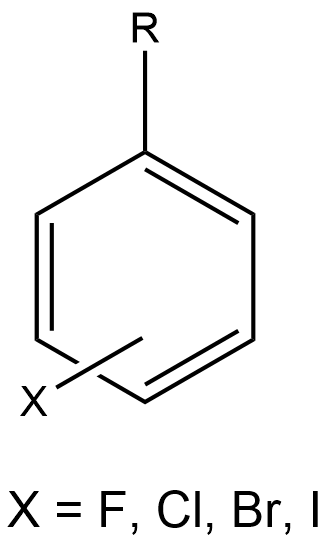
For years, halogenated aromatic intermediates were viewed as commodity chemicals, their production scattered and low-profile. But a shift has been underway. Chinese manufacturers have steadily moved upstream, refining processes for brominated and chlorinated benzene derivatives, biphenyls, and naphthalenes that quietly feed into high-value niches—liquid crystal polymers, advanced agrochemical actives, and specialty photoinitiators. This isn't a sudden boom; it's a deliberate accumulation of know-how in selective halogenation, isomer control, and waste-stream recycling that has repositioned these intermediates from bulk supply to precision chemistry.
What's striking is how this rise has been absorbed without fanfare. Unlike headline-grabbing capacity expansions in polymers or battery materials, the growth in halogenated aromatics has unfolded inside the supply chains of electronic materials, pharmaceutical building blocks, and performance coatings. For example, fluorinated and brominated aromatic cores now underpin high-refractive-index monomers and thermally stable dielectrics. Chinese producers have learned to tailor regiochemistry and purity to levels once reserved for Japanese or German specialty houses, often at a fraction of the historical cost, while maintaining batch-to-batch consistency for sensitive downstream applications.
This quiet ascent is also reshaping sourcing strategies. Buyers who once viewed Chinese halogenated intermediates as fallback options are now qualifying them as primary supplies, drawn by integrated bromine recovery loops, continuous flow fluorination units, and responsive custom synthesis teams. The result is a specialty market where China's role has shifted from price-taker to specification-setter in several niche aromatic halogenation routes, a change that has been gradual, understated, and yet increasingly difficult to ignore.
Why Downstream Formulators Are Rethinking Their Intermediate Suppliers
For years, downstream formulators leaned on a handful of intermediate suppliers simply because switching felt riskier than staying put. But that logic has quietly eroded. When a supplier ships a batch with slightly altered impurity profiles or viscosity drift, the formulator's team burns days recalibrating downstream processes. Those hidden costs rarely show up on a purchase order, yet they land squarely in the final product's stability data and customer complaint logs.
The push to rethink suppliers isn't driven by price alone. More formulators are asking hard questions about technical depth: can the supplier explain why a particular lot behaves differently under shear, or are they just reselling material from a bigger producer? The difference shows up fast. A supplier that understands the chemistry behind their intermediates can suggest tweaks to solvent ratios or stabilization packages before a problem reaches the pilot plant. That kind of support has become a differentiator, not a nice-to-have.
Communication patterns have also shifted the calculus. When a formulator sends an urgent inquiry about a delayed shipment or a certificate of analysis that doesn't match the spec sheet, waiting three days for a generic reply is no longer acceptable. Teams want a direct line to someone who can pull batch records, track container locations, and issue a corrective action plan without endless email chains. Suppliers that still operate through slow, layered approval processes are quietly being replaced by leaner, more responsive partners.
Agrochemicals, Pharma, and Electronics: Three End Markets Defining Demand
Agrochemical demand rarely follows a straight line. Regulatory bans in the EU, erratic monsoon seasons across South Asia, and inventory corrections in Brazil have all scrambled forecasts over the past two years. Yet the underlying pull remains: growers need higher yields on shrinking arable land, and older molecules are being replaced by lower-dose, higher-margin actives. That shift benefits suppliers of chiral intermediates and fluorinated building blocks far more than producers of legacy organophosphates.
Pharma has moved from being a reliable high-margin outlet to a more fragmented but still demanding one. The push toward antibody-drug conjugates and peptide therapeutics has tightened specifications for solvents, linkers, and PEGylated reagents. Meanwhile, the scramble to reshore API production—especially for antibiotics and oncology drugs—has created pockets of demand for custom synthesis and high-purity excipients that didn’t exist a decade ago. It’s no longer enough to be GMP-certified; buyers now expect batch-to-batch consistency and full traceability from raw material to finished dose.
Electronics is the most exacting of the three. A photoresist that works at 7nm may fail completely at 5nm, so suppliers live or die by qualification cycles that can stretch 18 months. Wet chemicals, CMP slurries, and specialty gases are all being reformulated for new transistor architectures and advanced packaging. Unlike agro or pharma, where volume and price dominate negotiations, electronics buyers often prioritize defect rates and purity measured in parts per trillion. That makes the segment resilient to cyclical downturns—once qualified, a material is rarely swapped out for a cheaper alternative.
From Bulk Output to High-Purity Custom Synthesis: Where China Now Competes
For years, Chinese chemical manufacturers were known primarily for supplying bulk intermediates and generic reagents at scale. That reputation, while still grounded in reality for many commodity products, no longer captures the full picture. A growing cluster of Chinese CDMOs and specialty chemical firms now operate at the opposite end of the value chain: high-purity custom synthesis for pharmaceutical, agrochemical, and advanced materials applications. The shift is not merely about adding capacity but about building the analytical, purification, and process development infrastructure that high-purity work demands.
What distinguishes this new competitive arena is the level of technical rigor now routinely offered. Facilities that once focused on multi-ton batches of a single intermediate have added kilo-lab and pilot-scale capabilities tailored to gram-level projects requiring impurity profiles below 0.1%, chiral purity above 99% ee, and documentation compatible with ICH guidelines. Many teams in Shanghai, Nanjing, and Chengdu now handle air-sensitive chemistries, continuous flow processes, and preparative SFC purification in-house. The result is a service model that competes directly with established Western and Indian providers, often at lower cost without sacrificing the batch-to-batch consistency that high-purity work demands.
Beyond cost, Chinese firms are gaining traction in areas where speed and problem-solving matter as much as price. Custom synthesis for rare building blocks, stable isotope-labeled compounds, and milligram-scale medicinal chemistry support has become a visible strength. Some suppliers offer dedicated project managers, weekly analytical reports, and rapid resynthesis of failed intermediates — practices that were rare in the bulk-output era. This shift toward high-touch, low-volume work signals a deeper change in how Chinese chemical manufacturers position themselves: not as commodity producers trying to move upmarket, but as full-service partners for complex synthesis challenges.
Cleaner Bromination and Chlorination: The Sustainability Shift Inside Chinese Plants
For years, bromination and chlorination lines in Chinese chemical plants ran on a simple premise: push volume, manage cost, and treat emissions as an afterthought. That logic is now being dismantled from the inside. Plant managers who once measured success in tons per day now track brine recycling rates, catalyst recovery percentages, and the energy footprint of every halogenation batch. The shift is not driven by marketing language but by hard operational math — tighter wastewater discharge rules, rising brine disposal fees, and buyers who increasingly ask for verified environmental data before signing a purchase order.
Inside the reactors, the changes are equally tangible. Older chlorination setups that vented excess chlorine to scrubbers are being replaced with closed-loop systems where unreacted halogen is captured, dried, and fed back into the next cycle. In bromination, continuous-flow reactors are taking over from batch vessels, cutting solvent use and reducing the formation of brominated byproducts that once ended up in sludge. Engineers on the floor describe a different kind of troubleshooting now: instead of fixing leaks to keep production moving, they fine-tune residence time and temperature profiles so the reaction consumes more of the halogen on the first pass.
What makes this shift credible is that it is showing up in plant-level data rather than corporate sustainability reports. Middle managers share spreadsheets tracking kilogram of halogen consumed per kilogram of product, not just headline emission figures. Third-party audits now walk through tank farms and control rooms, checking that recovery compressors are running and that brine polishing units are not bypassed. The result is a quieter but more durable transformation: Chinese halogenation capacity is being rebuilt around efficiency and reuse, not because it sounds better, but because it now costs less to run clean than to keep paying for waste.
Investment Signals in Specialty Halogenation Worth Watching This Decade
Specialty halogenation is quietly reshaping how investors think about chemical process innovation. The shift isn't driven by a single breakthrough, but by steady pressure on supply chains to handle fluorination and bromination with greater precision and lower waste. Companies that manage selective halogenation under mild conditions are starting to command premium valuations, especially where downstream products serve pharmaceuticals or high-performance polymers.
One signal worth tracking is the growing appetite for electrochemical halogenation methods. These routes avoid harsh reagents and reduce hazardous byproducts, which appeals to both regulators and cost-conscious manufacturers. In parallel, modular halogenation units that can be retrofitted into existing plants are attracting capital because they lower the barrier to process upgrades without requiring full facility rebuilds.
Another quiet indicator is talent movement. Engineers with experience in continuous-flow halogenation are being recruited into specialty chemical firms at unusual rates, suggesting that internal R&D priorities are tilting toward this area. Rather than betting on a single winner, many smart investors are mapping the enzyme-based and photo-catalytic niche players—those that can demonstrate stable yields across a narrow range of high-value substrates are likely to define the next phase of growth.
FAQ
China's dominance stems from integrated chlor-alkali and fluorine chemical chains, low-cost bromine recovery from brine, and a dense network of mid-sized producers that can scale from pilot to multi-ton batches without lengthy requalification. This lets specialty chemical buyers compress development timelines and secure competitive pricing on molecules that Western suppliers often treat as marginal byproducts.
Agrochemical synthesis remains the largest pull, especially for chloro- and fluoro-substituted pyridines and benzotrifluorides used in fungicides and herbicides. Pharmaceutical contract manufacturing is a close second, with iodinated contrast agents and fluorinated building blocks for kinase inhibitors. Liquid crystal materials, OLED intermediates, and high-performance polyimide monomers are smaller but higher-margin niches that reward precise isomer control.
Halogen atoms act as synthetic handles and bioisosteres, so suppliers that can deliver regiospecific bromination, selective fluorination, or Sandmeyer-based iodination enable chemists to build complex architectures faster. That reduces downstream failure rates and opens routes to crop protection actives, photoacid generators, and low-dielectric polymers that would otherwise be too costly or hazardous to make in-house.
Waste acid neutralization, bromine recovery, and dioxin control in chlorinated streams are the real bottlenecks. Jiangsu and Shandong have forced dozens of small halogenation workshops to close or consolidate, which tightened supply but also pushed surviving producers to adopt continuous flow reactors and solvent recovery. Buyers now audit not just product purity but also wastewater chloride and AOX levels before signing long-term contracts.
Many Chinese producers now co-locate halogenation with downstream coupling, amination, or esterification, so buyers can procure advanced intermediates instead of raw halides. That shifts quality responsibility upstream but also creates single-supplier risk. Sophisticated buyers mitigate this by dual-qualifying a second site and insisting on in-process analytical data rather than relying on final COA tests.
Photocatalytic bromination and electrochemical fluorination are moving beyond lab curiosities because they cut reagent waste and improve para/meta ratios. Another shift is toward masked halogenated intermediates—like trifluoroborate salts or aryl halides with removable directing groups—that let downstream chemists avoid handling sensitive organometallics. Producers that offer these pre-functionalized building blocks command a significant premium.
Fluorine boosts metabolic stability and lipophilicity without major steric penalty, making it a favorite in CNS and oncology pipelines. Bromine offers a clean leaving group for cross-coupling and a heavy-atom effect for flame retardancy in engineering plastics. Chlorine remains the volume leader, but its chemistry is mature, so margins are thinner and differentiation leans heavily on isomer purity and capacity reliability.
Raw material volatility for bromine and anhydrous HF can erase margins quickly, and a single environmental penalty can idle a plant for months. Technology transfer is another hidden risk: halogenation know-how often resides in a few veteran operators, so losing them to a competitor stalls production. Finally, downstream agchem and pharma demand is lumpy—large orders arrive with short lead times, then disappear for quarters—so working capital planning matters as much as reactor capacity.
Conclusion
China’s halogenated aromatic intermediates have outgrown their commodity-chemical past. A quiet but decisive change is underway: domestic producers now routinely deliver high-purity custom synthesis for agrochemical, pharmaceutical, and electronics clients that used to depend on European or Japanese suppliers. Downstream formulators are revisiting their sourcing maps for reasons beyond price—tight impurity profiles, scalable kilo-to-multi-ton processes, and the ability to keep a single supplier from pilot to production. Demand is being shaped by three end markets: new fungicides and herbicides that need brominated or chlorinated building blocks with exact regiochemistry; APIs for chronic disease treatments requiring low-metal, cGMP-grade intermediates; and electronic materials that demand ultra-dry, trace-metal-free halogenated aromatics, which were almost impossible to source in China ten years ago.
The sustainability story inside Chinese plants has moved from marketing slide to shop floor. Traditional chlorination and bromination routes, long criticized for corrosive waste and poor atom economy, are giving way to continuous-flow reactors, catalytic halogenation, and closed-loop solvent recovery. A handful of flagship sites now publish third-party verified EHS data and treat clean halogenation as a genuine competitive edge, not an afterthought. For investors and procurement teams, the signal is worth tracking: mid-size specialty chemical firms that combine fluorination or iodination know-how with in-house pilot plants and dedicated process safety labs are well positioned. Those that can document a path from benchtop custom synthesis to commercial-scale, low-residue production should capture premium contracts in crop protection, advanced electronics packaging, and next-generation pharmaceuticals over the next five to ten years.
Contact Us
Contact Person: Wei Zhang
Email: [email protected]
Tel/WhatsApp: 862163529955
Website: https://www.dslchem.com