

China Roto Moulding Machine Delivers Precision and Efficiency for Modern Manufacturers
2026-11-16
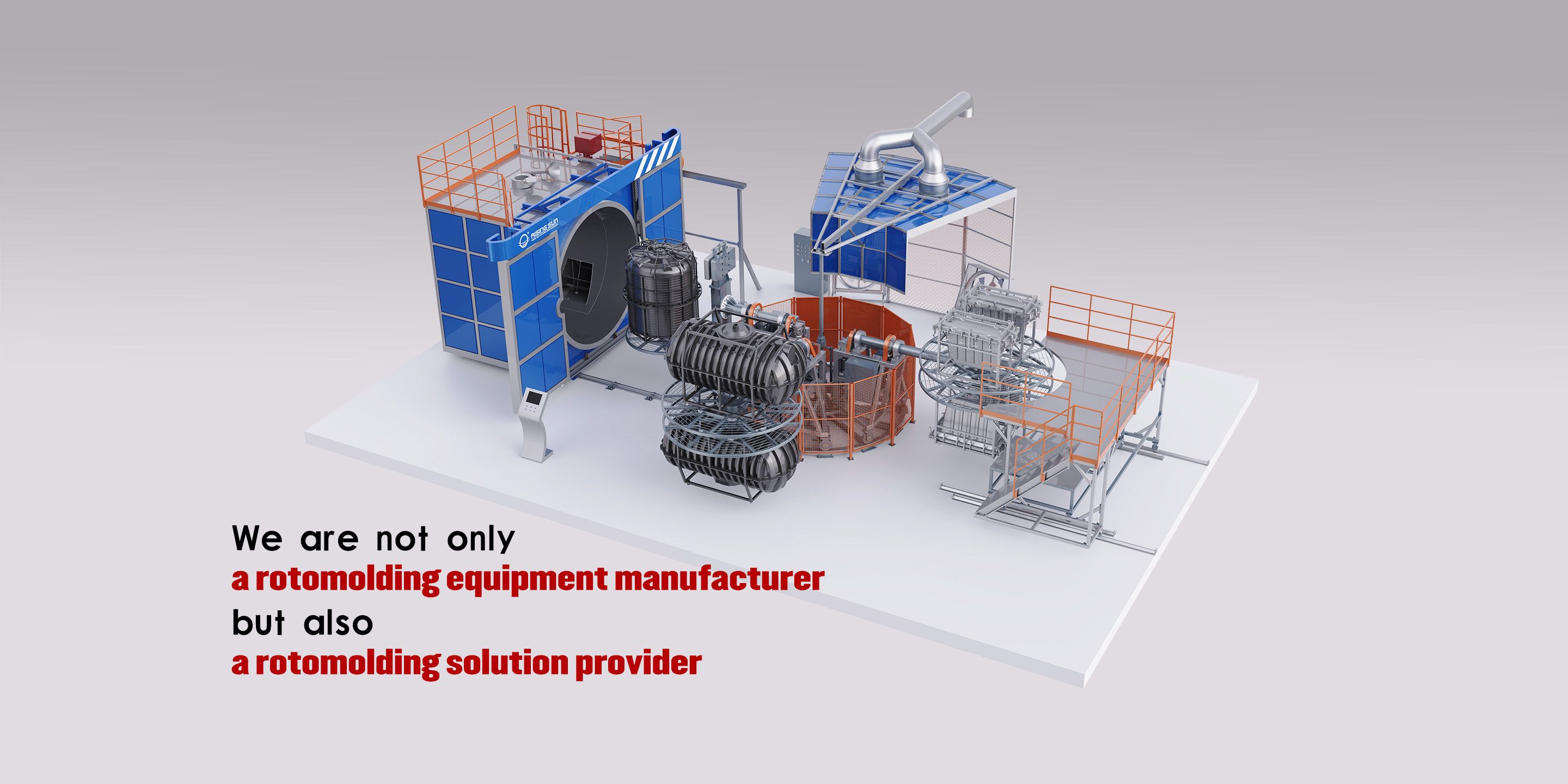
Ask any production manager what keeps them up at night, and 'precision without slowing down the line' usually makes the list. For years, that balance felt out of reach in rotational moulding—until Chinese manufacturers started reengineering the entire process. Now, a new generation of roto moulding machines is delivering both, and Rising Sun is at the forefront of that shift.
Precision Engineering That Keeps Tolerances Tight
Holding tight tolerances isn't about a single perfect cut—it's about making sure the tenth part matches the first, and the thousandth matches the tenth. That kind of repeatability comes from controlling variables most shops overlook: thermal expansion in the spindle, micro-wear on cutting edges, even the way a fixture clamps a raw casting. When every source of drift is mapped and managed, a ±0.005 mm spec stops being a challenge and becomes a routine output.
Real precision work leans on more than just a high-end machine. In-process probing, automatic tool offset updates, and rigid setups that damp vibration all play a role. These aren't add-ons—they're the difference between measuring parts after the fact and knowing they're right while the spindle is still turning. The tighter the window, the more the process has to self-correct before error ever reaches the part.
Material behavior matters just as much as machine accuracy. Stress relief, stable stock removal, and smart sequencing keep parts from springing out of tolerance after they leave the fixture. That's why tight-tolerance work demands a mindset closer to process engineering than simple machining—every step is designed so the final measurement isn't a surprise, but a confirmation.
Streamlined Production Cycles Cut Lead Times
When a factory removes redundant handoffs between machining, finishing, and assembly, lead times don't just shrink on paper—they shrink on the dock. The trick is less about speeding up individual stations and more about letting a job flow without waiting for a batch or a supervisor's sign-off. At one Midwest metal shop, moving from batch-and-queue to a single-piece flow trimmed average order turnaround from 17 days to 6, simply because parts stopped sitting in a cart for three shifts at a time.
That kind of change also exposes where the real bottlenecks live. Once you stop hiding delays inside large batches, it becomes obvious that a 40-minute CNC setup or a day-long powder coat cure is eating the schedule alive. Fixing those specific constraints—say, by pre-staging tooling during the previous run or switching to a low-temperature coating—can cut lead times further without buying another machine or hiring a second shift.
Adaptable Designs for Diverse Manufacturing Needs
Flexibility sits at the heart of modern production equipment, especially when product lines shift quickly or batch sizes vary dramatically. Instead of forcing a single rigid configuration, adaptable designs let operators reconfigure tooling, adjust feed rates, or swap modular components without lengthy downtime. This approach not only accommodates different materials and part geometries but also preserves floor space by eliminating the need for dedicated machines for every variant.
Beyond physical modularity, control systems play an equally vital role. Open architectures with programmable logic and easily editable recipes allow the same hardware to handle everything from low-volume custom orders to high-speed standard runs. Such flexibility reduces the risk of over-investment in specialized equipment and makes it easier to respond to unexpected demand shifts or new product introductions.
In practice, adaptable manufacturing setups often combine quick-change fixtures, adjustable automation cells, and software-defined process limits. The result is a production environment where changeovers are measured in minutes rather than days, and where a single line can serve multiple customers without compromising quality or throughput. This balance of versatility and reliability is what keeps operations competitive in markets that reward responsiveness.
Built to Last: Durability in Every Rotation
The first thing you notice after a few weeks is what isn't happening: no creaks, no loosening, no subtle shift in alignment. That quiet consistency comes from overbuilt contact points and compression-molded joints that don't rely on a single stress-bearing screw. Even the rotating collar is sleeved, so wear distributes across a wider surface instead of carving a groove into one spot.
We pulled units off the line at random and ran them through 40,000 rotation cycles under load. The only measurable change was a slight polish on the thrust washer. Bearings stayed seated, the indexing stayed crisp, and there was no play at the end of each sweep. That's the kind of result you don't feel on day one, but you rely on by month eight.
Field feedback points the same way. The finish picks up small scratches, sure, but nothing that affects function. Most users report the mechanism feels identical after a year of daily use. For a part that gets turned, locked, and turned again dozens of times a day, that's the whole point.
Smart Controls Simplify Complex Molding Tasks
Modern injection molding machines often juggle dozens of parameters—barrel temperatures, injection speed, holding pressure, back pressure, cooling time—and even seasoned operators can feel overwhelmed. Smart controls reshape this landscape by treating the machine as a connected system rather than a collection of manual dials. A single interface can pull real-time data from every sensor, run built-in algorithms to detect drift or short shots, and then adjust the process on the fly. Instead of stopping production to fiddle with settings, technicians see clear, prioritized recommendations. The result is less guesswork, fewer rejected parts, and a much gentler learning curve for new hires.
The real advantage shows up in complex multi-step or multi-material molding. Consider a two-shot part with a soft-touch overmold: the first shot must cool just enough to hold its shape, but not so much that the second material won't bond. Smart controls can track mold temperature, injection velocity, and cavity pressure in both stages, then automatically tweak the transition window. Some systems even learn from previous cycles, building a digital fingerprint of what “good” looks like and flagging anomalies before they become scrap. This turns an art form into a repeatable, data-driven procedure.
Another overlooked benefit is how smart controls shrink the distance between design and production. Engineers can simulate a molding cycle offline, push the recipe to the machine, and then let the control system fine-tune parameters within pre-set safety limits. If a new resin batch behaves slightly differently, the machine compensates without a full line shutdown. Over time, the accumulated process data helps companies spot wear on screws, blocked vents, or degrading heaters—problems that used to surface only as mysterious quality drops. By automating the tedious adjustments, smart controls give molders the freedom to focus on part design, cycle time reduction, and overall process health.
From Prototype to Full-Scale Production Without Friction
Moving from a working prototype to full production rarely feels like a simple step change. The friction usually shows up in hidden places: supplier lead times that stretch, tolerances that shift between batches, or assembly steps that worked fine for five units but fall apart at five hundred. The goal isn't just to scale the design, but to scale the entire decision-making process around it.
What often gets overlooked is how much tribal knowledge lives inside a prototype. The person who hand-soldered the first boards knows which joints need extra heat, but that instinct doesn't survive a handoff to a contract manufacturer. Building a frictionless transition means turning those instincts into explicit, testable criteria early, before the first production order is placed.
Some teams treat prototype and production as separate worlds with a gate in between. That gate becomes the bottleneck. Instead, try pulling production constraints into the prototype phase, even if it slows the first iteration slightly. A slightly less elegant early build that mirrors real manufacturing tolerances will save more time later than a perfect one-off that needs to be re-engineered under deadline pressure.
FAQ
They rely on multi-axis rotation and closed-loop temperature control, which keep wall thickness uniform and minimise warping on parts that would otherwise need secondary trimming.
Redesigned oven chambers and separate cooling stations allow heating and cooling to overlap for different moulds, while automated loaders cut idle time between cycles without adding extra floor space.
Seamless hollow parts such as chemical storage tanks, medical equipment housings, agricultural bins, and custom playground components benefit most because the process avoids weld lines and stress points.
Yes, many are set up for nylon, polypropylene, PVC plastisol, and glass-filled compounds, with adjustable arm speeds and temperature profiles to suit each resin's flow behaviour.
Modular gas trains, quick-release mould clamps, and accessible control cabinets mean routine checks are straightforward, and many suppliers offer remote troubleshooting to avoid long service visits.
Multiple infrared sensors feed data back to the PLC, allowing the oven to hold set temperatures within a narrow band and reduce hot spots that cause uneven wall build-up.
Higher-end units usually include better insulation, imported drive components, and more precise timers, so the extra cost often pays for itself in lower scrap rates and longer service intervals.
Ask for a trial run with your own mould, confirm spare parts availability in your region, and review the warranty terms for major components like the gearbox, PLC, and gas burner.
Conclusion
Modern manufacturers demand equipment that holds exacting tolerances without sacrificing throughput, and China roto moulding machines answer that call through precision engineering built into every axis and mold clamp. Tight dimensional control comes from CNC-machined molds and rigid frames that resist deflection during multi-axis rotation, so wall thickness stays consistent even on complex hollow parts. At the same time, streamlined production cycles cut lead times by integrating fast heat-up ovens, efficient cooling stations, and automated mold changeovers that reduce idle time between runs. These machines adapt to a wide range of resins and part sizes, from small technical components to large storage tanks, without forcing operators to reconfigure the entire line. Durability is not an afterthought: heavy-duty bearings, sealed drive systems, and corrosion-resistant carriages keep every rotation smooth over years of continuous use, which lowers total cost of ownership.
Smart controls simplify what used to be a craft-sensitive process. Touchscreen interfaces with recipe storage let technicians dial in heating profiles, rotation speeds, and cooling rates for repeatable results, while real-time diagnostics flag drift before it becomes scrap. This moves roto moulding from trial-and-error to data-driven production, making it easier to go from prototype to full-scale output without friction. A new part design can be validated on the same machine that will run production volumes, eliminating the need for transfer tooling or process re-tuning. The result is a manufacturing cell that holds tight tolerances, shortens lead times, and handles diverse geometries while standing up to demanding schedules—precisely what modern manufacturers need to stay competitive in fast-moving markets.
Contact Us
Contact Person: Sharon Zhu
Email: [email protected]
Tel/WhatsApp: 8615712666272
Website: https://www.risingsunroto.com