

Corn Milling Machine Plant: Key Equipment and Workflow Explained
2026-08-17
Turning maize into market-ready flour, grits, or feed is no small feat—it takes a lineup of machines that work in sync, from cleaning and conditioning to degermination, milling, and packaging. But what does a modern corn milling plant actually look like, and which equipment matters most at each stage? In this guide, we break down the core machinery and workflow behind an efficient operation, drawing on the engineering approach of PINGLE to show how intelligent design can lift output and consistency. Whether you're planning a new facility or upgrading an existing line, you'll find clear, practical insights to help you map the process from kernel to finished product.
The First Machine Corn Touches Sets the Tone
The moment corn drops into the first hopper or passes through the initial cleaner, the groundwork for the entire run is laid. That first contact rarely gets the attention it deserves, but it determines how evenly kernels flow, how much foreign material slips through, and whether downstream equipment starts with a clean, consistent feed. If this stage is rushed or poorly calibrated, every later adjustment becomes a patch rather than a fix.
A common mistake is treating the first machine as just a gatekeeper and focusing all tuning efforts on mills or flaking rollers farther down the line. Yet cracked kernels that leave the first cracker at irregular sizes will never behave the same in a tempering bin. Moisture that isn't applied uniformly at the start shows up later as hard spots or over-conditioned meal. Operators end up compensating with extra energy, more passes, or lower throughput—all because the initial tone was off.
Spending an extra twenty minutes checking roll gaps, screen wear, and feed distribution on that first machine usually pays back before the shift ends. It reduces surprise jams, keeps yield steadier, and makes the whole line easier to predict. The first touch doesn't need to be the most sophisticated; it just needs to be consistent and respected.
Degermination Without Sacrificing Grit Quality
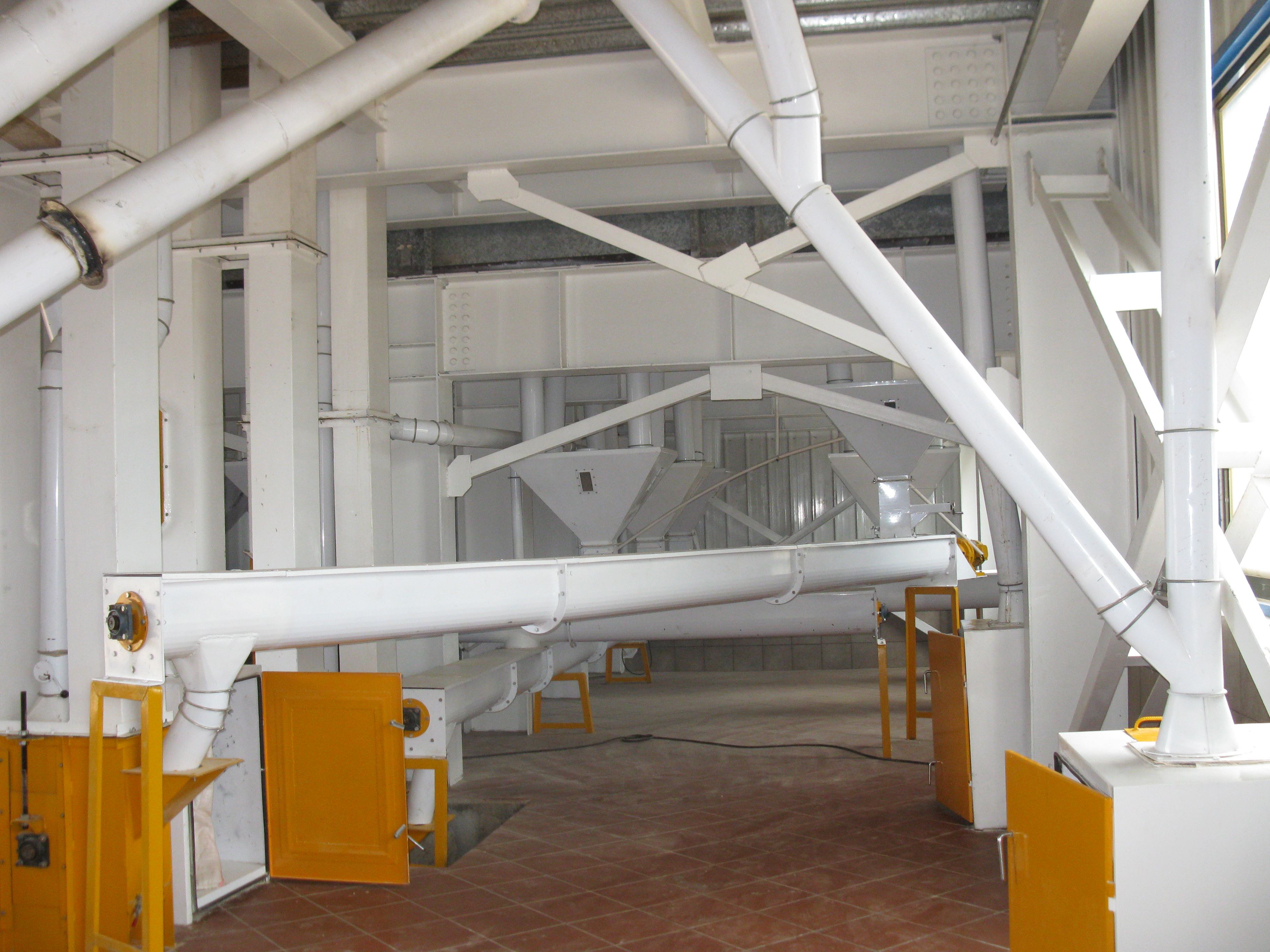
Conventional degermination often relies on aggressive impact or abrasion, which fractures the surrounding endosperm and produces an excess of fine flour at the expense of desirable coarse grits. The key is to apply a controlled, low-shear peeling action that separates the germ at its natural attachment point without propagating cracks through the vitreous horny endosperm. Machines with adjustable rotor clearances and gentle tumbling motions, rather than high-speed hammer mills, preserve the integrity of the grit fraction while still achieving near-total germ removal.
Moisture conditioning plays a decisive role in protecting grit quality during the degermination step. A short tempering period with a precise water addition softens the germ and the adjacent aleurone layer just enough to ease their detachment, while leaving the harder endosperm largely unaffected. Over-conditioning, by contrast, turns the endosperm rubbery and causes smearing that reduces grit sharpness and clogs downstream sifters. Operators often target a moisture uptake of one to two percent above the incoming grain moisture, with rest times adjusted for ambient temperature and kernel hardness.
After the germ is separated, the remaining endosperm chunks are gently reduced through a series of roller mills with progressively finer corrugations. This approach avoids the pulverizing effect of impact mills and maintains a high yield of uniform, angular grits prized in snack and cereal applications. Regular monitoring of the particle size distribution, along with periodic inspection of roll wear and sifter mesh integrity, ensures that the degermination line consistently delivers both clean germ removal and a grit product with the desired texture and cooking performance.
Roller Mill Settings That Keep Particle Size Even
Even particle size starts with the gap between the rolls. If one end of a roll sits slightly closer than the other, the mill will produce a mix of fines and oversized particles. Check parallelism with feeler gauges or a lead wire test at both ends of the roll, and adjust the eccentric bearing housings until the gap reads the same across the full width. Even a 0.05 mm difference can push the distribution wide.
Feed rate has a direct effect on grind consistency. Running the rolls too fast floods the nip and forces material through unevenly, while feeding too slowly lets particles bounce and re-grind, creating excess fines. Match the feed gate opening to the roll speed and product density, and use a level sensor or vibratory feeder to keep the supply steady. Sudden surges are often the hidden cause of drifting particle size.
Roll speed ratio and surface condition matter more than many operators expect. A ratio that's too aggressive can shear particles rather than crush them, producing a bimodal distribution. Keep the differential within the range specified for your grain or mineral, and inspect the roll surface for wear bands or glazing. Re-corrugating or replacing rolls before they lose their edge prevents the slow drift toward uneven sizing.
Sifting and Grading at the Heart of Yield
The true measure of a harvest rarely lies in the sheer volume gathered from field or factory floor. Instead, it emerges from the quiet, deliberate act of separating what is usable from what merely takes up space. Sifting begins as a mechanical chore, but quickly reveals itself as a conversation with the material itself—seeds passing through mesh, powders screened by vibration, fruits sorted by weight and color. Each pass through a sieve or grader strips away the inert, the misshapen, the too-small or too-large, leaving behind a fraction that can be handled with confidence. Yield, in this light, is not what you collect but what you actually keep.
Grading takes the process a step further, turning a uniform pile into distinct lots that answer different needs. A batch of milled flour might be sifted to remove bran flakes, then graded by particle size: fine for pastry work, coarser for rustic breads. In a nut processing line, cracked kernels fall through a series of vibrating trays, each with holes calibrated to a tolerance narrower than a fingernail’s edge. The odd-shaped ones diverted for oil pressing, the whole halves saved for premium packaging. This careful partitioning does more than tidy the inventory; it multiplies the usable output from the same raw incoming stream. Without it, a third of what could be sold or cooked would simply vanish into waste bins.
What often gets overlooked is how much grading depends on touch as much as measurement. Operators adjust the angle of a screen after feeling the way a handful of grains spreads across the mesh. They listen to the hum of the shaker, knowing by its pitch whether the feed rate is too heavy or the apertures are clogging. Small adjustments—a tenth of a millimeter here, a half-degree of tilt there—translate directly into the final proportion of first-grade product. In that sense, the heart of yield beats not in the harvester or the hopper, but in the hands and eyes that tune the sifting floor, turning a raw assortment into a dependable, market-ready stream.
Moisture Control Between Stages Prevents Jams
When bulk solids move from one processing stage to the next, even a small shift in moisture can turn a steady stream into a clogged mess. Material that leaves a dryer slightly damp or picks up ambient humidity in transfer chutes tends to stick to walls, form lumps, and bridge across openings. These jams rarely announce themselves until the line is already down.
Rather than relying on reactive clearing, operators can keep moisture levels within a narrow band at each transition point. Adding conditioned air or a light dehumidification step before sieves, rotary valves, or feed hoppers stops particles from gluing together. The aim is not to make the material bone-dry, but to match the moisture to what the next stage can handle without buildup.
When moisture is managed between stages, blockages become rare, and downstream equipment runs at its designed rate instead of lurching between stops and starts. This approach also reduces the need for hammering, poking, or manual intervention, which saves both time and wear on the equipment. Ultimately, consistent moisture control is less about perfect dryness and more about steady, predictable flow.
From Cleaning to Packing as One Continuous Flow
Cleaning and packing usually sit on opposite ends of a facility, with bins or racks between them. When you pull those steps into one continuous flow, items leave the wash zone and land directly in packing. There is no intermediate storage, no pause for a label check, no second scheduling pass.
The line moves at the pace of the drying tunnel, not the slowest individual worker. Packing stations flex up or down as the cleaning output changes, so the flow never turns into a pile. A small hiccup in cleaning shows up immediately at packing, which makes it easier to correct before it repeats.
This tighter layout also changes how people communicate. Instead of handing over batches at shift change, the next operator simply steps into the moving stream. Each item keeps a single path, and the time from wash to sealed box shrinks noticeably.
FAQ
A well-equipped plant usually starts with intake and cleaning equipment like magnet separators and vibrating screens, followed by tempering bins, degerminators, roller mills, plansifters, and finished product handling systems. The exact lineup depends on whether you're producing grits, meal, or flour.
After arriving at the intake pit, corn passes over magnets and screens to remove metal, stones, and fines. Clean corn is then conditioned with moisture in tempering bins before entering the degerminator. The broken stock moves through a series of roller mills and sifters, with aspirators pulling off bran and germ at several points, until the remaining endosperm reaches the desired particle size.
Tempering adds moisture and lets it soak in, which toughens the bran and softens the endosperm. That makes the germ easier to separate cleanly and reduces unwanted shattering of the hull. Without proper tempering, you end up with oilier finished products and more wear on downstream equipment.
The degerminator breaks open the kernels and frees the germ from the endosperm using impact or friction. Keeping the germ separate matters because it contains most of the oil, which can shorten shelf life if left in the meal or flour. A good degerminator also minimizes grit fracture, helping preserve larger particle sizes.
Plansifters and aspirators do most of the work. Plansifters grade particles by size across multiple sieve decks, while air channels lift off lighter bran and germ. Purifiers may be added when you need very clean, low-fat grits or specialty flours, since they remove tiny bran specks that gravity sifting alone might miss.
It comes down to controlling moisture, roll gap settings, and sifter cloth selection. Inline moisture monitors and automatic sampling help operators adjust the process before a large batch drifts out of spec. Many plants also run a final check sieve and metal detector right before packaging to catch any oversize particles or contamination.
Match the equipment to your target products and daily capacity first. A plant aiming for fine maize flour will need a different roll configuration and sifting setup than one focused on flaking grits. Also check access for cleaning and maintenance, because tight machine spacing can slow down screen changes and lead to long downtime.
Usually yes, if you plan the building layout and conveying system with extra headroom. Adding roller mills, a second plansifter, or larger tempering bins is easier than retrofitting a cramped line. It is worth leaving space near the degerminator and sifting section, since those points often become bottlenecks when capacity rises.
Conclusion
In a corn milling machine plant, the first equipment that grain touches sets the whole tone for downstream performance. A well-tuned receiving and pre-cleaning unit removes coarse impurities and stones before kernels ever reach the degerminator. That early step matters because degermination has to strip the germ and hull without tearing up the endosperm, otherwise grit quality plummets. Once the germ is out, roller mill settings take over. Careful gap adjustments and differential speeds keep particle size even, so you don't end up with a mix of flour and oversized chunks. Right after milling, sifting and grading do the heavy lifting for yield. Plansifters with layered screens separate grits, meal, and flour by particle size, and any shortcuts here mean lost product or re-work that costs real money.
Moisture control between stages is the quiet lifesaver of the whole operation. A few percentage points of added water at the right time keeps stock from gumming up rollers or blinding screens, and it also helps with bran separation. When every stage is timed and conditioned properly, the plant runs as one continuous flow from cleaning to packing. Corn enters at one end, passes through degermination, milling, sifting, and moisture adjustment without bottlenecks, and finished grits or flour bag out at the other end. No stop-and-start, no pile-ups waiting for a jam to clear. That kind of uninterrupted movement is what separates a profitable corn mill from one that just grinds corn.
Contact Us
Contact Person: Jiakuo Wu
Email: [email protected]
Tel/WhatsApp: +86-13011566087
Website: https://www.pinglemachine.com