

Custom 20-Inch Cutter Suction Dredger Manufacturer Delivers Tailored Dredging Solutions for Challenging Waterways
2026-08-17
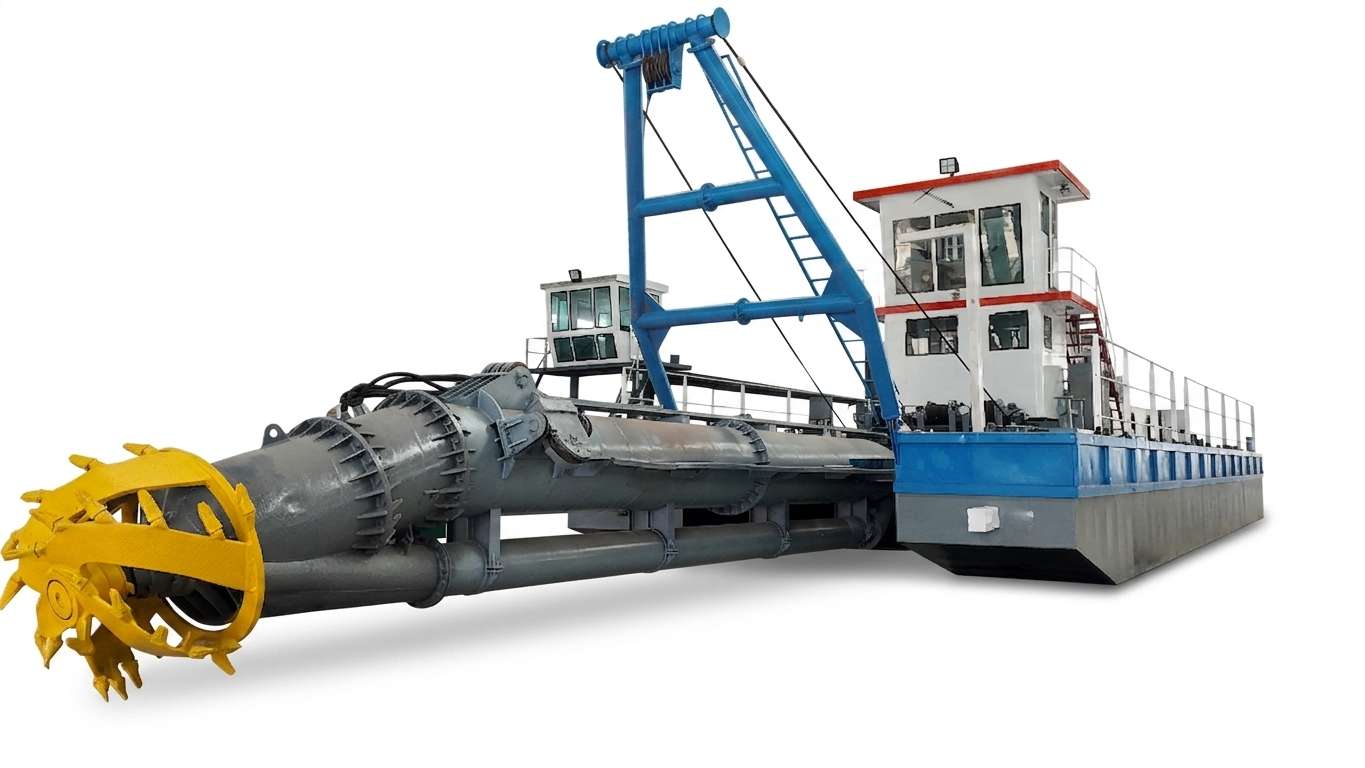
Most dredging contractors know the frustration: you bring in a standard 20-inch cutter suction dredger, and it just doesn’t fit the channel profile, the soil conditions, or the access constraints. That’s exactly the gap YaKai Dredger fills as a custom 20-inch cutter suction dredger manufacturer. Instead of forcing a stock machine into a tough waterway, YaKai Dredger engineers each dredger around the job—from cutter head geometry to pump clearances and hull dimensions. The result is a tailored dredging solution that actually matches the water, not the other way around. In the sections ahead, we’ll break down what that custom approach looks like on real projects and why it keeps contractors coming back.
Why a 20-Inch Cutter Suction Dredger Often Beats Bigger Machines in Tight Waterways
A 20-inch cutter suction dredger slips into canals, marinas, and narrow river bends where a 30-inch machine would need to dismantle bridges or wait for high tide. Its compact hull and shallower draft let it work right against bulkheads and under low utility crossings, cutting a clean profile without tearing up surrounding banks. That access alone often decides the job before horsepower ever enters the conversation.
Bigger dredgers bring brute output, but in confined water they burn hours repositioning, managing swing wires, and dodging obstructions. The 20-inch class turns tighter, sets up faster, and keeps the cutterhead exactly where the survey says the silt is. You get fewer passes, less over-dredging, and a finish grade that doesn't need a follow-up crew to fix.
There's also the logistics side. A 20-inch unit usually trucks in on two or three trailers and launches from a modest ramp. That matters when the nearest crane pad is a mile away or the access road can't take a lowboy with a 40-ton winch frame. In tight waterways, the machine that arrives and starts pumping this week often beats the one that's still being assembled next month.
Inside the Custom Build: How We Engineer for Rocky Bottoms and Strong Currents
Designing for rocky bottoms and strong currents isn't about fighting the river—it's about listening to it. We start each custom build by mapping the underwater terrain, noting where boulders create eddies and where the flow accelerates into narrow chutes. This isn't guesswork; it's a blend of sonar readings, on-site wading, and years of reading water. By understanding how the current moves around each rock, we can shape the hull and keel to deflect rather than resist, letting the boat skim over obstacles that would leave a standard hull pinned or rolled.
The materials matter just as much as the shape. We use a reinforced polymer composite that flexes on impact, absorbing the shock of a hidden ledge or a submerged tree. Unlike rigid fiberglass that cracks or aluminum that dents, this composite springs back, keeping the hull intact through repeated collisions. The bottom gets an extra layer of abrasion-resistant coating, and the chines are rounded rather than sharp, so a glancing blow slides off instead of catching. Every weld, seam, and rivet is tested in a hydraulic flume that mimics a class III rapid, ensuring the boat can handle not just one hit, but a season of them.
Finally, we tune the trim and rocker for agility in fast water. A slight upward sweep at the bow lets the boat rise over standing waves instead of diving through them, while a subtle V in the stern tracks straight when you need to ferry across a strong current. We've learned that the best handling comes from balance—too much rocker and the boat spins out, too little and it plows. Each hull is hand-finished and tested on our local river, where the bottom is a mix of granite slabs and loose cobble. If it survives there without a scratch or a scary moment, we know it's ready for your water.
From River Bend to Port Approach: Matching Dredger Specs to Real Job Sites
Walk any river bend at low water and you'll see why dredger specs are never a one-size-fits-all decision. The current that scours the outside bank and drops silt on the inside point demands a machine that can pivot quickly, set spuds without sliding, and work in a tight channel. Move down to a port approach and the picture shifts completely: long-period swell, passing ship traffic, and sudden depth changes call for a much heavier dredger with strong anchors and the stability to keep cutting while the water moves underneath it. Ignoring these local conditions is how you end up with a beautifully engineered vessel that simply cannot hold station or produce at the required rate.
Bottom material adds another layer. A river bend often hides layered silts and soft clays that a standard cutter head chews through without complaint. A port approach, on the other hand, may expose compacted sands, stiff glacial till, or even decades of dumped ballast. Here the difference between a 400 kW cutter drive and a 900 kW drive is not a specification sheet detail; it is the difference between finishing a job in two weeks or watching the dredger bounce off hard material while fuel burns and the client asks questions. Smart contractors take cores and probe the bottom before selecting a dredger, because knowing whether the job is a carving job or a grinding job changes everything.
Then there are the practical constraints that never appear in a brochure. Mobilization distance, draft limits under bridges, air draft, crew quarters for 24-hour operations, and local noise or turbidity rules can knock out a technically perfect dredger. Some jobs suit a trailing suction hopper dredger because it can work while moving and needs no fixed spuds; others demand a cutter suction dredger with a booster pump and a floating pipeline to reach a distant disposal site. The right match is rarely the biggest or newest machine. It is the one that fits the exact stretch of water, the exact soil, and the exact schedule without forcing the contractor to fight the site every day.
The Hidden Costs of Off-the-Shelf Dredgers (And How Tailored Design Avoids Them)
Many project managers assume an off-the-shelf dredger is the economical choice, but that sticker price rarely tells the whole story. Standard machines are built for a broad range of conditions, which means they are optimized for none. Pumps, cutters, and hulls often get pushed outside their ideal operating window, accelerating wear on wear parts and driving fuel consumption far above manufacturer claims.
A tailored design starts with the actual job: sediment type, grain size, pumping distance, and production targets. Engineers can match impeller clearances, hard-metal liners, and cutter teeth to the specific slurry, so the equipment spends more time in its efficient zone. This reduces unscheduled maintenance, extends component life, and avoids the expensive field retrofits that often follow a generic purchase.
The result is lower total cost over the project, not just a lower invoice. Tailored dredgers also adapt more cleanly when site conditions shift, because you are not paying for unnecessary capacity or struggling with an undersized system. In short, you spend once on the right design instead of repeatedly on downtime, spare parts, and emergency fixes.
Case Study: Clearing a Sediment-Choked Canal Without Halting Local Traffic
When a century-old canal serving a busy industrial district began backing up with decades of accumulated silt, local authorities faced a painful choice: shut down the waterway for months and reroute hundreds of trucks and barges, or watch commerce slowly grind to a halt. The solution came from a Dutch dredging team that proposed a phased, night-time sediment removal plan. By using a floating suction dredger that worked six-hour windows between midnight and dawn, they cleared the channel in eleven weeks while daylight traffic never missed a single scheduled passage.
The real trick lay in how they handled the spoils. Instead of trucking wet sludge through residential streets, the crew pumped it into geotextile tubes laid along a disused rail spur. The tubes filtered water back into the canal while the sediment dried to a cake that could be hauled away at low-traffic hours. Local businesses were kept in the loop through a simple WhatsApp group where the dredge master posted daily progress maps—no corporate dashboard, no jargon, just a photo of the canal section and a note on what would happen next.
What stands out about this case isn't the machinery, but the refusal to treat the canal as an isolated engineering problem. The dredging contractor hired a retired lockkeeper who knew every shoal and current from memory, and paid him to argue with the data models. In the end, the canal ran three feet deeper than its original design, barge operators reported faster turnaround, and the city quietly adopted the same phased approach for two other clogged waterways. The lesson stuck: keeping traffic moving isn't about doing less work—it's about doing the right work when nobody is watching.
What to Ask a Manufacturer Before Committing to a 20-Inch Dredger
A glossy brochure won't tell you how a 20-inch dredger handles abrasive sand or sudden clay pockets. Start by asking the manufacturer for references from operators working in conditions similar to yours—same soil type, same water depth, same working hours. Then press them on the parts that actually wear out: what's the metallurgy of the pump casing and impeller? Can you swap wear plates without cutting the hull? How many hours do they honestly expect between rebuilds, not under ideal lab conditions but in real silt?
Next, dig into the less glamorous side of the deal: delivery, commissioning, and what happens after the warranty expires. Ask whether the manufacturer sends its own engineers for assembly or leaves you with a stack of translated manuals. Find out if they stock critical spares in your region or if a broken shaft means six weeks of downtime waiting for a shipment. A useful test is to request a line-by-line quote for spare parts for the first two years of operation—this reveals not only cost but also which components the builder considers most likely to fail.
Finally, don't sign anything until you've talked to a recent buyer who had a serious problem. Ask the manufacturer directly: "Tell me about a time a customer's dredger went down in the first month." The quality of their answer—whether they explain the diagnosis, the fix, and the changes they made to prevent recurrence—will tell you more than any specification sheet. Also confirm what training the crew receives and whether the builder offers remote troubleshooting or on-site support during the first major overhaul.
FAQ
The combination of a high-torque cutter head and a robust ladder assembly lets it break up compacted material before suction, so it can keep working even in hard clay, gravel, or heavily vegetated channels. A 20-inch discharge diameter also moves a large volume of slurry per hour, which helps clear narrow or winding waterways faster without constantly repositioning.
The engineering team starts with a site survey that looks at water depth, sediment type, flow rate, and access limits. From there they adjust cutter power, pump impeller size, spud carriage length, and even the hull shape. The result is a machine that fits the job rather than forcing the job to fit a stock model.
They are built for more than soft silt. With the right cutter teeth and pump clearances, a custom 20-inch dredger can process dense sand, clay, packed gravel, and organic debris. The manufacturer matches wear materials and drive specifications to the abrasive load so production stays consistent instead of dropping off after the first week.
Yes. The design often includes a shallow-draft pontoon hull and a trunnion-mounted ladder that can be lowered close to the bottom. This allows dredging in as little as 1.5 to 2 meters of water while still maintaining pump efficiency, and the swing system can be narrowed for canal or marina work.
Wear parts are selected based on the expected particle size and hardness. That might mean high-chrome alloy pump liners, ceramic-coated cutter blades, or replaceable wear shoes on the suction mouth. The manufacturer also routes pipe bends with larger radii to reduce internal turbulence and places grease points where they can be reached without a full teardown.
Depending on the scope, a full custom build usually takes between five and eight months. Standard components can shorten that timeline, while specialized cutter heads, automation packages, or unusual hull dimensions add a few weeks. The manufacturer provides a staged schedule so buyers can plan site preparation and crew training in parallel.
Support includes on-site commissioning, operator training, and a spare parts package sized to the first year of operation. The manufacturer also keeps the as-built drawings and material certifications on file, so if a pump bearing or cutter shaft needs replacement later, the part can be matched exactly without guesswork.
Conclusion
Bigger isn't always better in dredging. When a waterway narrows, currents push hard against the hull, or the bottom is an irregular mix of rock and clay, a 20-inch cutter suction dredger often outworks its larger counterparts. Instead of forcing a stock hull and ladder into those conditions, a custom builder can adjust spud placement, ladder length, cutter tooth pattern, and pump clearances to suit the actual profile of a river bend or port approach. That keeps production steady where a larger machine would spend too much time repositioning or burning through expensive cutters. It also avoids the hidden costs of off-the-shelf dredgers—underpowered swing winches, mismatched discharge piping, and hulls that draw too much for shallow approaches.
One recent build cleared a sediment-choked canal without halting local traffic, simply because the dredger was designed to work in a narrow lane and pump spoil to a nearby dewatering cell. Before committing to a 20-inch dredger, buyers should ask the manufacturer how the ladder is reinforced for rocky bottoms, what wear parts are locally available, how dredge pumps are matched to expected slurry density, and what support is included for commissioning. A tailored answer to those questions usually separates a reliable production tool from a stock hull with a fresh coat of paint.
Contact Us
Contact Person: Nancy
Email: [email protected]
Tel/WhatsApp: (+86) 13869631558
Website: https://www.yakaidredger.com/