

D Rings Exporter for Durable Metal Hardware Solutions
2026-11-02
Finding hardware that holds up under pressure is easier said than done. D rings may look interchangeable, but the difference between a forged ring that survives years of load cycles and a cast one that snaps unexpectedly is enormous. That is exactly why Kingming has become a preferred D rings exporter for durable metal hardware solutions. In this article, we will break down the materials, finishes, and quality checks that separate reliable D rings from the rest.
What Makes a D Ring Hold Up Under Heavy Loads
The real reason a D ring doesn't fold under a heavy load rarely comes down to how chunky it looks. It's the material and the way it's shaped that matter. Quality D rings are usually forged from alloy steel, not cast, because forging forces the metal's grain to follow the curve of the ring instead of leaving weak spots at random. After that, a careful heat treatment—quenching followed by tempering—gives the steel a balance of hardness and toughness. If it's too hard, it snaps; too soft, it stretches. The plating on the outside is purely cosmetic corrosion protection and contributes nothing to strength.
Load direction is another silent killer. A D ring's rated capacity assumes the force pulls straight along the plane of the ring, evenly across the curved section. Pull it sideways, twist it, or let the load concentrate on one edge, and the breaking strength drops far faster than most people expect. The pin or bolt through the ring matters just as much: a random hardware-store bolt won't have the shear strength of the original forged pin, and if it's undersized or too soft, it becomes the first thing to fail. Look closely at a well-made D ring and you'll also notice the base where the ring meets its mount is thickened or radiused—that's not a style choice, it's stress relief.
Even the best D ring needs a bit of sense after the fact. After any serious pull, check for permanent deformation, hairline cracks, or a pin that no longer fits snugly. Rust isn't just ugly; it slowly eats away the cross-section, so chipped plating should be touched up early. And while rated capacities are useful, they assume a steady, controlled pull. A sudden shock load—like a snatch recovery or a dropped load—can exceed that rating in a fraction of a second. Keeping a healthy safety margin isn't being overly cautious; it's understanding that the ring's strength is only as good as the chain of decisions around it.
Custom Finishes That Survive Harsh Environments
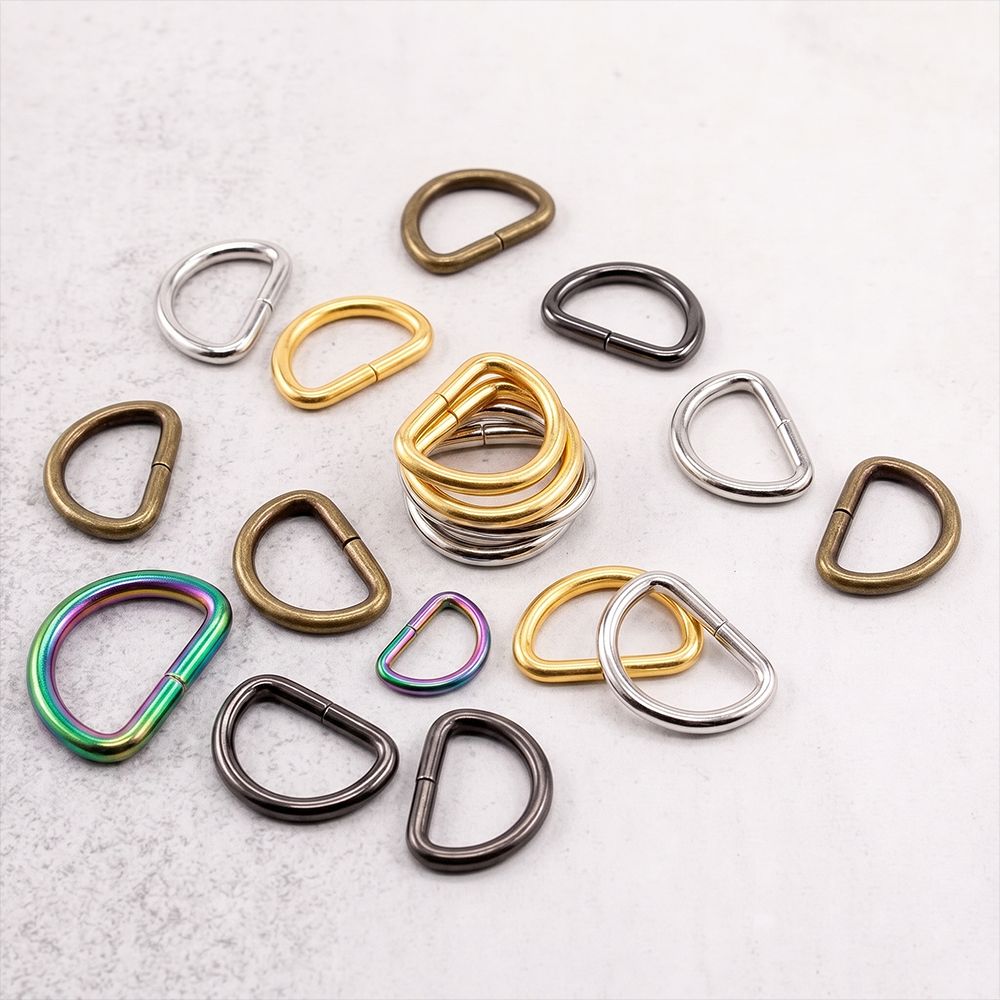
When standard coatings blister, chalk, or peel under relentless UV exposure, salt spray, or chemical washdowns, custom finishes become the quiet workhorse. The difference isn't just a thicker layer—it's matching resin chemistry, cure schedules, and pretreatment steps to the exact failure mode of the environment. A marine railing, a desert solar array, and a food-processing line each demand a different balance of flexibility, adhesion, and cross-link density.
We start with the substrate condition and end-use abuse, then build backward. That might mean a zinc-rich primer under a fluoropolymer topcoat for coastal steel, or a ceramic-reinforced epoxy for constant abrasion. Testing goes beyond a salt-spray cabinet: thermal cycling, impact at low temperature, and real-world sample racks in the target climate. The result is a finish that doesn't just look right on day one—it holds its gloss, color, and edge protection years later, when the cheap alternative has already failed twice.
Where D Rings Fit in Automotive and Outdoor Gear
In truck beds, trailers, and roof racks, D rings usually show up as welded or bolted anchor points along the floor, side rails, or crossbars. They give ratchet straps and cam buckles a fixed loop to bite into, which beats wrapping webbing around sharp metal edges or door hinges. A pair of flush-mount D rings in a pickup bed can hold down toolboxes, firewood, or motorcycles without eating into payload space when not in use.
On the outdoor side, the same shape moves into softer applications. Backpack shoulder straps, hydration packs, and dog harnesses often use small plastic or coated metal D rings for clipping carabiners, keys, or leash ends. Hammock suspensions and tent guyouts rely on larger stainless or aluminum D rings as junction points where cordage changes direction or needs a quick release. In kayak and canoe rigging, D rings glued to the hull or strapped around a roof bar create tie-down points that survive wet launches and highway wind.
The real distinction comes down to load rating and mounting. Forged steel D rings with a stamped working load limit belong under a vehicle as recovery points or cargo anchors, while anodized aluminum or injection-molded rings are fine for light lashing and everyday carry. Check whether the ring is through-bolted, welded to a plate, or just sewn into webbing before trusting it with anything that can shift or swing.
A Closer Look at Our Forging and Coating Process
Instead of pouring metal into a mold and hoping for the best, we start with solid round bars of alloy steel and heat them in an induction furnace until they reach roughly 1,200°C. The glowing billet then moves to a closed-die hammer, where a single high-tonnage blow forces the metal to flow into the die cavity. That pressure aligns the internal grain structure along the part's most stressed contours, closing up micro-porosity and yielding a core strength that machining from plate stock simply cannot match.
Once the forging cools to room temperature, it enters a multi-stage surface preparation line. We remove scale with a fine-grit wheel blast, then rinse and dry the part before applying either an epoxy powder coat or a zinc-rich e-coat, depending on the end-use environment. Coating thickness is held between 60 and 90 microns using automated spray guns and checked with a calibrated gauge on every rack. After a 20-minute cure at 190°C, the finish hardens into a flexible, impact-resistant skin.
The real difference shows up in our cross-section audits. Every shift, a sample part is cut, polished, and inspected under a microscope to confirm grain flow follows the forging die geometry and that the coating has no pinholes or edge pull-back. We also run neutral salt spray tests past 500 hours on coated coupons. That kind of verification lets us back the combined forging and coating process with a service-life estimate rather than a vague promise.
Bulk Ordering Without the Usual Headaches
Ordering in bulk usually means juggling minimums, long email threads for quotes, and surprise fees that show up at checkout. Our process strips all that out. You get a clear per-unit price up front, no hidden pallet charges, and the ability to mix product variants within the same order without penalty.
Once your order is placed, you're not left guessing. A single point of contact tracks your shipment from warehouse to delivery, and if anything changes, you hear about it before it becomes a problem. We also keep a rolling inventory of your past orders, so reordering takes a few clicks instead of another round of forms.
The result is that restocking feels routine instead of risky. You can plan your purchasing around actual demand, not arbitrary order windows, and you'll never have to chase down an invoice or a partial delivery again.
Matching the Right D Ring to Your Strap Width
A D ring that's too narrow will bunch up the strap and cause uneven wear, while one that's too wide leaves the hardware sliding around and looking sloppy. The general rule is to choose a ring whose inner width is about 1/4 inch larger than the strap, but this can shift depending on material thickness. Take a quick measurement before buying, and you'll avoid the hassle of returns or a wonky finished piece.
For thin webbing or ribbon straps under 3/4 inch, stick with a smaller ring that hugs the edge without forcing folds. Mid-width straps from 3/4 to 1.5 inches pair well with standard hardware found at most craft supply shops. If you're working with heavy canvas or leather over 1.5 inches, look for a heavy-duty ring with a wider opening and thicker gauge to handle the extra bulk and stress.
Don't forget to account for how the strap attaches. A folded-over end adds another layer of material, so the ring needs enough clearance for both layers plus any stitching or rivets. If possible, test-fit by sliding the folded strap through the ring before committing. A snug fit is fine for decorative straps, but load-bearing straps need just enough play to move without jamming.
FAQ
We keep zinc-plated steel, 304 and 316 stainless steel, and solid brass in regular production. The choice really depends on where the ring will be used, stainless handles moisture and chemicals better, while zinc-plated steel keeps costs down for indoor applications.
Yes, customization is a core part of what we do. Just send your drawings or a physical sample, and we can adjust the inner width, wire thickness, and surface treatment. We also run a pre-production sample so you can check the fit before committing to a full batch.
You'll find them in pet leashes and collars, horse tack, marine covers, cargo tie-downs, backpack straps, and outdoor furniture. Basically anywhere a product needs a strong, reliable attachment point, our D rings tend to fit the bill.
We pull test a sample from every production run on a tensile machine and check the weld or formed joint under magnification. For corrosion resistance, we run salt spray tests on plated and stainless parts. A batch only ships if it passes both checks.
We offer zinc plating, nickel plating, black oxide, and electrophoretic coating. If you need a specific color match, we can also do a custom powder coat. The finish choice affects both look and rust resistance, so we typically recommend based on the end-use environment.
For stock sizes, we can send a small sample set right away. For custom D rings, we make a pre-production sample after the tooling is approved. That way you know exactly what you're getting before we run the full quantity.
Stock sizes start at 1,000 pieces per order. Custom sizes may have a higher starting point because of tooling and raw material setup, but we are flexible for repeat customers or if you combine multiple sizes in one shipment.
We pack them in reinforced cartons with dividers or individual poly bags per size, then load onto export-grade pallets. For ocean freight, we add moisture barriers inside the cartons. Air freight orders get extra corner protection to prevent crushing.
Conclusion
Anyone who has watched a cheap D ring deform under a sudden load knows the difference between a stamped hook and a properly forged metal loop. Our export range starts with high-strength carbon steel or marine-grade stainless alloy, then moves through closed-die forging to align the grain structure around the highest stress points. That is why our D rings hold steady in off-road recovery straps, overland roof racks, and heavy-duty pet tie-outs, even when the pull angle shifts abruptly. Coatings are not an afterthought either: zinc-nickel, black oxide, and e-coat finishes are applied in-house after shot blasting, so the rings resist salt spray, road de-icing chemicals, and damp saddlebag conditions without flaking or rusting after a single season.
On the ordering side, we treat strap width as a functional spec, not an afterthought. Each D ring is measured across the inner gap to match your webbing without excessive sliding or binding, and we keep common sizes in stock for nylon, polyester, and leather straps from 20 mm to 50 mm. Bulk buyers get straightforward weight-based quotes, clear lead times, and consistent packaging that avoids tangling in transit. Whether you need a few hundred rings for a tactical bag run or a container load for trailer hardware, the same forging dies and coating baths are used from sample to final shipment, so the ring you approve is the ring your customers receive.
Contact Us
Contact Person: Jamie Zeng
Email: [email protected]
Tel/WhatsApp: +86 13728219269
Website: https://www.kmhardware.com