

Direct Expansion Air-Conditioning Unit Supplier Guide for Reliable Commercial Cooling
2026-11-24
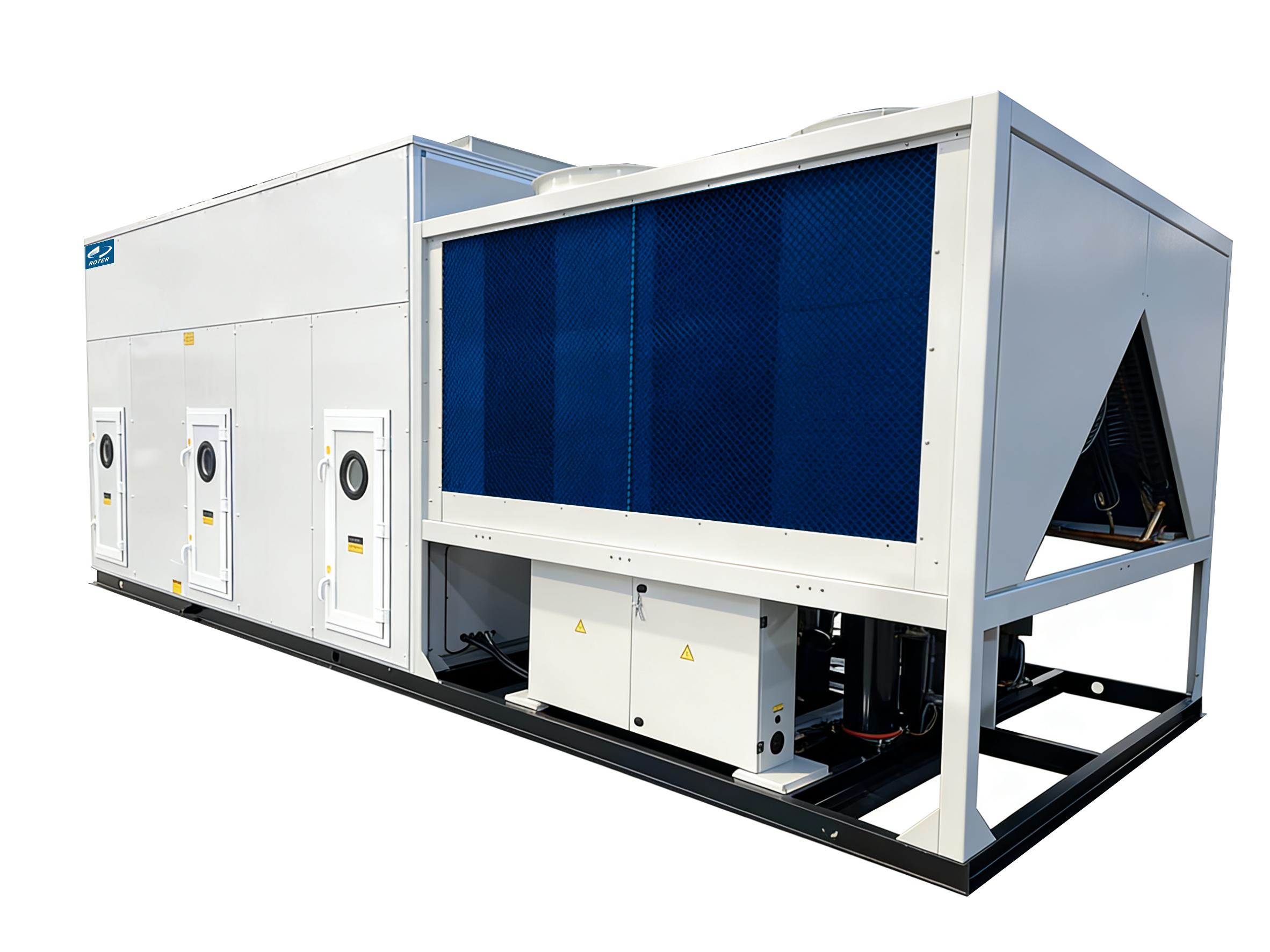
Commercial cooling rarely rewards guesswork. A direct expansion air-conditioning unit that looks efficient on a datasheet can quietly drain operating budgets if it was never matched to the building’s actual load, runtime, and maintenance realities. That is exactly why this guide exists: to help facility managers, contractors, and consultants cut through supplier claims and focus on what keeps DX systems reliable when cooling demand peaks. ROTER brings a field-driven perspective to that selection process, with guidance shaped by real commercial environments rather than brochure conditions. Before you compare capacities or negotiate warranties, it helps to know which supplier habits separate durable performance from repeated callbacks. Here’s where to start.
Why Oversized DX Units Fail Quietly in Mild Weather
Oversized DX units look impressive on paper, but their real-world behavior in mild weather often goes unnoticed because the failure is subtle. When outdoor temperatures hover in the comfortable 60–75°F range, the system rarely needs to push past a fraction of its capacity. That sounds efficient, but it means the compressor runs in short, incomplete cycles. Moisture never gets pulled out of the air properly, and the coil never reaches the conditions it was designed for. Over weeks, you end up with a space that feels clammy or stuffy while the thermostat insists everything is fine.
The quiet part is the slow degradation of internal components. Large coils retain more refrigerant and oil, and in mild weather those fluids don't circulate the way they would under heavier load. Oil can pool in the evaporator, starving the compressor of lubrication on startup. Simultaneously, the oversized unit short-cycles so frequently that contactors and capacitors wear faster than the runtime hours would suggest. Nobody notices because the air still cools on demand—just inefficiently and with a growing wear pattern hidden behind normal diagnostics.
What makes these failures particularly tricky is that standard performance tests are run at design conditions, not at the partial-load conditions where oversized units spend most of their life. A technician checks pressures on a mild day, sees numbers within range, and leaves. Meanwhile the unit keeps skipping its latent heat removal duties, and the homeowner keeps dialing the thermostat lower to feel comfortable. The result is higher energy use, shorter equipment life, and a complaint that doesn't match any obvious fault code.
Compressor Unloading and Its Effect on Daily Energy Draw
Most rotary screw compressors do not actually stop when plant demand falls; they throttle the inlet and continue running in an unloaded state. The motor keeps turning, the airend keeps spinning, and the control system holds discharge pressure within a set band, but no usable compressed air is delivered. Depending on the package design and control settings, unloaded power commonly ranges from 15% to 35% of full-load kW. A 90 kW machine idling unloaded at 25% for two hours per day adds about 45 kWh to the daily meter total. Across a week, that is energy spent simply keeping the unit ready for a load that may never return.
The effect on daily energy draw is easiest to see when unloaded hours are separated from loaded hours. Load/unload cycling, a pressure band that is too wide, undersized receiver volume, or a target pressure set well above actual need can all stretch the unloaded portion of the cycle. Field measurements on lightly loaded shifts often show a compressor spending a third of its running hours unloaded, especially where demand is uneven later in the day. Tightening the band, adding storage, or adjusting the unloading timer often removes a noticeable slice of daily kilowatt-hours without changing production activity.
Unloading itself has a protective role: it avoids repeated motor starts and lets oil temperatures stabilize. The problem is not the mode but the lack of attention to how often and how long it occurs. A machine that sounds busy may be doing very little while the meter still turns. Recording unloaded run-hours against loaded run-hours makes that hidden consumption visible and usually points to a handful of control or storage changes rather than a major equipment replacement.
Humidity Control Without Overcooling the Space
Lowering the thermostat is often the default response to a humid room, but it rarely solves the underlying problem. A conventional air conditioner removes moisture only while the compressor is running, and if the unit is oversized or the cycle is short, the coil may not stay cold enough or long enough to condense much water. The space ends up cool and clammy instead of comfortably dry, because the cooling load has been met while the latent load remains untouched.
A more effective route treats dehumidification as its own task rather than a byproduct of cooling. Dedicated dehumidifiers, reheat coils, and variable-speed equipment can pull moisture from the air without driving the room temperature down. Reheat, for example, warms the supply air slightly after it leaves the cooling coil, so the system can keep running to strip out moisture while the thermostat remains steady. Variable-speed blowers support longer, lower-airflow cycles that favor moisture removal over rapid temperature drops.
The payoff is a steadier indoor feel. The space stays at a comfortable setpoint without the cold, damp sensation that comes from overcooling, and occupants often feel just as comfortable at a slightly higher temperature when the air is drier. By keeping humidity and temperature as separate control targets, the system avoids the cycling between muggy and chilly that makes a room feel unsettled.
Service Access, Charge Tolerance, and Real Maintenance Windows
Getting a technician to your site rarely follows the neat timelines promised in a brochure. Weather, traffic, and last-minute emergency calls can push an arrival window by hours, yet many contracts still pretend otherwise. A more honest approach is to define service access in terms of specific days and hours when your facility is actually open, rather than assuming a generic 9-to-5 availability. This simple shift prevents the frustrating scenario where a crew shows up at a locked gate or a shift change that no one mentioned during the sales call.
Charge tolerance is another detail most vendors would rather not discuss. Compressors, lifts, and conveyor systems draw varying loads depending on ambient temperature and workload, and a unit rated for a theoretical maximum may behave very differently in a cramped mechanical room or a dusty loading dock. Instead of hiding behind fine print, it is more useful to agree upfront on what level of runtime deviation is acceptable before a service visit is triggered. That way, a ten-minute spike during a heat wave does not automatically generate an emergency invoice, but a consistent overload pattern does get flagged early.
Real maintenance windows end up being shorter than the time between arrival and departure. Access permissions, safety briefings, and waiting for a machine to cool down all eat into the clock. A practical schedule accounts for these interruptions by treating the first and last half hour as buffer rather than billable labor. When both sides acknowledge that a four-hour booking may only include two and a half hours of actual wrench time, the expectations become manageable instead of adversarial.
Making the Unit Talk to Existing Building Controls
Older buildings rarely use one clean protocol. A unit that can follow an external setpoint, enable signal, or fan-speed command usually integrates faster than one that insists on its own schedule. Look for dry contacts, 0–10 V inputs, and Modbus RTU or BACnet MS/TP terminals before reaching for extra hardware.
Mapping the points takes more time than wiring them. Identify which registers or terminals correspond to occupied mode, temperature setpoint, current speed, and fault output, then record those addresses in the controller's point list. Where the unit lacks a shared language, a small protocol gateway can translate without forcing a controls upgrade.
After the first successful read and write, test fail-safe behavior. Simulate a lost connection, a stale setpoint, and a restart to confirm the unit holds safe conditions instead of shutting down or drifting. That kind of handshake matters more than having every data point visible on a dashboard.
Prequalifying Suppliers Through Test Reports and Warranty Language
Test reports reveal how a supplier behaves when no one is watching the production line. Instead of treating these documents as routine paperwork, procurement teams should read them for signs of process control, repeatability, and honesty about failures. A well-structured report will include raw data, test conditions, and the equipment used, not just a final pass statement. When a supplier voluntarily discloses out-of-spec results and explains corrective actions, that transparency often matters more than a clean sheet. Asking for the full report rather than a summary also separates suppliers who actually test from those who only generate certificates on request.
Warranty language works as a second layer of prequalification because it shows how much confidence a supplier has in its own product and how it handles problems after shipment. Vague phrases like "reasonable commercial efforts" or "industry-standard remedies" shift risk back to the buyer, while precise terms around replacement timelines, labor coverage, and exclusions indicate a more accountable operation. During qualification, compare warranty clauses across shortlisted suppliers and ask what happens on day one after the standard coverage ends. A supplier that negotiates warranty in good faith, rather than burying limitations in fine print, usually has fewer unresolved quality issues.
The most useful approach is to combine both signals before signing any long-term agreement. Test data shows the supplier's technical capability and willingness to document reality, while warranty language exposes the commercial attitude toward defects and long-term performance. When these two align, the qualification decision becomes easier to defend internally. When they conflict, for example a glowing test report paired with a heavily restricted warranty, the mismatch itself should trigger deeper questioning about the supplier's production stability and after-sales commitment.
FAQ
Look at how they handle compressor staging, hot gas bypass options, and whether they publish part-load performance data. A supplier that can show coil face velocity and sensible heat ratio for your climate will save more headaches than one pushing a standard package unit.
Not really. Commercial spaces often have fluctuating occupancy and fresh air requirements. Units with variable airflow compatibility, staged or inverter-driven compressors, and controls that integrate with building automation tend to hold temperature and humidity better than fixed-speed residential-style equipment.
Ask for references from buildings similar to yours, average lead time for replacement compressors, where spare parts are warehoused, and whether their service network covers your site. Also check if the supplier offers startup commissioning rather than just shipping the unit.
Very. A unit that cools air too quickly without removing enough moisture leaves the space clammy. Look for the sensible heat ratio, reheat options, and whether the controls can slow airflow or adjust compressor capacity to improve dehumidification.
Usually yes. Commercial cooling failures tend to happen during the hottest weeks. A supplier with nearby parts stock and technicians who know the equipment can restore service faster than a cheaper option that requires shipping critical components across the country.
Multiple compressor stages, inverter-driven scroll compressors, and hot gas bypass all help match cooling output to actual load. This reduces short cycling, keeps suction pressure stable, and extends compressor life.
Request full performance data at design conditions, coil face velocity, sound power levels, electrical data, and control diagrams. If a supplier hesitates to provide detailed engineering submittals before purchase, that can be a warning sign.
Look at total cost over a ten-year window including energy use at part load, expected compressor life, replacement part costs, and local service labor rates. A slightly more expensive unit with better part-load efficiency and accessible support often ends up costing less.
Conclusion
Reliable commercial cooling starts with recognizing that a direct expansion unit sized too aggressively rarely delivers its nominal capacity where it matters. In mild weather an oversized DX system short cycles, leaving the coil cold enough for a few minutes but never running long enough to pull moisture from the air. The result is a space that feels clammy even when the thermostat reads satisfied. A better supplier conversation focuses on part-load behavior and compressor unloading instead of peak tonnage. Units with staging or variable capacity keep suction pressure stable across a wider load band, which reduces daily energy draw and avoids the hidden cost of frequent motor starts. Humidity control then becomes a controls problem as much as a refrigeration problem: reheat, reduced airflow, or expanded sensible heat ratio targets can remove moisture without overcooling the space, provided the supplier documents how those sequences behave at 50 to 60 percent load.
Beyond performance, the practical side of ownership deserves equal weight. Look for access panels that do not require removing major refrigerant piping or electrical raceways, and ask how much charge tolerance the circuit can accept before capacity or superheat control degrades. Real maintenance windows are shorter than most specification sheets admit, so filter pulls, coil cleaning, and belt or fan checks need to be possible in under an hour. Integration matters too: if the unit cannot expose setpoints, alarms, and operating modes through BACnet or Modbus without a proprietary gateway, it will remain a black box to the building automation system. Finally, supplier prequalification should hinge on test reports and warranty language. Request part-load performance data and check whether the warranty excludes failures from short cycling, low ambient operation, or control signal mismatch. Suppliers that share that evidence openly tend to be the ones worth keeping on a short list.
Contact Us
Contact Person: Rhea
Email: [email protected]
Tel/WhatsApp: +8618800560886
Website: https://www.rotorairtech.com