

Halogen-Free Flame Retardant Exporter Company Pioneers Eco-Friendly Fire Safety Solutions
2026-11-02
What if the materials that protect us from fire didn't have to harm the planet? That's the question driving X.X.F.R, a halogen-free flame retardant exporter that's turning heads with eco-friendly fire safety solutions. In a market long dominated by chemical compromises, this company is proving that safety and sustainability can go hand in hand. Here's what makes their approach worth a closer look.
Quietly Replacing Halogenated Retardants Across Global Supply Chains
The shift away from brominated and chlorinated flame retardants is rarely announced with press releases or product relaunches. Instead, procurement teams and formulation chemists are quietly swapping them out in the background, driven less by regulatory bans alone and more by a steady drip of customer audits, insurance requirements, and wastewater test results. A resin supplier may change a masterbatch without changing the part number; a cable compounder might adjust the filler package while keeping the datasheet nearly identical. That silence is intentional. Publicly admitting a reformulation can trigger re-qualification costs, shift liability discussions, or alert competitors to a performance gap that now needs closing.
The replacements themselves are not one-for-one drop-ins. Phosphorus-based synergists, metal hydroxides, and expandable graphite all demand different loading levels, processing windows, and often a rethink of mechanical properties like impact strength or elongation. In some wire and cable applications, moving away from a brominated epoxy means accepting a thicker insulation wall or a slightly higher compound density to hit the same UL 94 rating. This is why the quiet replacement often moves through tier-two and tier-three suppliers first—compounders and masterbatch makers who can test niche alternatives without the brand owner having to rewrite a public specification. The result is a fragmented, region-specific patchwork of materials where a laptop housing made in Vietnam may already be halogen-free while the same model assembled in Mexico still uses a legacy brominated blend, simply because the local supply base has not yet absorbed the cost of the transition.
When Fire Safety and Environmental Responsibility Stop Competing
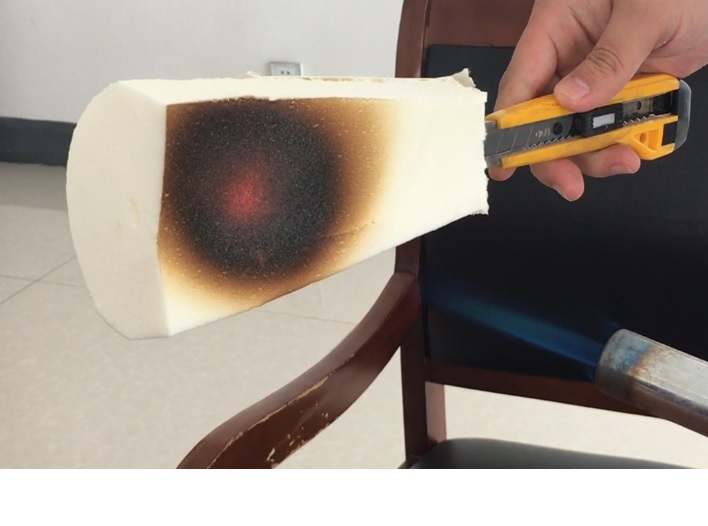
For decades, fire safety and environmental health were framed as a zero-sum trade-off. Adding halogenated flame retardants to furniture foam or electronics made products pass open-flame tests, but those same chemicals leached into homes, waterways, and wildlife, building up over time. The assumption was that a material could either resist ignition or be safe for the planet—never both.
That old conflict is disappearing as material science moves toward inherently fire-resistant options. Wool, modacrylic blends, and mineral-based barrier fabrics meet commercial flammability standards without needing a chemical spray. In insulation, dense-pack cellulose treated with borates delivers strong fire performance while using recycled paper and low embodied energy. Even data centers now use clean-agent fire suppression that leaves no toxic residue, cutting both environmental harm and cleanup costs.
What makes the difference is integrating fire safety at the design stage rather than bolting it on later. Engineers now evaluate thermal behavior, chemical composition, and end-of-life disposal together, selecting materials that resist fire by their structure, not by additive chemistry. This approach satisfies stricter green building codes, reduces long-term liability, and proves that protecting people from fire and protecting ecosystems are no longer competing goals.
The Export Market’s Shift Toward Non-Toxic Flame Retardant Chemistry
The playbook that once dominated export-oriented flame retardant production is being rewritten. Buyers in the EU, North America, and several key Asian markets now routinely request halogen-free documentation before a single container leaves the port. This isn't just about ticking a regulatory box—it reflects a deeper risk calculation. Persistent, bioaccumulative additives carry reputational costs that many downstream brands are no longer willing to absorb.
The alternatives, however, are not simple drop-in replacements. Formulators working with ammonium polyphosphate, aluminum hydroxide, or phosphorus-nitrogen systems quickly learn that loading levels, processing temperatures, and mechanical properties all shift. Some exporters find themselves collaborating more closely with compounders because a grade that passes UL 94 in a lab can still fail in a thin-wall injection molded part. That hands-on reformulation work squeezes near-term margins but builds a defensible position for suppliers who move early.
The speed of transition varies by application. Electronics and upholstered furniture are leading the shift, while construction materials move more slowly due to longer certification cycles. Manufacturers that treat non-toxic flame retardancy as a core engineering challenge—not a marketing afterthought—are beginning to secure long-term contracts from brands with published restricted substance lists. In this segment, the old cost advantage of halogenated chemistry is fast becoming a liability.
A Field Guide to Halogen-Free Retardants That Actually Perform
Plenty of halogen-free retardants claim broad effectiveness, but real performance hinges on matching the chemistry to the polymer and the end-use fire scenario. Metal hydroxides like aluminum trihydrate and magnesium dihydroxide work through endothermic dehydration and are suited for lower-temperature resins such as EVA or polyolefins, though they often demand loadings above 50% by weight. Phosphorus-based systems, including ammonium polyphosphate and organophosphorus compounds, promote char formation and shine in polyamides, polyesters, and some epoxy formulations. Intumescent packages that combine a carbon source, an acid donor, and a blowing agent deliver the best balance in polypropylene and polyethylene when thin-wall ratings matter.
Field validation requires more than a simple limiting oxygen index test. Run UL 94 vertical burn at the exact part thickness you will mold or extrude, and back that up with cone calorimeter data to see peak heat release and total smoke production. Watch for processing windows—some halogen-free additives degrade at temperatures common in engineering thermoplastics, leading to plate-out or screw corrosion. Moisture sensitivity, especially with ammonium polyphosphate, can sabotage long-term electrical properties, so condition molded specimens before retesting.
Synergy is where practical performance improves without overloading the matrix. Small additions of zinc borate or nanoclays can reinforce the char layer from phosphorus systems, letting you cut total additive content by 10–20% while keeping V-0. Particle size distribution and surface treatment of mineral fillers control dispersion and therefore both flame retardancy and impact strength. Treat formulation as an iterative screening process: start with a known base system, adjust ratios, and verify on real parts under your own processing conditions.
Why the Best Fire Protection Now Leaves No Toxic Footprint
For decades, fire suppression meant choosing between saving a space and contaminating it. Halon and older chemical agents worked quickly, but they left behind corrosive residues and gases linked to ozone depletion and long-term health issues. That trade-off is gone. The latest systems use clean agents, water mist, or inert gas blends that break down without persistent byproducts. After discharge, there's no greasy film on equipment, no toxic dust in the air, and no need for a hazmat-style cleanup before people can safely re-enter.
What changed is the chemistry and the delivery method. Clean agents like FK-5-1-12 evaporate within seconds and have a Global Warming Potential of less than 1, meaning they don't linger in the atmosphere. Water mist systems cool and smother flames using droplets fine enough to avoid water damage, while inert gases simply lower oxygen levels below combustion threshold without producing any secondary compounds. These approaches stop a fire at its source without introducing a new set of risks to the room or the planet.
The practical upshot is that fire protection no longer needs to leave a trace. Museums, data centers, hospitals, and even home kitchens can be protected with systems that are effective against flames but nearly invisible afterward. Inspectors and building owners increasingly ask for this because the cost of downtime and cleanup from a discharge—let alone the health liabilities—often exceeds the cost of the fire itself. Leaving no toxic footprint isn't a marketing line; it's the new baseline for responsible design.
From Factory to Port: How Eco-Friendly Retardants Travel the World
At the plant, every batch of eco-friendly flame retardant is packed into reusable intermediate bulk containers or recyclable fibre drums lined with a moisture barrier. The loading crew checks weight distribution and seals each unit with tamper-evident closures before it leaves the warehouse floor. Shrink wrap made from 30% post-consumer recycled resin keeps pallets stable without adding unnecessary plastic waste.
Once on the road or rail, the shipment often moves via routes planned to minimise empty miles and favour lower-emission transport modes. Some forwarders now use electric yard tractors for the first leg from factory gate to inland terminal, while long-haul stretches rely on intermodal rail where available. Each container carries a small digital tag that logs temperature, humidity and vibration, so any rough handling or condensation risk can be spotted before it becomes a product loss.
At the port, the retardants wait in ventilated warehouses away from direct sunlight, and loading teams use reusable dunnage airbags to brace the cargo inside the container. Documentation is checked against the shipment's safety data sheets and environmental compliance codes, then the container is sealed for the ocean leg. The same pallets and drums can be returned or recycled at the destination, closing the loop on a journey that emphasises protection of both the product and the planet.
FAQ
Traditional flame retardants often rely on halogens that release corrosive smoke and toxic byproducts during combustion. Halogen-free alternatives suppress fire without those hazards, reducing risks to people and equipment while still meeting strict safety standards.
Instead of treating sustainability as an afterthought, we design our formulations around low environmental impact from the start. That means carefully sourced raw materials, reduced energy use in production, and products that break down more cleanly after their service life.
We work across electronics, construction, automotive, and textiles. Each sector has different fire safety demands, so we adapt formulations to match specific polymer systems, processing conditions, and regulatory requirements rather than offering one-size-fits-all products.
Yes. A common complaint about early halogen-free options was that they weakened materials or hurt processability. Our R&D focuses on balancing flame retardancy with tensile strength, flexibility, and surface finish, so manufacturers do not have to sacrifice product quality.
Depending on the application, our products are tested against standards such as UL 94, IEC 60695, EN 45545, and RoHS directives. We provide full documentation and support customers through third-party certification processes.
We maintain a dedicated compliance team that tracks regional chemical inventories and fire safety regulations. Shipments are prepared with correct labeling, safety data sheets, and customs documentation to minimize delays and ensure smooth delivery.
We do not just sell additives. Our engineers help with formulation trials, processing adjustments, and troubleshooting. If a customer faces dispersion issues or needs a specific flame rating, we work side by side until the production line runs smoothly.
We use ISO-certified production lines and run in-process checks on particle size, thermal stability, and active content. Retained samples from every batch allow traceability, so customers receive the same performance whether they order from Europe, Asia, or the Americas.
Conclusion
A quiet but decisive change is unfolding inside global manufacturing hubs. A halogen-free flame retardant exporter has moved beyond niche status, steadily displacing brominated and chlorinated additives from plastics, textiles, and electronics. Buyers used to treat fire safety and environmental responsibility as a forced trade-off; this company's portfolio proves the two can reinforce each other. The export market is noticing. Specifications that once defaulted to halogenated chemistry now list phosphorus, nitrogen, and mineral-based systems as preferred alternatives. The shift isn't driven by marketing but by hard data: lower smoke toxicity, no corrosive acid gas, and easier end-of-life handling. The company's field guide strips away inflated claims, showing exactly which retardant families deliver consistent UL 94 V-0 performance, thermal stability, and processing compatibility without resorting to persistent organic pollutants.
What happens after the order is placed matters just as much as lab results. The firm has built a logistics chain that keeps eco-friendly retardants stable from factory to port, whether shipping to Southeast Asia, Europe, or the Americas. Moisture-sensitive phosphorus compounds travel in sealed, desiccant-lined containers; mineral fillers are palletized to prevent settling. Documentation includes full toxicological profiles and REACH/RoHS compliance data, so customs clearance doesn't stall. The result is a supply chain where non-toxic flame protection reaches production lines on schedule, without red tape or hidden environmental costs. Fire safety no longer has to leave a toxic footprint, and the exporters making that promise stick are the ones quietly rewriting procurement standards across continents.
Contact Us
Contact Person: Guohua Wang
Email: [email protected]
Tel/WhatsApp: 8613003442895
Website: https://www.xxflameretard.com