

IMS Core Network Platform: Unlocking Next-Generation Communication Potential
2026-06-11
The way we connect is evolving faster than ever, and at the heart of this transformation lies the IMS Core Network Platform—a technology quietly powering the seamless voice and video experiences we now take for granted. Yet, many still overlook the untapped potential it holds for next-generation services. At IPLOOK, we're not just observing this shift; we're driving it, turning standards-based IMS into a launchpad for innovation. But what exactly makes this platform a game-changer, and how can it reshape the future of communication in ways you might not expect?
Redefining Connectivity: The IMS Core Advantage
Modern communication networks demand more than just reliable voice and data transmission; they require an architecture that can seamlessly integrate an exploding array of services and devices. The IP Multimedia Subsystem (IMS) core delivers exactly this by decoupling services from the underlying access network. Instead of being locked into a single delivery method, operators can offer consistent, high-quality experiences whether a user connects over LTE, Wi-Fi, or fixed broadband. This abstraction layer transforms the network into a programmable, adaptable platform, ready to embrace whatever the next innovation brings without a foundational overhaul.
At the heart of IMS's advantage is its ability to unify disparate communication modes into coherent, session-based interactions. Voice, video, messaging, and data sharing no longer exist in silos; they become components of a single, fluid conversation that can be dynamically adjusted in real time. For businesses, this means richer collaboration tools that go beyond basic calling. For consumers, it translates into spontaneous, multimedia interactions that feel natural rather than constrained by technology. The IMS core handles the heavy lifting of session control, quality assurance, and security, freeing application developers and service providers to focus on creativity and user experience.
Looking ahead, the IMS core isn't just a legacy gateway to 5G—it is the critical enabler of network slicing and ultra-reliable low-latency communications. By virtualizing its functions and distributing intelligence closer to the edge, IMS ensures that advanced use cases like autonomous vehicle coordination, remote surgery, and massive IoT ecosystems can operate with the exacting performance they demand. This evolution proves that the core isn't merely keeping pace; it is actively redefining how connectivity is orchestrated, turning smart ideas into reliable, everyday realities.
Seamless Integration for Tomorrow's Networks
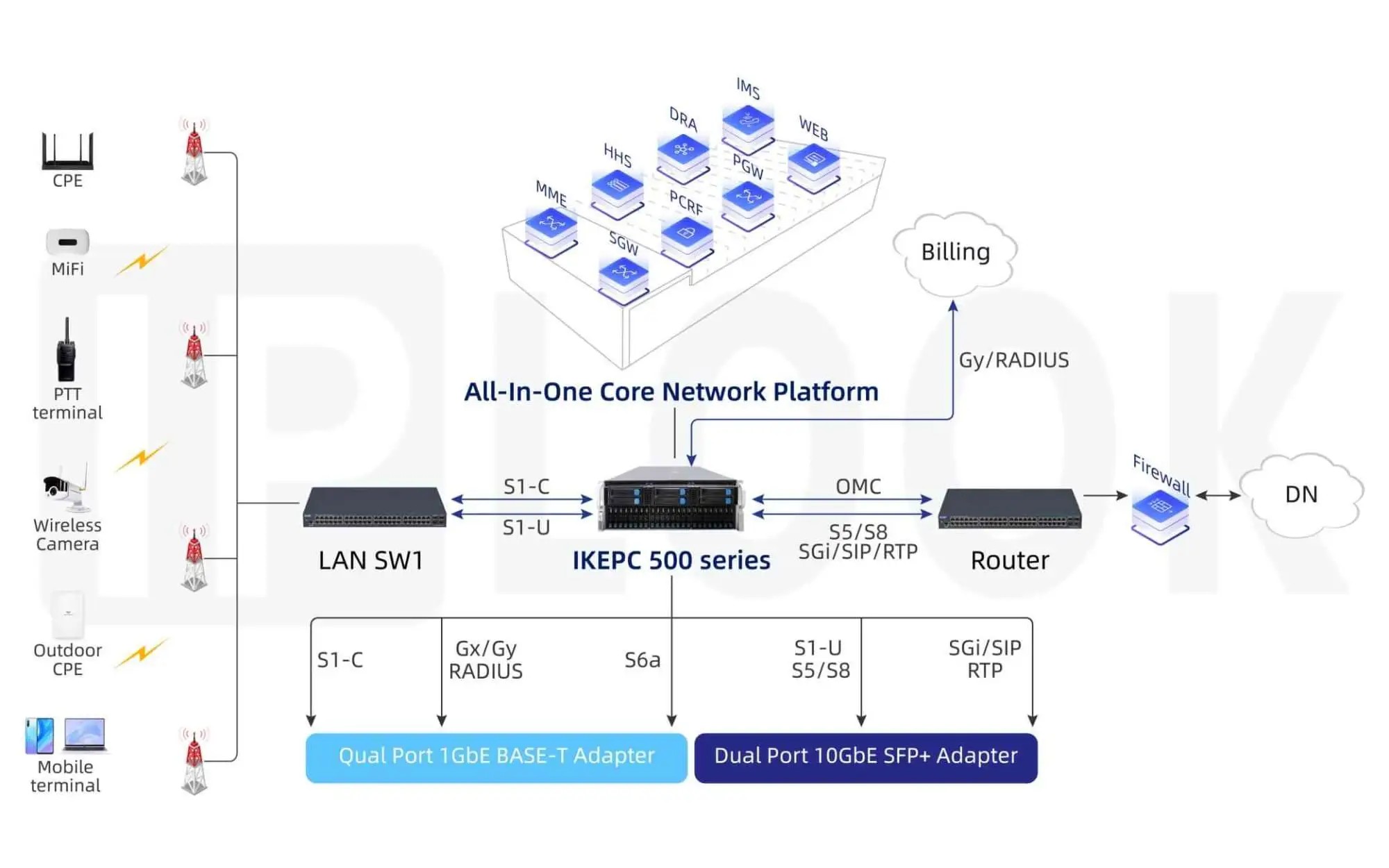
The foundation of modern connectivity hinges on the ability to weave disparate systems into a cohesive fabric without friction. Instead of bolting on new layers that create technical debt, the emphasis is shifting toward architectures that absorb innovation naturally—where yesterday's infrastructure talks fluently with tomorrow's protocols. This isn't about rip-and-replace; it's about evolving the network's conversational capacity so that each new node, whether edge sensor or cloud cluster, slips into the existing dialogue as if it had always belonged.
When integration becomes less of a project and more of a persistent state, the operational burden dissolves. Teams stop spending cycles on translation and custom bridges, redirecting that energy toward crafting experiences and solving actual problems. The magic happens in the quiet moments—updates that deploy without late-night calls, APIs that self-document, and infrastructure that bends around new requirements without snapping the old. That seamlessness changes not just the technology, but the culture around it, making the network feel less like a fragile machine and more like a living, adaptive tissue.
Ultimately, the networks that thrive won't be the ones with the most sophisticated individual parts but those where the whole behaves as a single, intuitive organism. The integration meant for tomorrow doesn't announce itself with fanfare; it shows up in the way a new service becomes instantly reachable, or a security patch propagates without a trace of disruption. It’s the quiet design principle that turns complexity into something that simply works, so people can forget about the plumbing and get back to building what matters.
Driving Innovation in Real-Time Communication
Real-time communication has moved beyond simple voice and video calls, evolving into a backbone for immersive digital experiences. Developers now weave live interactions directly into apps, from collaborative whiteboards to multiplayer gaming, pushing latency boundaries to near imperceptibility. The challenge isn't just faster data transmission but smarter orchestration of media streams, adaptive codecs, and edge computing that collectively shrink the gap between intention and expression.
Breakthroughs in WebRTC and QUIC protocols have democratized low-latency connections, yet the real innovation lies in context-aware communication layers. These systems dynamically adjust to network conditions, device capabilities, and user behavior, seamlessly blending asynchronous and synchronous modes. For instance, a shared virtual workspace might fluidly transition from a threaded chat into a live brainstorming session without jarring context switches, preserving the user's cognitive flow.
Looking ahead, the convergence of AI and real-time communication is redefining what's possible. Intelligent noise suppression, real-time translation, and emotion-aware interfaces are already surfacing, but the next frontier involves predictive communication — systems that anticipate user needs, pre-fetch relevant data, or suggest collaboration patterns before explicit requests. This moves real-time interaction from reactive to intuitive, transforming it into a proactive companion in both professional and personal exchanges.
Scalable Architecture Meets Unmatched Reliability
Building systems that gracefully expand with demand while staying rock-solid under pressure isn’t just a goal—it’s a necessity. Our architecture is designed from the ground up to scale horizontally, distributing workloads across resources so performance never degrades, no matter the spike. At the same time, every component is built with redundancy and failover in mind, ensuring that reliability isn’t an afterthought but woven into the very fabric of the infrastructure.
We’ve moved beyond the idea that scaling means compromising on stability. The platform intelligently anticipates shifts, reallocating resources before bottlenecks even form. This proactive approach means that your applications stay responsive, data remains consistent, and downtime becomes a distant memory. It’s engineered for the unpredictable, delivering a steady hand when circumstances get chaotic.
What sets this apart is the seamless marriage of growth and dependability. You don’t have to choose between pushing boundaries and sleeping soundly. Every layer—from the database shards to the edge nodes—is calibrated to handle more while breaking less. That’s the promise: a system that grows with your ambition, without ever making you question its trustworthiness.
Empowering Next-Gen Services with IMS Core
The IMS core acts as the hidden engine behind fluid connectivity in today’s ultra-responsive applications. It bridges legacy telecom frameworks with agile, software-driven architectures, allowing carriers to orchestrate real-time voice, video, and messaging across any access network. By abstracting service logic from underlying transport, operators rapidly prototype and launch context-aware features without overhauling the foundation. This means a developer can embed rich communication directly into an app—turning a simple retail interface into a live consultation hub—without worrying about the plumbing underneath.
Beyond basic interoperability, the IMS core unleashes session-level intelligence that adapts on the fly. Its standardized policy and charging rules enable dynamic quality-of-service tweaks, so a remote surgery platform gets guaranteed low latency while a file-sharing app shifts to best-effort delivery during peak hours. Network slicing, coupled with IMS-based identity management, carves out dedicated virtual spaces for industries from autonomous fleets to massive IoT sensor grids, each with tailored security and bandwidth profiles. This granular control turns a one-size-fits-all network into a precision tool, monetizing every millisecond and megabit.
Looking ahead, the fusion of IMS with edge computing and AI-driven orchestration promises services that anticipate need rather than simply react. Imagine a manufacturing floor where predictive maintenance triggers an instant, high-definition video consult with an off-site engineer, session parameters negotiated in milliseconds without human intervention. As privacy regulations tighten, the built-in authentication and lawful intercept framework provides a ready-made trust layer, sparing enterprises from bolting on compliance afterthoughts. In essence, the IMS core isn’t just keeping pace with next-gen demands—it’s actively shaping how services get imagined, built, and scaled.
Beyond Boundaries: IMS Core in Action
In today's hyperconnected ecosystem, IMS core shatters the old silos of voice, video, and data. It weaves these services into a single, fluid fabric that adapts to any device or network. Whether a call starts on a 5G smartphone and seamlessly hands over to a Wi-Fi tablet, or a video conference pulls in an IoT camera feed, the IMS core acts as the invisible orchestrator. It translates diverse protocols, manages quality on the fly, and ensures that the experience feels continuous—even when the underlying pipes change mid-session. This isn't just convergence; it's liberation from the technical constraints that once defined how and where we could communicate.
The real magic emerges when operators push IMS beyond its traditional domain. By exposing its capabilities through open APIs, the core becomes a platform for innovation. Think of a retail app that launches a high-definition video call with a support agent directly from a chat session, with the agent's screen instantly populating the user's order history—all mediated by the IMS core without dropping a beat. Or emergency services that automatically stitch together voice, real-time video, and precise indoor locating, giving first responders a unified picture. These scenarios demand more than just interoperability; they need an intelligent layer that can broker sessions, enforce policies, and scale on demand. IMS core delivers that, turning rigid telecom infrastructure into a launchpad for bespoke, real-time experiences.
Looking ahead, the boundaries that IMS core breaks are not just technical but geographical and conceptual. With network slicing and edge computing, a single IMS instance can serve multiple virtual networks, each tailored to a specific vertical—from autonomous vehicles exchanging ultra-reliable telemetry to massive IoT sensor grids reporting sporadic updates. The core's architecture gracefully absorbs these extremes because it decouples control from media, anchoring services at the optimal location. This means a multinational manufacturer can have its own private slice of IMS, ensuring factory floor communications never traverse the public internet, while consumers on the same physical infrastructure enjoy their cat videos undisturbed. IMS core in action is the quiet engine turning the promise of pervasive, context-aware connectivity into an everyday reality—no smoke, no mirrors, just a profound evolution that most users will never even notice.
FAQ
An IMS core network platform is the architectural backbone that enables multimedia communication services over IP networks. It decouples services from the underlying access technology, so voice, video, and messaging work consistently whether the user is on 4G, 5G, or Wi-Fi. Its central role comes from standardizing control and session management, which lets operators roll out new services quickly without rebuilding the entire network each time.
Legacy circuit-switched setups are rigid and struggle with anything beyond basic voice. An IMS core, by contrast, treats all communication as IP-based sessions. This makes it simple to blend real-time voice with interactive video, group chat, or augmented reality overlays in a single call—things that would be clunky or impossible on old infrastructure. It opens the door to rich, context-aware experiences that users increasingly expect.
A future-ready IMS platform is built with cloud-native principles—think containerization, microservices, and automated orchestration. It supports network slicing so operators can dedicate resources to specific use cases, and it’s designed to interwork seamlessly with WebRTC and IoT frameworks. Deep analytics and AI‑driven policy control also let the network adapt on the fly, rather than being statically configured.
Businesses can embed rich communication directly into their apps and workflows via APIs that the IMS layer exposes. For instance, a customer support interaction could start as a chat, upgrade to a video session, and include screen sharing without ever dropping context. This fusion of real‑time media with business logic helps companies move beyond plain phone calls to more personal, efficient interactions.
The secret is centralized session control and a service-aware architecture. When a user moves from mobile data to Wi-Fi during a video call, the IMS core hands over the session invisibly by re-routing the media path. Device capabilities are negotiated at the start of each session so that a smart TV receives a high-def stream while a basic tablet gets an optimized version—all from the same core without service interruption.
In 5G standalone networks, voice services are delivered through Voice over New Radio (VoNR)—which is essentially an IMS-powered solution. The IMS core manages call setup, quality of service, and emergency handling across the 5G radio. Without a robust IMS foundation, VoNR cannot provide the low-latency, high-definition voice that 5G promises, nor can advanced features like video calling with 5G‑grade performance be realized.
One persistent myth is that migrating to an IMS core means a multi-year, rip‑and‑replace project that disrupts everything. In practice, modern IMS solutions can coexist with legacy gear, and the transition can be done in a phased manner—starting with a single service or user group. Another misconception is that IMS is only for huge telcos; actually, cloud‑delivered IMS makes it accessible to smaller operators and even private networks.
When the IMS core is optimized—through automation, self-healing mechanisms, and centralized monitoring—operators see significant reductions in manual troubleshooting and outage resolution times. For example, automated scaling of call session control functions during peak hours prevents overload without human intervention. This translates to fewer service tickets, lower operational costs, and the ability to reallocate engineering talent toward innovation rather than maintenance.
Conclusion
The IMS Core Network Platform is fundamentally reshaping how connectivity is perceived and delivered in the modern telecom landscape. By providing a unified, all-IP framework, it eliminates the fragmentation that once plagued legacy systems, allowing voice, video, and data services to converge with remarkable fluidity. This redefined connectivity is not just about better call quality—it’s about creating an ecosystem where real-time interactions feel intuitive and unbounded. The platform’s inherent design enables operators to integrate seamlessly with both existing infrastructure and emerging technologies like 5G and edge computing, ensuring that the transition to tomorrow’s networks is evolutionary rather than disruptive. Innovation becomes a natural byproduct of such an environment: developers can craft immersive communication experiences, from ultra-HD video conferencing to augmented reality collaboration, without wrestling with protocol barriers. The IMS Core thus serves as a catalyst, turning rigid communication silos into a dynamic playground for next-generation services.
Underpinning this transformation is a scalable architecture that pairs elastic resource allocation with carrier-grade reliability—a combination that networks handling mission-critical traffic simply cannot compromise on. As service demands fluctuate, the platform adapts without missing a beat, maintaining session continuity and security even under extreme loads. This engineered resilience empowers service providers to confidently roll out cutting-edge offerings like virtual reality telepresence, massive IoT event streaming, and interactive holography, knowing the backbone can handle the strain. Beyond mere technical metrics, the IMS Core in action transcends traditional boundaries: it bridges disparate devices, networks, and user contexts, enabling unified communication that follows the user seamlessly from a smart home to a high-speed vehicle to a remote industrial site. In essence, the IMS Core Network Platform doesn’t just support the next generation of communication—it actively unlocks potential that was previously theoretical, turning ambitious concepts into everyday reality for businesses and consumers alike.
Contact Us
Contact Person: Shimmy
Email: [email protected]
Tel/WhatsApp: 85253392231
Website: https://www.iplook.com