
LLLT for Hair Loss: Which One Is the Most Effective?
2026-07-25
Hair loss can be a frustrating journey, but low-level laser therapy (LLLT) is emerging as a promising solution. With so many devices on the market, finding the one that truly works can feel overwhelming. At GUANG TAI, we’ve seen firsthand how the right technology makes all the difference. So which LLLT method really delivers results? Let’s break down the science and cut through the hype.
Beyond the Cap: Unpacking the Real Differences Among LLLT Devices
LLLT devices might look similar at first glance, especially those helmet or cap designs flooding the market, but the real distinctions lie inside. The number of diodes, their placement, and the specific wavelengths used directly shape how effectively light reaches your scalp. A cap with 300 diodes spaced evenly across the dome will deliver a very different treatment than a rigid helmet with 100 diodes clustered in strategic zones. Some units use a single wavelength like 650nm, while others blend 650nm and 810nm to target both surface and deeper tissue layers. These engineering choices aren't just technical trivia—they determine whether you get uniform coverage, sufficient energy density, and the right penetration depth for your particular hair loss pattern.
Power output and pulsing patterns are where many brands quietly diverge. While one device might run continuous wave at 3mW per diode, another pulses at 25mW in a specific frequency meant to synchronize with cellular rhythms. This isn't a marketing gimmick—pulsed light can reduce heat buildup while still delivering therapeutic doses. The trade-off is that pulsed devices often require longer session times to match the total energy output of their continuous counterparts. Then there's the matter of batteries versus corded operation, which affects both convenience and consistent power delivery. A device that slowly dims as its battery drains may give you an uneven dose across sessions unless it has tight voltage regulation.
The physical fit and materials also matter more than spec sheets suggest. A flexible silicone cap filled with diodes can contour to your head, minimizing air gaps that scatter or absorb light. Rigid helmets, however, often maintain a fixed distance from the scalp, which can be advantageous if the optics are precisely engineered but problematic if they create hot spots or dead zones. Even the inner lining fabric plays a role—some materials reflect light back toward the scalp while wicking sweat, a small touch that can improve comfort and efficacy during months of regular use. When you strip away the branding and look at these fundamentals, it becomes clear why user experiences vary so widely with devices that seem identical on a surface level.
Wavelength Wars: Red vs. Near-Infrared Light for Follicle Revival
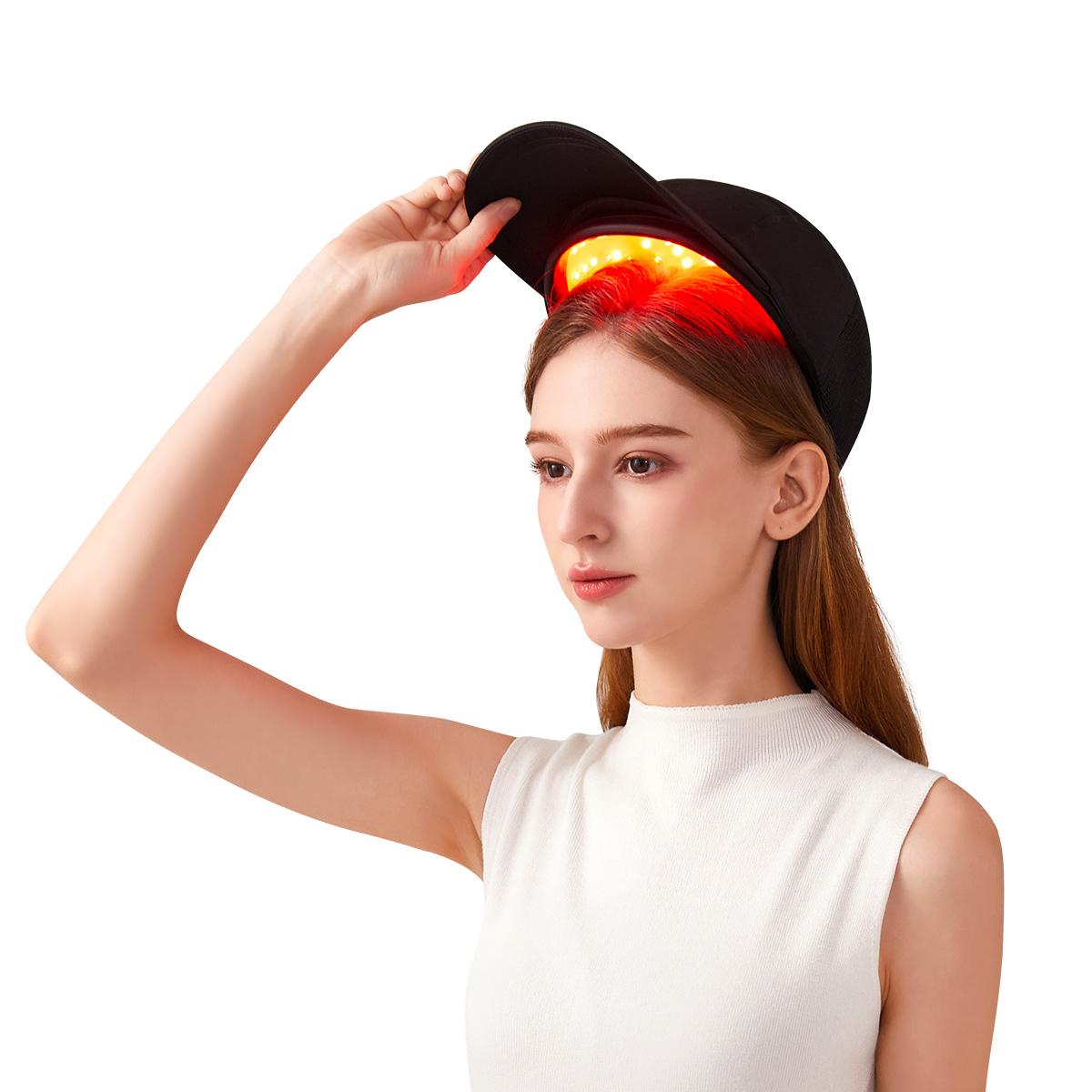
When it comes to waking up dormant follicles, not all light is created equal. Red light, typically hovering around 630–660 nm, barely scratches the surface—it gets absorbed in the upper layers of the skin, making it great for calming inflammation and boosting superficial circulation. But hair roots live deeper, tucked away in the dermis where a superficial glow won't reach. That's where near-infrared steps in: wavelengths from 800–850 nm dive past the epidermis, delivering energy right to the cellular engines of the follicle. It's like the difference between warming your hands by a fire and standing directly in the sun.
The real magic happens at the mitochondrial level. Cytochrome c oxidase, the photoreceptor that kickstarts ATP production, absorbs red and near-infrared light differently. Red light excites it enough to improve cell function, but near-infrared penetrates deeper and triggers a more sustained metabolic boost. For follicles stuck in the telogen phase, this can mean the difference between a gentle nudge and a full-on wake-up call. Studies have shown that while both types can increase hair count and thickness, near-infrared often yields quicker, denser results simply because it reaches the target without losing energy along the way.
But don't write off red light just yet. Combining the two often works better than either alone. Red light preps the scalp environment—reducing oxidative stress and improving microcirculation—while near-infrared does the heavy lifting deeper down. Think of it as a tag team: one sets the stage, the other steals the show. The real question isn't which wavelength wins, but how to use them together in a way that mimics the body's natural repair rhythms, without overwhelming the tissue. Because at the end of the day, hair growth isn't a race; it's a carefully orchestrated biological concert that plays out in millimeters per month.
Dose Matters: How Much Light Do Your Follicles Actually Need?
Finding the sweet spot for light exposure is trickier than most assume. Too little, and you might as well be shining a flashlight through a wool hat. Too much, and you risk overheating the scalp or triggering a stress response that stalls progress. The goal is to deliver just enough energy to wake up dormant follicles without crossing into counterproductive territory.
The term “dose” isn't about time alone—it's a combination of irradiance, wavelength, and session duration. Even a powerful device used too briefly may fall short, while a weaker one used for longer can sometimes deliver comparable results. Understanding this interplay helps you avoid the common trap of assuming more intensity always translates to faster growth.
Consistency often matters more than sheer power. Short, frequent sessions tend to outperform sporadic marathon treatments because cellular repair and energy absorption follow a rhythm. Listening to your scalp's feedback—slight warmth without discomfort—guides you toward a routine that respects your follicles' natural capacity.
Evidence Check: Which Devices Have the Science to Back Their Claims?
Many wellness gadgets promise transformative results, but without rigorous research, these assertions often amount to little more than clever marketing. The initial step in separating fact from fiction is scrutinizing whether the technology has been validated in peer-reviewed studies rather than relying solely on internal data or anecdotal testimonials. Devices that modulate neural activity, track metabolic markers, or employ photobiomodulation should point to concrete, reproducible outcomes measured against placebo controls. For example, some sleep headbands have demonstrated improved sleep onset latency in randomized trials, whereas certain vagus nerve stimulators still lack consistent evidence for stress reduction outside of laboratory settings.
A deeper look reveals that the credibility of these products hinges on the specificity of their measurement and intervention mechanisms. Wearables that claim to gauge blood pressure or hydration levels must use clinically accepted gold standards for comparison to be considered reliable; otherwise, the readings may simply reflect algorithmic guesswork. Similarly, recovery devices employing electrical muscle stimulation or compression therapy need to show not just acute physiological changes but meaningful improvements in performance or healing over time. The scientific bar should be high: double-blind, sham-controlled experiments that track clearly defined endpoints, not just subjective user ratings or short-term biomarker fluctuations that quickly revert to baseline.
Regulatory clearance by bodies like the FDA or CE marking is sometimes mistaken for scientific endorsement, but these often indicate safety and basic performance rather than proven efficacy for every advertised benefit. A medical-grade designation does not automatically mean the device outperforms a cheaper generic alternative. Consumers and practitioners should demand transparency about the exact parameters tested, the study populations involved, and whether the findings been independently replicated. Ultimately, the devices worth adopting are those that welcome scrutiny and continually refine their approach based on the evolving evidence, rather than resting on a single favorable publication or a glossy spec sheet.
User Reality: Why Consistency and Comfort Could Make or Break Your Results
Most people chase dramatic overnight transformations, convinced that a single intense push will flip their results. The real engine of progress, though, is the boring stuff—showing up on days when motivation is nowhere to be found, doing the work without fanfare. Consistency compounds in ways that sporadic effort never can, yet it’s often dismissed because it lacks the thrill of a quick fix.
Then there’s the double-edged sword of comfort. Staying within familiar routines can feel safe, but it’s also where growth stalls. When your environment, tools, or habits never challenge you, it’s easy to mistake busyness for progress. The friction of discomfort isn’t a sign to retreat; it’s the signal that adaptation is happening.
What’s Next: Emerging Innovations That Could Change the Game
The horizon is brimming with ideas that could rewrite entire industries. Imagine bioengineered materials that self-heal like living tissue, slashing waste and extending product lifespans overnight. Meanwhile, room-temperature superconductors are edging closer to reality, promising lossless power grids and levitating transport that feels snatched from science fiction. These aren't distant fantasies—lab breakthroughs are accelerating, and the first commercial prototypes might surface sooner than skeptics expect.
On the digital frontier, the fusion of AI with quantum computing is unlocking problem-solving at scales previously unimaginable. Drug discovery could shrink from years to weeks, while climate models gain the precision needed to pinpoint local impacts. Elsewhere, brain-computer interfaces are moving past medical niches, with non-invasive devices learning to interpret thoughts for everyday tasks. It's a quiet revolution in human-machine collaboration that could redefine accessibility and communication long before any full-blown cyborg era.
Perhaps the wildest transformation lurks in synthetic biology, where custom-designed organisms might manufacture fuels, recycle plastics, or even grow building materials. Early-stage projects are already programming yeast to produce spider silk—for ultra-strong, biodegradable fabrics. Pair that with decentralized fabrication networks, and you have the seeds of a manufacturing shift that sidelines global supply chains in favor of local, biodigital production. The common thread? Each of these innovations challenges our assumptions about what's possible, hinting at a near future where the line between the organic and the engineered blurs entirely.
FAQ
Low-level laser therapy uses red or near-infrared light to stimulate hair follicles. The light energy is absorbed by cells, boosting ATP production and improving blood flow to the scalp. This wakes up dormant follicles and can thicken existing hairs over time.
Not really. Effectiveness depends on your specific hair loss pattern and lifestyle. Laser caps are great for diffuse thinning because they cover the whole scalp, while combs let you target smaller areas more precisely. Some people prefer helmets for higher power output, but consistency matters more than the device style.
Think about convenience first. If you want a hands-free routine while watching TV, a cap or helmet fits right in. Combs require more effort but can feel more direct on stubborn spots. Check the number of lasers and their wavelength—650 nm is common, but 670 nm might penetrate slightly better. More lasers don’t always mean faster results; the key is regular use.
In-clinic sessions use much stronger devices, so you might see quicker initial progress. At-home devices are lower power but designed for frequency—using them every other day can catch up over 6-12 months. Many people combine both for a boost, but home therapy alone works fine if you're patient.
Look past the marketing hype. The real differences come down to coverage (how well the light reaches all thinning areas), build quality that ensures consistent diode output, and actual user adherence. A device that's comfortable on your head is one you'll actually use three times a week. Clinical backing with real human studies also adds credibility.
Pay attention to the fit and weight—a heavy cap gets annoying fast. Adjustable sizing and padding matter more than you'd think. Also check if the laser diodes are medical-grade and evenly spaced. Some models now include a battery pack, which beats being tethered to a power bank. Timer shut-off is a small feature that makes sessions brainless.
Most people see less shedding around the 3-4 month mark, but visible regrowth often takes 6 months or more. Photos are your friend because daily changes are subtle. If nothing happens after 8-9 months of faithful use, the device might not be the right fit for your type of loss, or your follicles could be past the responsive stage.
Conclusion
When weighing up which LLLT device actually delivers on its promises, it's clear that real effectiveness isn't pinned to a single feature. The cap-versus-helmet debate often misses the point: what truly matters is how well the light penetrates your scalp. Red light around 650 nm targets the surface layers, energizing follicular cells, while near-infrared light in the 800–900 nm range reaches deeper, where dormant follicles may lurk. Several clinical studies hint that a blend of both wavelengths can be more powerful than either alone, yet many devices only offer one. Even if the spectrum is right, the dose must be strong enough—measured in J/cm²—and delivered consistently, which isn't always guaranteed across LED arrays and battery-driven gear. Parsing the published evidence is a sobering exercise; only a small number of brands have bothered to conduct rigorous, controlled trials, and user reviews often fill the gaps that science hasn't yet closed.
A perfectly engineered device still fails if it's a chore to use. Comfort and convenience aren't just nice-to-haves; they're the glue that keeps you treating your scalp day after day. Heavy, awkward helmets or sessions that drag on too long quietly sabotage results, while lightweight, wireless designs with shorter treatment times quietly build compliance. That's why the market is shifting toward personalized approaches: think sensors that read your scalp in real time and adjust light output, or apps that track progress and tweak protocols. What's becoming clear is that the most effective LLLT isn't some universal gold standard—it's the device that masters the basics (clinically backed wavelengths and doses) and then disappears into your routine so effortlessly that you actually use it. The future isn't about one winner; it's about the device that fits seamlessly into your life.
Contact Us
Contact Person: Leon Yi
Email: [email protected]
Tel/WhatsApp: +86 17363316873
Website: https://zzgt.en.alibaba.com/