

Medium Voltage Switchgear Exporter: Essential Guide to Reliable Power Solutions
2026-08-24
Medium voltage switchgear is the silent backbone of industrial power—until it isn't. When sourcing from an exporter, every detail matters: arc resistance, insulation life, and the logistics behind getting equipment to your site intact. This guide strips away the marketing fluff and focuses on what delivers dependable performance. For teams that can't afford to gamble, Deepwill offers a track record worth examining before you sign anything.
Medium Voltage Switchgear Fundamentals: What Buyers Often Overlook
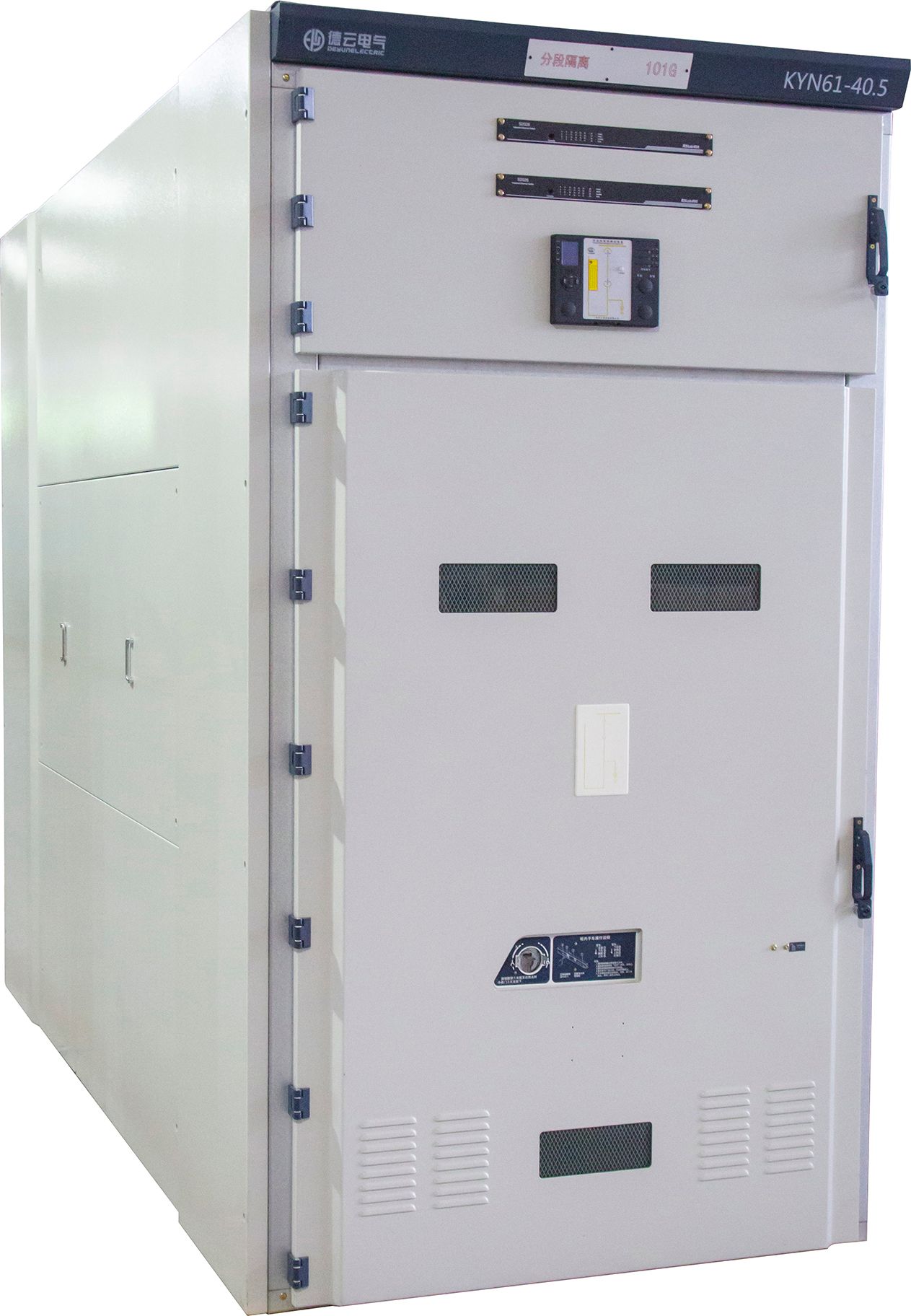
Most buyers zero in on rated voltage and continuous current, then stop. That misses the ratings that actually determine whether the gear survives a fault. Ask for the short-time withstand current and its duration—25 kA for three seconds is common, but some cheap panels only manage one second. In a confined electrical room, the internal arc classification matters just as much. A panel that vents hot gases toward the operator aisle can turn a minor fault into a serious injury, so check the IAC rating and the pressure relief path, not just the label on the nameplate.
Access for maintenance is another blind spot. Draw-out circuit breakers need clear space in front, and some compact designs shift cable termination to the rear or side, which can double outage time in a retrofit. Also look at the interlocks: the earthing switch should be mechanically interlocked with the breaker, and a voltage detection system should be built in if your safety rules require proving dead before earthing. Auxiliary contacts and communication wiring are often specified too late; including spare contacts and a protocol module from day one avoids costly field modifications.
Environmental derating rarely shows up in a datasheet but hits reliability hard. Above 1,000 meters altitude, air density drops and both cooling and insulation suffer, so the switchgear must be derated. Humidity and salt spray attack busbar insulation, and not all heat-shrink or epoxy coatings perform the same over 20 years. If you want to avoid partial discharge failures, require a routine partial discharge test on every panel before shipment, not just a one-minute power-frequency withstand test.
Spotting a Capable Exporter: Beyond the Brochure and Price List
A glossy brochure and a competitive price list rarely tell you how an exporter handles a delayed shipment, a last-minute design tweak, or a customs hold. The real test is in the details they don't advertise: how quickly they respond to a technical query, whether they offer transparent production timelines, and how they react when something goes wrong. Ask for references from clients in your own market, and listen for patterns in what those buyers didn't expect to be challenging.
Walk through their communication habits during the negotiation phase. Do they ask about your end-user's installation process, or only about order volume? Do they suggest alternative materials when one becomes scarce, or just push the same spec sheet? A capable exporter uses questions to uncover your real constraints, not to close a deal faster. Their factory audit reports, if shared willingly, will also show whether they track defect rates and corrective actions over time — rather than simply quoting an ISO certificate number.
Finally, place a small trial order before committing to a container load. Watch how they handle labelling, packaging reinforcement, and documentation accuracy under real conditions. A partner who sweats the small stuff on a modest order is far more likely to protect your margins when volumes rise and timelines tighten.
Compliance That Actually Matters: Certifications, Testing, and Traceability
Real compliance isn't a wall of logos on a landing page. It's a chain of evidence that starts long before a product ships and continues well after. For materials that touch food, skin, or sensitive environments, the difference between "marketing-safe" and genuinely safe comes down to three things: certifications that hold up under scrutiny, testing that reflects real-world use, and traceability that doesn't fall apart the moment someone asks for a batch record.
Certifications only mean something if the issuing body is accredited, the scope is specific, and the audit isn't a one-time checkbox. A generic "ISO certified" claim tells you almost nothing—ISO 9001 for quality management is not the same as ISO 10993 for biocompatibility or FDA 21 CFR compliance for food contact. We push suppliers to name the exact standard, the certificate number, and the date of last audit. If they can't produce that in under an hour, the certification is decoration, not assurance.
Testing is where most claims quietly die. A material might pass a migration test at 40°C for 24 hours but fail at 70°C for 2 hours—or pass in distilled water but leach additives in acidic or fatty simulants. We require test reports that match the intended use, not the easiest conditions. And traceability ties it together: every batch needs a unique identifier linked to raw material lots, production dates, and test results. Without that thread, a recall becomes a guessing game, and "compliant" becomes a word that only works until something goes wrong.
Custom Switchgear for Harsh Environments and Non-Standard Grids
Off-grid mining camps, coastal water treatment plants, and remote microgrids rarely enjoy the tidy voltage levels and clean waveforms that standard switchgear assumes. Equipment built for the lab or the suburban substation often fails within months when exposed to salt spray, extreme temperature swings, or grids that sag to 85 volts and spike to 290 without warning. Custom switchgear for these settings starts by acknowledging that the grid itself is an unpredictable variable, not a constant to be protected against.
The real difference shows up in component selection and enclosure design. Instead of off-the-shelf circuit breakers rated for a narrow band, these panels use wide-range trip units, harmonic-tolerant busbars, and corrosion-resistant coatings tested to ISO 12944 C5-M. Ventilation is filtered and often positive-pressured to keep out conductive dust, while internal heating elements prevent condensation in high-humidity coastal zones. The result is a panel that keeps operating when the grid drifts, the air is thick with salt, and the nearest spare part is three weeks away by boat.
What often surprises first-time buyers is how much field data shapes the final design. A brief site survey—logging voltage fluctuations over a week, measuring ambient temperature peaks, and checking for corrosive gases—allows the engineering team to adjust trip curves, increase creepage distances, and choose contact materials that won't weld under frequent inrush. That upfront effort eliminates the cycle of retrofitting standard gear to survive conditions it was never meant to see.
Getting It There Safely: Packaging, Shipping, and Site Delivery Insights
When it comes to moving sensitive equipment across long distances, the real work starts long before the truck leaves the dock. We've learned that padding choices make or break a delivery—custom-cut foam inserts beat loose fill every time, and double-wall boxes handle vibration far better than standard cardboard. The trick is matching the package to the actual journey, not just the item's weight.
On the road, straps and load bars are only half the story. Drivers who know the route's trouble spots—rail crossings, construction zones, sharp highway curves—can adjust speed and lane position to reduce sudden jolts. Adding tilt indicators and shock sensors to high-value crates gives you an honest record of what happened after the warehouse door closed.
Site delivery is where good packaging finally proves itself. Before unwrapping, check the pallet for shifted straps, crushed corners, or moisture stains. Unbox in stages and photograph any damage immediately; that paperwork is what gets a replacement approved without weeks of back-and-forth. A quick call to the project manager about gate access and lifting equipment also prevents last-minute handling errors.
After Installation: Building a Maintenance Routine That Prevents Failures
A good maintenance routine starts the moment the final bolt is tightened. Rather than waiting for something to rattle or leak, create a simple log that records operating hours, fluid levels, and any small irregularities you notice during daily use. Those early notes often reveal patterns long before a component actually fails.
Set aside a short weekly window for visual checks, and a longer monthly session for deeper items like filter changes, belt tension, and torque verification. The exact intervals will depend on workload and environment, so treat the manufacturer's schedule as a baseline, not a rigid script. Dust, humidity, and frequent starts and stops all shorten the safe window between checks.
Finally, pair each routine task with a clear pass/fail threshold. If a reading is near the edge, schedule a follow-up within days instead of pushing it to the next cycle. This habit keeps small adjustments from becoming emergency repairs and gives you a record you can rely on when conditions change or new operators take over.
FAQ
Medium voltage usually covers 1 kV up to about 38 kV, with 12 kV, 24 kV, and 36 kV being common ratings. This range sits between low voltage distribution and high voltage transmission, balancing insulation costs with short-circuit capability. For export, the exact voltage and frequency need to match the destination grid, along with local practices for earthing and protection.
Ask for a shipment list from the past five years, plus third-party type test reports from labs like KEMA or CESI. Better yet, request contact details for two or three overseas end users and ask them directly about spare parts response, failure handling, and how the equipment behaved during commissioning.
IEC 62271-200 is the core standard for metal-enclosed switchgear, while IEC 62271-100 covers circuit breakers. ANSI/IEEE C37 applies to many North American projects, and GB 3906 is common in China. Also check the internal arc classification, such as IAC AFLR, and whether the insulation medium is SF6, vacuum, or an alternative gas.
Altitude above 1000 metres usually requires derating, and coastal or humid regions demand anti-corrosion treatment on enclosures and busbars. Low temperatures can affect lubricants and electronic relays. A good exporter will provide environmental correction calculations and options like space heaters, tropicalised coatings, or cold-weather operating mechanisms.
Look at the mechanical endurance class, such as M2 for 10,000 operations, and the electrical endurance of the vacuum interrupters. Request temperature rise test data and internal arc test certificates. Also check whether the design uses proven operating mechanisms and whether the manufacturer offers long-term spare parts availability or remote monitoring interfaces.
You need a single line diagram, rated voltage, current, and short-circuit level, plus environmental conditions, cable entry direction, protection and control preferences, and any local deviations from IEC or ANSI standards. Include transport constraints like container dimensions and site access, because switchgear panels are heavy and may need special lifting arrangements.
Yes, because switchgear is safety critical and downtime is expensive. Ask for a written response time commitment, such as 48 hours for remote diagnosis and seven days for on-site presence. Check if they have a local service partner or spare parts inventory in your region, and whether they provide commissioning supervision, training, and documentation in your language.
Export-oriented makers use dedicated packaging with vacuum sealing, desiccant, and reinforced crates for ocean freight. They handle fumigation certificates, certificates of origin, and customs paperwork without hesitation. Their drawings, nameplates, and manuals are available in multiple languages, and they have completed projects in your target market with the necessary local type approvals.
Conclusion
Medium voltage switchgear often fails long before its rated life because buyers treat it as a commodity rather than a system. A dependable exporter starts by clarifying arc ratings, busbar material, insulation class, and the real meaning of IP and IK protection—details that rarely show up on a price sheet. Beyond polished brochures, look for documented in-house testing, a traceable supply chain for breakers and relays, and the willingness to open factory acceptance test reports before shipment. Type-test certificates from recognized labs carry more weight than a wall of logos, especially when the equipment will connect to grids with unusual fault levels or grounding schemes.
The right partner also adapts the design to humidity, salt, altitude, and non-standard voltage or frequency combinations without treating every change as a costly special. Crating, sea freight packing, and final delivery to site still cause hidden damage and delays; a capable exporter plans lifting points, moisture barriers, and customs documentation as part of the order, not as an afterthought. Once installed, the practical maintenance plan matters as much as the hardware. Clear torque values, lubrication intervals, thermal inspection checkpoints, and spare part lead times should be provided in plain language, so local teams can prevent insulation tracking and contact wear before a failure shuts down production.
Contact Us
Contact Person: Julion
Email: [email protected]
Tel/WhatsApp: 8617351370631
Website: https://www.deyunelectric.com