

N06625 Nickel Based Alloy Extruded Seamless Pipe Factory Delivers Premium Corrosion-Resistant Solutions
2026-11-16
In industries where extreme environments are the norm, material failure is not an option. From deep-sea oil extraction to chemical processing plants, engineers constantly search for alloys that can withstand punishing corrosion, high temperatures, and relentless pressure. That’s precisely where N06625 nickel-based alloy comes into its own—and why the latest extruded seamless pipes from JILAIDA are turning heads. Forged with precision and backed by decades of metallurgical expertise, these pipes promise more than just compliance with industry specs; they deliver a durable, cost-effective shield against some of the toughest service conditions on earth. But what really sets a premium supplier apart in a market flooded with claims of quality? Let’s unpack the craftsmanship and real-world performance behind the alloy.
Why N06625 Excels in Harsh Chemical Environments
At the heart of N06625’s chemical resilience is a carefully balanced composition that leans heavily on nickel, chromium, and molybdenum. This isn’t just another corrosion-resistant alloy—the molybdenum content immediately raises the bar against pitting and crevice attack in halide-rich streams, while the nickel backbone gives it the guts to stand up to chloride-induced stress corrosion cracking that would have standard stainless steels splitting in no time.
Where many materials balk at mixed acid environments, N06625 shows a remarkable ability to handle both oxidizing and reducing conditions. It doesn’t merely survive in nitric acid one day and sulfuric the next; the alloy forms a stable passive film that holds up across a pH range that often trips up higher-profile superalloys. That versatility has made it a go-to for scrubbers, pickling tanks, and chemical processing hardware where the recipe changes from batch to batch.
Another layer of toughness comes from the alloy’s metallurgical stability. The addition of niobium ties up carbon and prevents intergranular corrosion during welding, so fabrications don’t develop weak points at the seams. In sustained hot chloride exposure or acidic brines—where chloride pitting is a constant threat—N06625 retains both its ductility and its corrosion resistance, often outlasting competitors and silently doing its job long after conventional materials would have crumbled.
Inside the Extrusion Process That Shapes Superior Seamless Pipes
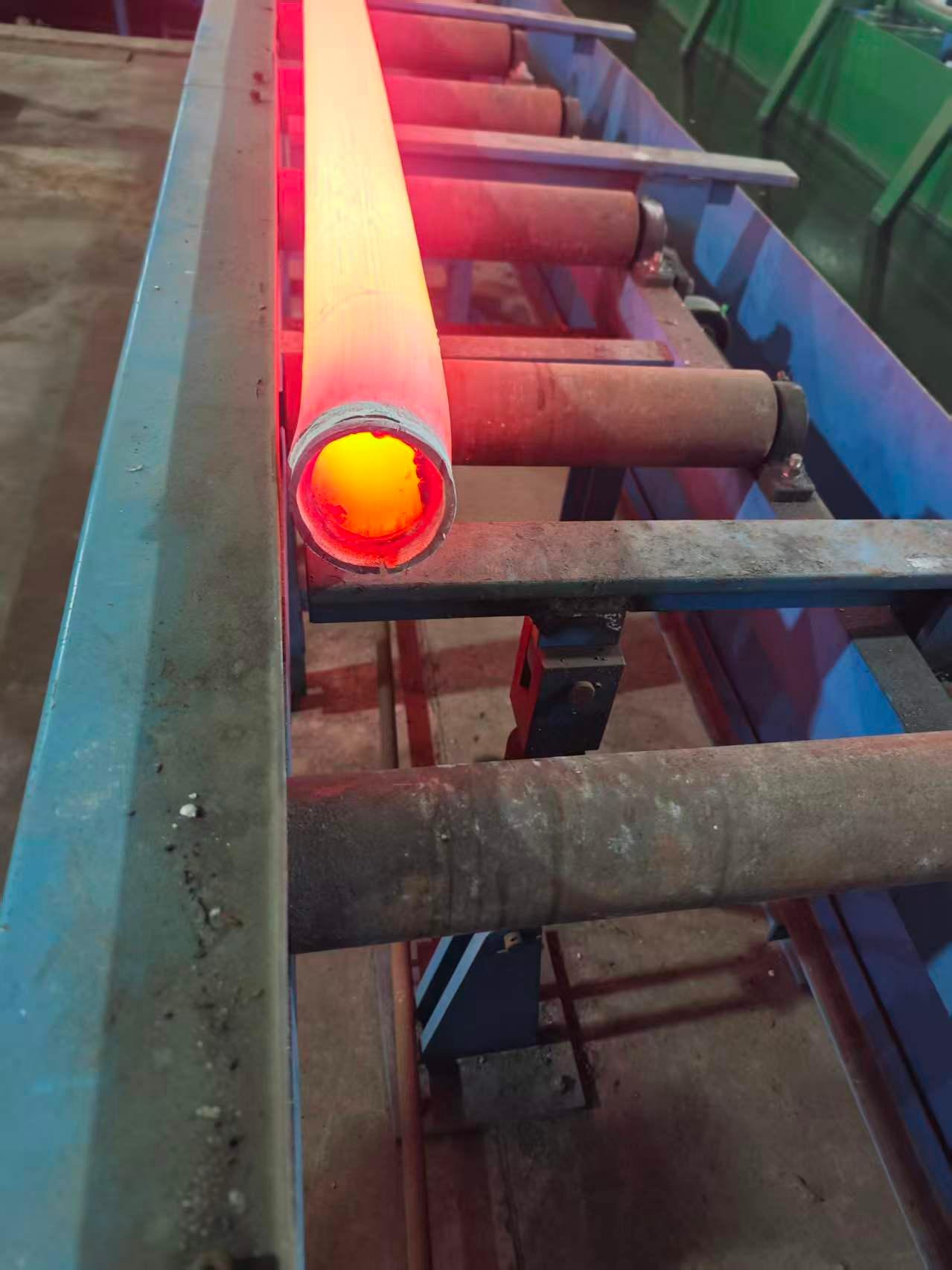
The transformation begins with a solid cylindrical billet, heated until it glows a deep orange and becomes pliable enough to flow under extreme pressure. A hydraulic ram forces this softened metal against a piercing point and through a die, pushing material outward and forward in a single, continuous motion. What makes this approach remarkable is the way grain structure realigns during deformation—elongating along the pipe's axis instead of cutting across it, which naturally boosts strength and fatigue resistance without the weak spots a weld seam would introduce.
Temperature control in this phase isn't just about keeping the metal hot. The core of the billet must stay slightly warmer than its surface to encourage uniform flow, otherwise internal tearing or surface cracks can appear before the shell even forms. Operators watch for a narrow window where viscosity is low enough for the material to behave almost like a viscous fluid, yet the geometry holds steady long enough to guide it into a straight, dimensionally stable hollow. A sudden drop or spike here can distort the wall thickness beyond recovery.
Once the pipe emerges, it moves through sizing rolls and cooling beds where the final diameter and roundness are locked in place. The absence of a weld line isn't just a cosmetic detail—it means the wall responds predictably under internal pressure, which is why extrusion dominates in nuclear, chemical, and deep-sea applications where joint failure isn't an option. The result is a hollow form with a through-thickness integrity that machining or roll-forming alone can't replicate, carrying proof of the process in every micron of its microstructure.
Real-World Applications Where Corrosion Resistance Pays Off
Take offshore wind farms, where turbine foundations get battered by salt spray day in, day out. Standard steel would demand endless maintenance boats and costly coating repairs. Switch to alloys designed for marine environments, and those turbines keep spinning with minimal intervention. The real payoff isn’t just the material itself—it’s the thousands of hours of downtime avoided and the safety risk reduction for crews working in rough seas.
Chemical processing plants tell a similar story but with even more aggressive fluids. A single flange failure from acidic corrosion can release toxic vapors, trigger an emergency shutdown, and land a company in regulatory trouble. Engineers here don’t just look at initial price tags; they lean into high-nickel alloys or specially passivated stainless grades because one avoided leak pays for the upgrade ten times over. The application proves that corrosion resistance isn’t a feature on a datasheet—it’s a barrier between routine production and disaster.
Medical implants operate under an entirely different kind of stress, buried in the warm, salty, and electrochemically active human body. A hip stem made from a lesser material might slowly release metal ions, cause inflammation, and need revision surgery. Choosing materials like titanium with its spontaneously formed oxide layer means the implant integrates quietly for decades. Here, corrosion resistance translates directly into patient quality of life, making the premium material choice a moral and economic no-brainer.
What Sets Our Factory’s Quality Control Apart
Instead of relying on generic checklists, we designed a process where every product passes through three separate inspection stages—each handled by a different team with no overlap. This deliberately breaks the chain of familiarity, so no single pair of eyes ever gets too comfortable with a recurring flaw. The result is a system that catches deviations most setups miss.
We stopped treating quality as a final gate and embedded it directly into the production rhythm. Our line operators have the authority to pause the run if they spot a pattern that doesn't feel right, even before it technically fails a spec. That kind of ownership changes the entire dynamic—it turns quality from a policing function into a shared instinct.
Measurement here isn't just about tolerances on a printout; we built custom jigs and testing rigs that replicate real-world stress in ways standard equipment can't. One of our lead technicians spent six months prototyping a fixture that simulates the exact vibration profile of a customer's operating environment. That obsessive attention to how things actually get used is what keeps returns nearly nonexistent.
Comparing N06625 to Other Nickel Alloys for Critical Service
N06625 stands apart from many nickel alloys due to its exceptional fatigue and thermal-fatigue strength, rooted in the solid-solution strengthening effects of niobium and molybdenum. When placed beside alloys like N08825 or N10276 in aggressive chloride-rich environments, the difference becomes clear: while others may resist pitting, 625 maintains structural integrity under cyclic loading and high temperatures where thermal expansion mismatch would quickly compromise leaner grades. This makes it a go-to for expansion joints, bellows, and fasteners in aerospace and marine exhaust systems where stress and corrosion act together.
In wet, reducing-acid service, comparisons often turn to alloys such as C-276 or C-22, which boast higher molybdenum and tungsten for broad-spectrum corrosion resistance. Yet N06625 holds an edge in applications involving alternating oxidizing and reducing conditions, as seen in chemical processing waste streams. It avoids the sensitization issues that can plague some C-type alloys after welding, even without post-weld heat treatment, thanks to its carefully balanced niobium content. Field failures in refinery hydroprocessing units have repeatedly shown that 625 weld overlays outlast clad alternatives in sulfidic and naphthenic acid attacks, largely because of its resistance to intergranular attack and chloride stress corrosion cracking in the heat-affected zone.
When cost and availability push engineers toward duplex stainless steels or super-austenitic grades for seawater handling, N06625 remains the benchmark for true criticality. In subsea valve components or turbine blades where zero-leakage integrity is non-negotiable, the alloy’s resistance to crevice corrosion under deposits and biological films far surpasses that of 6Mo stainless steels. Nickel alloys like K-500 offer higher strength but lack comparable aqueous corrosion resistance, whereas 625 delivers a rare combination: high tensile properties up to 1,200°F, immunity to chloride SCC, and the metallurgical stability to perform reliably across decades of saltwater immersion—no coating, no cathodic protection, no periodic inspection needed.
How Premium Materials Cut Long-Term Maintenance Costs
The appeal of cheap components fades quickly once the repair invoices start stacking up. Premium materials, by contrast, are engineered to shrug off wear, dampness, and UV exposure without needing constant attention. A simple change—like opting for marine-grade aluminum over standard steel in an outdoor fixture—can eliminate the corrosion cycle that normally demands sanding, priming, and repainting every couple of years. It’s not just about surviving tough conditions; it’s about staying structurally sound and presentable with only a rinse now and then.
Take flooring choices in busy commercial spaces, for instance. Vinyl might seem budget-friendly upfront, but it scuffs, warps, and requires regular waxing or replacement strips. Dense porcelain tiles or polished concrete, on the other hand, laugh at heavy foot traffic and spilled coffee. Their surface layers resist staining and etching so well that a damp mop is often the only maintenance tool required. In a decade of use, the difference in custodial hours and costly product stripping adds up to a massive expense—one that never appears on the initial purchase order.
Perhaps the quietest advantage is how premium materials lower the likelihood of operational downtime. When a key component fails, it rarely does so at a convenient moment. High-grade alloys, advanced composites, or laminated glass interlayers stay reliable far beyond their warranty periods, sidestepping the cascading costs of halted production lines, emergency callouts, and the logistical headaches of sourcing rare replacement parts. The long-term ledger doesn’t see a premium; it sees a year-after-year drop in unplanned spending.
FAQ
N06625 is a nickel-chromium-molybdenum alloy with excellent resistance to a wide range of corrosive environments. The addition of niobium provides high strength without the need for precipitation-hardening treatments. When formed into an extruded seamless pipe, the alloy maintains uniform properties throughout, avoiding weak points found in welded alternatives. This makes the pipes an ideal choice for demanding applications where both mechanical integrity and corrosion resistance are critical.
Extrusion forces the heated billet through a die under high pressure, creating a continuous, seamless structure with refined grain flow. This method eliminates weld seams, which are often susceptible to intergranular corrosion or stress cracking. The result is a pipe with superior surface finish, consistent wall thickness, and enhanced fatigue resistance—properties that machined or welded pipes can struggle to match without additional processing.
The alloy offers strong resistance to pitting, crevice corrosion, and stress-corrosion cracking, especially in chloride-containing environments. It also resists oxidizing and reducing acids, including sulfuric, phosphoric, and nitric acids, over a range of temperatures and concentrations. This performance is rooted in the high nickel and molybdenum content, which stabilizes the passive film and prevents localized attack.
You'll find N06625 extruded seamless pipes in offshore oil and gas platforms, chemical processing plants, marine exhaust systems, and nuclear power facilities. They handle everything from sour gas transport to seawater cooling and reactor components. The alloy's ability to perform under severe conditions—high pressure, aggressive chemicals, and salt spray—makes it a staple in energy, aerospace, and pollution control equipment.
Unlike many stainless steels, N06625 maintains its corrosion resistance and mechanical strength at temperatures exceeding 1000°F (538°C). It resists chloride-induced attack far better than common grades like 304 or 316, which means fewer failures and longer service life in harsh environments. The factory's extrusion process also ensures tighter dimensional tolerances and consistent metallurgical quality, reducing the need for field adjustments or early replacement.
Yes, N06625 is designed for continuous use at temperatures up to roughly 1200°F (650°C) and can withstand short-term exposure to even higher temperatures. The alloy forms a durable oxide layer that protects against scaling and carburization. This makes the pipes suitable for heat exchangers, superheater tubes, and furnace components where thermal stability is just as important as corrosion resistance.
The factory generally supplies extruded seamless pipes in a wide range of diameters, commonly from 1/2 inch to 12 inches, with wall thicknesses varying from Schedule 10 to Schedule 160 and beyond. Custom dimensions can often be produced to meet specific project requirements. The pipes are manufactured and tested according to international standards such as ASTM B444 or ASME SB444, with full material traceability and mill test reports provided.
Quality control begins with chemical analysis of each heat of raw material. The extrusion process is monitored in real time for temperature, pressure, and speed. Following extrusion, pipes undergo heat treatment for optimal microstructure, then a series of non-destructive tests including hydrostatic pressure testing, radiographic inspection, and ultrasonic examination. Mechanical testing, corrosion testing per ASTM G28, and dimensional checks complete the verification before shipment.
Conclusion
A nickel alloy pipe is only as dependable as the process behind it—and at our factory, N06625 takes shape through a carefully controlled hot extrusion that eliminates the weld seams and latent flaws so common in alternative products. With roughly 60% nickel, 22% chromium, and 9% molybdenum, the alloy naturally forms a tough passive film that repels pitting, crevice attack, and chloride stress cracking even when exposed to boiling acids, sour gas, or concentrated seawater. During extrusion, the grain flow aligns to deliver uniform mechanical strength and wall thickness, a critical advantage over rolled-and-welded tubes that can suffer from hidden decay at the heat-affected zone. We reinforce this material advantage with a quality regimen that starts at billet inspection and carries through to spectrochemical verification, continuous ultrasonic scanning, and hydrostatic testing at 1.5 times the rated pressure. Each pipe leaving the line is documented against its heat number so traceability and repeatability remain absolute.
When placed in real-world service—such as reactor vessels handling mixed sulfuric and nitric acids, offshore risers coping with brine and hydrogen sulfide, or pollution scrubbers tackling flue gas condensates—N06625 routinely outlasts both lower-grade stainless steels and many high-nickel alternatives like Alloy 600 or 825. Its superior creep strength at elevated temperatures often allows engineers to down-spec wall thickness without sacrificing safety margins. In a side-by-side comparison, the margin of reliability in oxidizing and reducing acids tilts overwhelmingly in favor of N06625, especially where chlorides are present. The economic logic becomes clear fast: fewer unplanned shutdowns, less frequent strip-downs for inspection, and a drastically lower replacement cadence slice long-term maintenance costs to a fraction of what lesser materials demand. For operators who measure success by uptime and total cost of ownership, a factory that wraps metallurgical precision, real extrusion expertise, and relentless testing into every seamless pipe delivers a corrosion-resistant solution that simply cannot be matched by commoditized supply.
Contact Us
Contact Person: Chenji Li
Email: 521 Zhonghui Road, Huishan Economic Development Zone
Tel/WhatsApp: +86 83112233
Website: https://www.jldnickelalloy.com/