

Pharmaceutical Excipient Silica: Professional Insights into Its Role and Benefits
2026-05-27
Behind every robust pharmaceutical formulation lies an unsung hero: silica. While often overlooked, this versatile excipient is pivotal in ensuring drug stability, flowability, and bioavailability. Yet, the true differentiator is the quality of the silica itself. Discover how Zhonglian's advanced silica solutions are reshaping excipient performance, offering formulators a competitive edge in an ever-evolving industry.
Why Pharmaceutical Silica Outperforms Traditional Excipients
In the world of drug formulation, the shift toward high‑functionality excipients is more than a trend — it’s a response to the growing complexity of APIs. Pharmaceutical silica consistently outperforms legacy options like lactose or starch because its performance isn’t just about bulk; it’s about precision. Where traditional fillers can struggle with moisture sensitivity or inconsistent flow, silica’s amorphous structure and high surface area deliver moisture scavenging, anti‑caking, and flow enhancement in a single, low‑dose material. This means manufacturers can avoid the trade‑offs that often come with multi‑component blends, simplifying both the formulation and the supply chain.
Another area where silica pulls ahead is in protecting sensitive actives. Many conventional excipients are largely inert bystanders in a tablet, but silica actively stabilizes the formulation. Its porous nature allows it to adsorb not just water but also oils and other reactive impurities that would otherwise degrade the drug. This capability is especially valuable in fixed‑dose combinations and hygroscopic compounds, where traditional diluents can actually accelerate instability. By locking away disruptive molecules, silica helps maintain potency and shelf life without requiring extra coating steps or cold‑chain logistics.
The real differentiator, though, is how silica’s particle‑level versatility translates into manufacturing robustness. High‑speed tableting and encapsulation demand powders that flow uniformly and compress predictably — areas where traditional excipients often require tight specification control or pre‑processing. Silica’s nanoscale texture creates a ball‑bearing effect that smooths out flow irregularities across a wide range of particle sizes, while its low bulk density can be finely tuned to adjust disintegration or dissolution. This adaptability allows formulators to fix production bottlenecks without overhauling the entire formulation, saving time and cost in scale‑up that older excipients can’t match.
Decoding the Impact of Silica Particle Size on Drug Performance
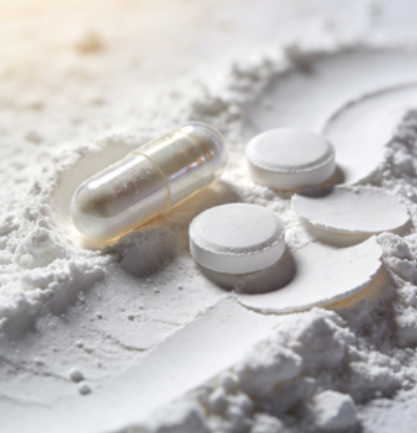
The size of silica particles plays a subtle yet pivotal role in fine‑tuning drug performance. While often overlooked, particle dimensions directly influence dissolution rates, drug loading capacity, and overall bioavailability. Smaller particles, with their high surface‑area‑to‑volume ratios, accelerate drug release, making them ideal for immediate‑release formulations where rapid onset is critical.
However, the relationship is far from linear. Ultrafine silica can easily agglomerate, creating inconsistent release profiles or even causing dose dumping. Formulators must strike a delicate balance: particles large enough to ensure stable and predictable dissolution, yet small enough to fully harness the benefits of enhanced solubility. This is particularly crucial for poorly water‑soluble drugs, where a well‑chosen silica grade can transform an otherwise unusable compound into a viable therapeutic option.
Beyond dissolution, particle size also dictates processing behavior during manufacturing. Flowability, blend uniformity, and tablet hardness are all sensitive to silica dimensions. A deeper understanding of these size‑dependent phenomena allows scientists to move beyond trial‑and‑error approaches, rationally designing drug delivery systems that deliver consistent, optimal performance in the clinic.
Silica's Quiet Role in Stabilizing Moisture-Sensitive Formulations
In the world of formulation science, moisture is often the invisible adversary. It creeps into powders, destabilizes active ingredients, and shortens shelf life. While many solutions focus on elaborate packaging or synthetic desiccants, silica operates with a subtle efficiency that belies its simplicity. Its porous architecture, invisible to the naked eye, acts like a labyrinth of microscopic chambers, each capable of trapping water molecules before they can interact with sensitive compounds. This isn't just drying—it's a controlled, sustained defense that works at the molecular level, preserving the integrity of everything from pharmaceutical tablets to powdered foods without altering taste, texture, or bioavailability.
What makes silica particularly valuable is its adaptability. Unlike single-purpose stabilizers, it can be tailored to match the unique moisture challenges of a formulation. High-surface-area varieties excel in low-humidity environments, while those with larger pore volumes manage rapid moisture surges in manufacturing. This versatility allows formulators to design stability into products from the start, rather than retrofitting solutions after instability appears. And because silica is chemically inert, it rarely triggers the cross-reactions that plague other excipients—a quiet reliability that has made it an indispensable tool in moisture-sensitive systems.
Perhaps most underappreciated is silica’s role in maintaining functional performance. In effervescent tablets, a single drop of moisture can spark a premature reaction that ruins the user experience. Silica intercepts that moisture, delaying the reaction until the tablet hits water. In spice blends or powdered supplements, it prevents caking by coating particles and absorbing ambient humidity, ensuring each pour is as free-flowing as the first. These are not headline-grabbing feats, but they define product quality and consumer trust. Silica’s quiet role may go unnoticed by the end user, but for formulators, it’s often the difference between a product that survives the shelf and one that thrives on it.
Rethinking Silica: Beyond Anti-Caking to Bioavailability Enhancement
The conventional view of silica as a mere flow agent fails to capture its untapped potential in formulation science. While it still ensures powders remain free-flowing, recent advances reveal that engineered silica particles can actively improve how the body absorbs active ingredients. This shift moves silica from a background processing aid to a central player in therapeutic efficacy.
By carefully tuning surface porosity and particle architecture, silica can now serve as a carrier that controls the release of poorly soluble compounds. Its high surface area allows for molecular-level dispersion, preventing aggregation and maintaining the drug in a more bioaccessible state. This leads to faster dissolution rates and higher peak plasma concentrations, without relying on chemical modification of the active itself.
Perhaps most intriguing is silica's role in stabilizing supersaturated solutions within the gastrointestinal tract—a phenomenon known as the 'parachute effect.' Through tailored interactions with drug molecules, certain silica grades can delay precipitation long enough for substantial absorption to occur. Such functionality turns a once overlooked excipient into a versatile tool for tackling the growing challenge of low-bioavailability candidates in development pipelines.
Matching Silica Grades to Solid, Liquid, and Semi-Solid Dosage Demands
Selecting the right silica grade isn’t a one-size-fits-all affair—it hinges on the physical form of the dosage. For solid formulations like tablets and capsules, precipitated silicas with high porosity and small particle size perform exceptionally well as flow aids and anti-caking agents, ensuring smooth powder handling and consistent die filling. Their ability to adsorb moisture also helps maintain stability, even when the blend includes hygroscopic actives.
When working with liquid systems—suspensions, emulsions, or oral syrups—fumed silicas step into the spotlight. Their chain-like aggregate structure creates a three-dimensional network that imparts viscosity and suspends insoluble particles with minimal impact on clarity or taste. The choice between hydrophilic and hydrophobic grades then becomes pivotal: hydrophilic types are go-to for aqueous bases, while hydrophobic variants excel in oil-based or anhydrous formulations, preventing phase separation without leaving a gritty mouthfeel.
Semi-solid forms such as ointments, creams, and gels demand yet another performance profile. Here, silica’s role often shifts from mere stabilizer to rheology modifier. Medium-surface-area silicas strike a balance—thickening without excessive stiffness, so the product spreads easily yet stays in place. Particle size and surface treatment also influence skin feel and drug release, making it essential to match the grade to both the formulation’s polarity and the desired application characteristics.
Navigating Safety and Regulatory Nuances of Silica in Global Markets
Silica, in its various forms, sits at the intersection of industrial necessity and public health concern. While crystalline silica is a fundamental component in products from glass to electronics, its respirable particles pose well-documented risks, including silicosis and lung cancer. This dual nature forces companies to walk a tightrope between leveraging silica's irreplaceable properties and adhering to an increasingly complex web of safety regulations that differ wildly from one jurisdiction to another.
The regulatory landscape is anything but uniform. In the European Union, silica is tightly controlled under REACH and workplace exposure limits are rigorously enforced, often driving innovations in dust suppression and real-time monitoring. Across the Atlantic, OSHA's silica standard in the United States sets its own permissible exposure limits, but enforcement intensity varies by administration. Meanwhile, emerging economies in Asia and Africa may have written standards that look robust on paper, yet practical oversight remains inconsistent, leaving workers vulnerable and multinationals grappling with how to apply a single global safety policy without running afoul of local norms or, worse, endangering lives.
The nuances go beyond legal texts. Cultural attitudes toward workplace safety, the availability of protective equipment, and even the local geology—which affects the type and hazard level of silica dust—create a puzzle that no one-size-fits-all approach can solve. Forward-thinking companies are responding by moving past mere compliance. They are embedding hazard awareness into the fabric of their operations, tailoring training to regional realities, and investing in closed-system technologies that minimize dust generation altogether. In this environment, navigating silica safety isn't just about avoiding fines; it's about building trust in a global supply chain that increasingly demands transparency and demonstrable care for the people who handle raw materials every day.
FAQ
Pharmaceutical-grade silica refers to highly purified amorphous silicon dioxide that meets strict pharmacopoeia standards for use in drug products. Unlike industrial silica, which may contain crystalline impurities and irregular particle sizes, the pharma version is produced under tightly controlled conditions to ensure minimal heavy metal content, consistent surface area, and particle morphology. This purity is crucial because silica often ends up in oral solid doses or even parenteral preparations, where safety and bioavailability must not be compromised. The manufacturing process for pharmaceutical silica typically yields a fluffy, white powder with exceptional flow properties and a high internal porosity, making it ideal for its functional roles without introducing toxicity risks.
Silica's prevalence in tablet and capsule formulations comes down to its unmatched versatility. It acts as a glidant to improve powder flow during high-speed compression, prevents caking in powder blends, and can even function as a moisture scavenger to protect hygroscopic actives. Its amorphous structure provides a massive surface area that can adsorb liquids, transforming sticky or cohesive materials into free-flowing granulations. Additionally, silica is chemically inert and compatible with a vast range of drug substances, so it rarely causes stability issues. This multi-functionality allows formulators to reduce the number of excipients, simplifying the formulation and accelerating development timelines.
In tablet production, silica primarily enhances flowability and compressibility. By coating the surfaces of other powder particles, it reduces interparticulate friction and Van der Waals forces, ensuring uniform die filling and consistent tablet weight. Its high surface area can also adsorb excess moisture, which is particularly valuable for moisture-sensitive actives or when using hygroscopic binders. Some types, like colloidal silicon dioxide, also aid in the distribution of lubricants, so you get better homogeneity without over-blending. Beyond that, silica can act as a disintegrant aid by wicking water into the tablet matrix, subtly speeding up breakdown in the gut. These benefits collectively improve manufacturing efficiency and final product quality.
Yes, and selecting the right type can make or break a formulation. The most common are colloidal silicon dioxide (often called fumed silica) and precipitated silica. Fumed silica is produced via flame hydrolysis, resulting in extremely fine, non-porous particles linked in branched aggregates that provide excellent flow enhancement. Precipitated silica has a more porous interior, making it superior for moisture scavenging and transforming liquids into free-flowing powders. There are also hydrophilic and hydrophobic grades created by treating the surface with silanes; hydrophobic silica can be used to tailor rheological properties in non-aqueous systems. The choice depends on the specific challenge—whether it's improving powder flow, adsorbing a liquid active, or stabilizing a sensitive formulation.
Safety hinges on confirming the silica is amorphous rather than crystalline. Crystalline silica, like quartz, is a known respiratory hazard, but pharmaceutical grades are intentionally manufactured as amorphous forms that lack the rigid lattice structure responsible for toxicity. Regulatory agencies require strict particle size and purity specifications, and formulators must ensure their supplier provides the necessary documentation. Inhalation of fine dust during handling should still be minimized through engineering controls, as any respirable particulate can irritate the lungs. Oral ingestion of silica excipients is very low-risk, but for parenteral products, specially treated or highly pure grades are needed to avoid aggregation issues. Ultimately, adhering to compendial standards and robust supplier qualification eliminates most safety concerns.
Silica's internal porosity allows it to act like a molecular sponge, adsorbing trace moisture from the environment and from the excipient blend itself. This is critical for drugs that hydrolyze, degrade, or undergo polymorphic changes when humidity spikes. By incorporating a finely dispersed silica grade, formulators can create a dry microclimate within the drug product that persists throughout its shelf life. Silica doesn't just capture water—it strongly binds it through hydrogen bonding, so the moisture isn't readily released back during temperature fluctuations. This protective effect helps maintain dissolution profiles and potency, even in blister packs or bottles that might otherwise allow moisture ingress. It’s a simple, elegant solution that often outperforms specialized coatings or packaging.
Conclusion
Pharmaceutical silica has quietly transformed from a simple flow aid into a multifunctional cornerstone of modern formulation science. Unlike conventional excipients, its high surface area and tunable porosity enable it to outperform traditional anti-caking agents by simultaneously managing moisture, improving blend uniformity, and even boosting drug dissolution. Particle size plays a decisive, often underappreciated role: nano-sized silica can dramatically increase a drug’s surface exposure, accelerating wetting and disintegration, whereas coarser grades suit direct compression processes without compromising mechanical integrity. This delicate balance between particle engineering and functional performance explains why silica is now central to stabilizing moisture-sensitive actives—its amorphous structure adsorbs microenvironmental water without triggering chemical degradation, preserving potency throughout shelf life.
Yet silica’s contributions extend far beyond protective roles. Emerging research repositions it as a bioavailability enhancer, forming stable mesoporous carriers that amorphize poorly soluble drugs and maintain supersaturation in the gut. This shift demands careful grade selection: fumed silica seamlessly integrates into solid blends, while colloidal dispersions thicken suspensions and stabilize emulsions in liquid or semi-solid forms. Navigating the global regulatory landscape adds another layer of sophistication—while silica is widely recognized as safe, regional differences in compendial standards and permissible limits require formulation scientists to marry deep material knowledge with strategic compliance. The result is a humble-looking powder that quietly enables robust, patient-centric medicines across every dosage form.
Contact Us
Contact Person: Levin Wang
Email: [email protected]
Tel/WhatsApp: 8618668999988
Website: https://www.silicaplant.com/