

Reliable Used Truck Cranes Supplier for Heavy Lifting Projects
2026-05-21
When heavy loads demand absolute reliability, settling for second-rate equipment isn't an option. Yet, brand-new truck cranes often strain budgets without adding proportionate value—especially when proven, pre-owned machines can handle the toughest lifts at a fraction of the cost. That's where JILIANG CHI changes the game. As a supplier dedicated to rigorously inspected used truck cranes, we bridge the gap between affordability and uncompromising performance. But how do you separate a hidden gem from a costly gamble? Read on to discover what makes a used crane truly project-ready—and why the right partner makes all the difference.
Why a Well-Maintained Used Crane Outperforms Expectations
When a used crane has a verifiable history of routine lubrication, load testing, and component inspections, it often operates with a smoothness that rivals factory-fresh models. The hydraulic systems have settled into reliable cycles, pivot points have worn in rather than worn out, and any early-life manufacturing quirks were already corrected. This broken-in but not broken-down state means the crane can handle its rated capacity with an ease that frequently catches new owners off guard—in the best possible way.
It’s not simply about avoiding breakdowns. A well-cared-for crane tends to keep its adjustments tight and its movements precise, which translates to safer, faster lifts on the job site. Operators notice the difference immediately: controls respond without delay, the boom extends and retracts without chattering, and the swing motion stays buttery. This level of reliability, backed by a stack of service records, often outperforms a machine that’s been parked idle or used hard without any love.
Savvy buyers know that the real value lies in the details—like a meticulously kept logbook, consistent oil analysis reports, and honest repair invoices. These aren’t just paperwork; they’re a window into how the machine has been treated. A crane that’s been maintained proactively, rather than waiting for failure, frequently arrives on a new site with more usable life left than its age or hours would suggest. That’s when a used crane starts to feel like a strategic investment that consistently delivers above expectations.
Matching Your Heavy Lift Needs with the Right Truck Crane
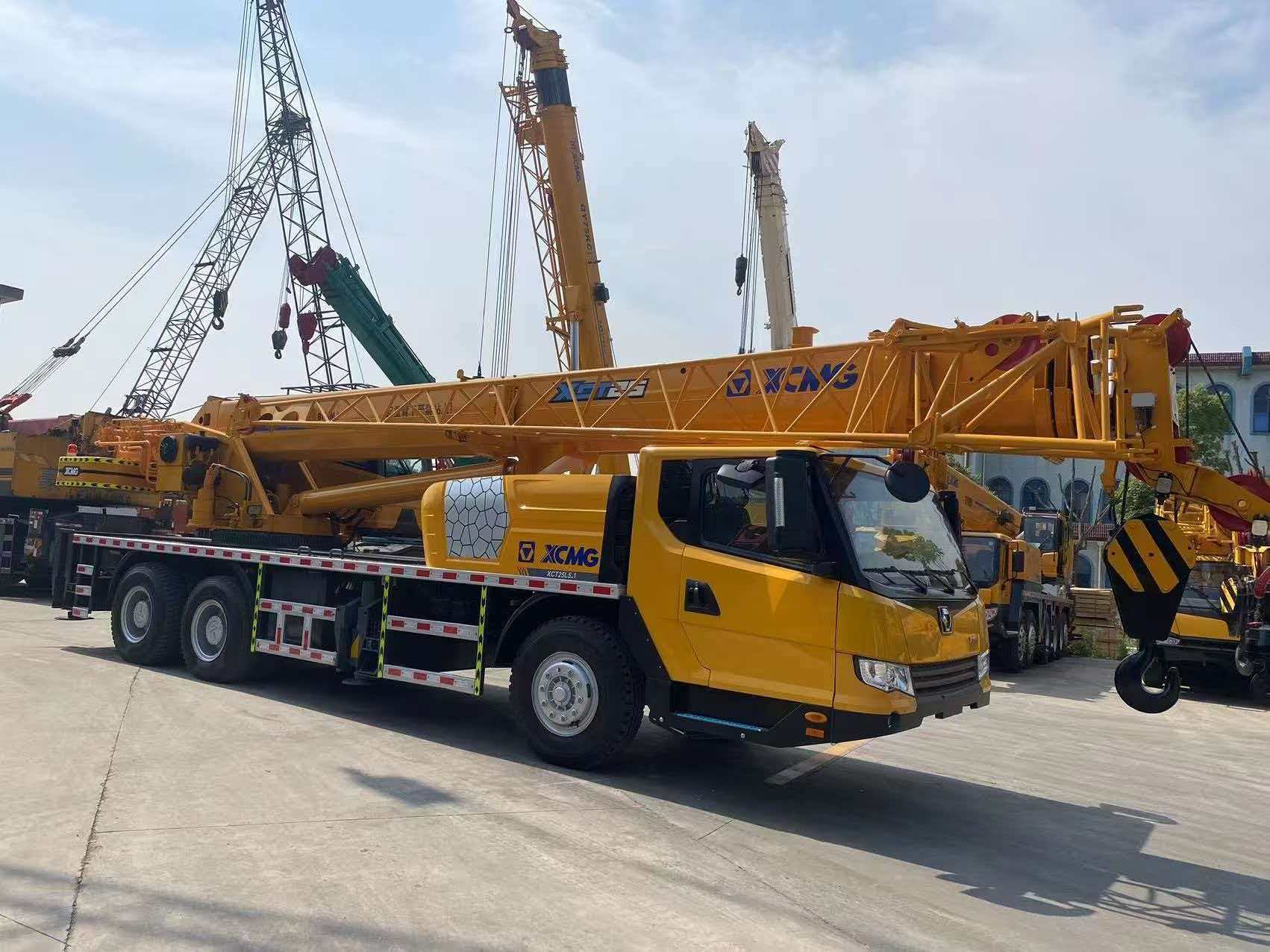
In heavy construction and industrial projects, a truck crane isn’t just a tool—it’s the backbone of your lift plan. Getting the right match starts with understanding the weight, radius, and height of each critical pick. Overlooking a few meters of radius or an extra ton of load can stall a job or, worse, create safety hazards. That’s why the selection process has to be deliberately slow and precise, focusing on the crane’s rated capacity charts rather than its maximum advertising numbers. A crane that lifts 100 tons at a short radius might only handle 8 tons at full reach, so real-world job conditions always take the lead.
Beyond bare lifting power, terrain, site access, and setup space often decide which rig actually gets the job done. An all-terrain truck crane with multi-mode steering may be your only option on a soft, uneven construction site, while a compact hydraulic truck crane can slip into urban infill projects where every inch counts. Consider also how often you’ll need to reposition between lifts—booms with pin-and-latch sections speed up reconfiguration and keep the crew moving. Don’t forget the counterweight configuration: some carriers allow self-assembly, slashing the need for a second assist crane and saving you half a day on tight schedules.
Finally, the right match aligns with your operational tempo and maintenance reality. If your fleet already runs a certain make, sticking with a brand that shares controls, parts, and training can cut unplanned downtime. It’s also worth talking to the service department before you buy—some models have predictably long lead times for critical components, and that matters more than brochure specs when a pump failure hits mid-project. In the end, the best heavy lift solution is never the one with the highest headline capacity, but the one that integrates seamlessly with how your team actually works, day in and day out.
The Overlooked Advantage of Pre-Owned Lifting Equipment
Buying used lifting equipment often gets a bad rap for perceived wear and tear, but seasoned professionals know the real value lies beneath the surface. Unlike fresh-off-the-line machinery, pre-owned gear has already proven its reliability in real-world conditions — any initial manufacturing flaws have typically been ironed out long before the second sale.
There’s also a quiet advantage in the break-in period being over. Hydraulic seals are seated, bolts have settled, and the equipment’s operational quirks are known quantities. You’re not gambling on how a new model might behave under stress; you’re getting a tool that’s already demonstrated its capabilities over time.
Beyond the technical perks, there’s the simple fact that older, well-maintained equipment often comes from a generation where build quality mattered more than cutting every possible cost. Many pre-owned lifts, hoists, and cranes were built in an era of thicker steel and simpler, more durable electronics — a quiet rebellion against today’s disposable culture in heavy industry.
How Our Inspection Process Ensures Reliability on Your Site
We take a hands-on approach that goes far beyond simply ticking boxes. When our team arrives on site, the first thing we do is observe how your operations actually flow—because reliability isn't about rigid checklists. It's about understanding the unique rhythm of your equipment, environment, and team. That context lets us spot subtle signs of wear, misalignment, or inefficiency before they snowball into downtime.
Every inspection is layered: we combine advanced diagnostic tools with old-fashioned experience. Thermal imaging catches overheating components that the naked eye would miss, while vibration analysis reveals imbalances that lead to premature failure. But we don't stop at data. Our technicians talk through findings with your crew, turning raw numbers into practical adjustments. This back-and-forth means every visit builds a richer picture of your site's health, letting us refine our checks over time.
The result is a partnership rooted in predictability. You're not just getting a report; you're getting a roadmap that keeps your systems performing day after day. By catching root causes instead of symptoms, we help you avoid the scramble of reactive repairs. That's how reliability becomes something you can count on—not just hope for.
Real Projects, Real Results: Used Cranes in Action
When a mid-sized logistics company needed to expand its yard, a brand-new crane was far beyond the budget. Instead, they sourced a well-maintained used mobile crane with a 50-ton capacity. Within a week of delivery, it was lifting shipping containers and positioning heavy machinery. The project finished two days early, and the crane has since become a permanent asset, handling daily operations without a single breakdown. It was a clear case of practical thinking overcoming financial limits.
On a residential high-rise construction site in Atlanta, a contractor faced a tight three-month window to erect the steel frame. A new tower crane would have taken months to arrive and set up. The team opted for a used self-erecting tower crane that could be on-site and operational in under three days. Its ability to lift 12,000 pounds at the jib tip kept productivity high, and the entire frame was completed ahead of the deadline. The savings weren't just in the purchase price—faster assembly meant less rental cost for other equipment.
In the energy sector, a wind farm maintenance crew needed a reliable all-terrain crane capable of navigating rough access roads and lifting 80-ton turbine components. A pre-owned 150-ton all-terrain crane with a reinforced boom was located through a reputable dealer. After a thorough inspection and minor refurbishments, it was dispatched to a remote ridge line. Over six months, it performed dozens of lifts in gusty conditions without a hitch. The project manager noted that the used crane delivered the same performance as a newer model but at 40% of the capital outlay, proving that real results don't always require new paint.
A Smarter Path to Heavy Lifting: Balancing Budget and Performance
Finding the sweet spot between cost and capability in heavy lifting equipment often feels like a tug-of-war. Many operations assume that high performance automatically demands a premium price tag, but that’s no longer the only option. Advances in engineering and smarter system design mean you can push boundaries without draining the budget. The trick is knowing where to invest and where to trim, all while keeping safety and reliability front and center.
Modern approaches strip away unnecessary weight from structural components through refined analysis and high-strength materials, so you get rugged durability without paying to move dead mass. Intelligent power management further tilts the balance: hybrid or energy-recovery drives can slash fuel bills, while smart controls adapt lifting speeds and force to the actual load, reducing wear and the chance of costly downtime. Even simple choices like modular designs let you tailor a setup for today’s needs with room to expand later, avoiding overbuying.
This balance isn’t just about the purchase price—it’s a long game. A well-chosen system keeps per-lift costs low and sidesteps the hidden expenses of maintenance surprises. By focusing on total lifecycle value rather than flashy specs, you get a machine that works as hard as your team does, year after year. In the end, a smarter path to heavy lifting simply means making every dollar work smarter, not harder.
FAQ
A truly dependable supplier backs every machine with a transparent history report, including past usage, maintenance logs, and any structural repairs. Look for one that does their own multi-point inspections and load testing before listing a crane, not just cosmetic touch-ups. They should also offer flexible warranty options and have readily available parts and service engineers—nobody wants downtime on a critical lift.
Start with a detailed physical inspection: boom sections for cracks or excessive wear, outriggers for deformation, and the chassis for rust. Ask for a recent load test certificate and check the engine and hydraulic hour meters against service intervals. If you can’t visit in person, request a live video walkaround and make sure a third-party inspection is an option. Don’t shy away from bringing your own mechanic—any honest supplier will welcome that.
The biggest advantage is immediate availability combined with significant cost savings—often 30–50% off new prices. Used cranes let you avoid the steep initial depreciation hit, and since many heavy lifting projects don’t demand this year’s model, you get proven performance without the wait time for factory orders. Parts for popular older models are also widely available and less expensive.
They’re perfect for bridge construction, wind turbine erection, industrial plant maintenance, and large-scale steel erection. Used truck cranes excel anywhere you need high lifting capacity with mobility between sites, such as erecting precast panels, setting HVAC units on mid-rises, or managing heavy loads at shipping ports—projects where the crane’s basic engineering has already stood the test of time.
Every crane goes through a 100-point mechanical and structural inspection upon arrival. We replace hydraulic hoses, seals, and wear parts as a standard, not just when they’re failing. Load testing is done with calibrated weights to rated capacity, and we verify all safety devices—limit switches, overload protection, boom angle indicators—before the machine leaves our yard. And yes, we provide a full documentation package afterwards.
Absolutely. Need a lattice fly extension for extra reach? Different counterweight configurations? A specific paint color or safety lighting package? We can handle all of that in-house before delivery. We’ve even retrofitted older models with modern camera systems and remote monitoring to match the visibility and control you’d expect from newer equipment.
We’re not just about the sale—we have a floating service team that can travel to your jobsite for emergency repairs, plus remote troubleshooting for electrical and hydraulic issues. We keep a healthy stock of major components like engines, transmissions, and cylinders for the brands we sell. Operator training and setup assistance are also included in the first deployment for many of our larger cranes.
We usually start with the maximum load you’ll lift, the radius it needs to be placed at, and your required tip height. Then we look at job site constraints: can a 5-axle carrier fit? Is there a weight restriction on the access road? Our team will run a few lift plans with different models to show you the trade-offs in chart capacity, setup time, and transport costs—no guesswork, just practical comparisons based on real load charts.
Conclusion
A well-maintained used truck crane often delivers performance that rivals new equipment, especially when sourced from a supplier committed to rigorous standards. At the heart of every successful heavy lift is a perfect match between the crane’s capabilities and the project’s demands. Our approach focuses on understanding your specific needs—be it reach, capacity, or terrain—and pairing you with a pre-owned crane that has been thoroughly inspected and serviced. Many project managers overlook the inherent advantages of used lifting equipment: significantly lower upfront costs, faster availability, and a proven track record in the field. When you combine these benefits with a detailed, multi-point inspection process that checks everything from hydraulic systems to structural integrity, reliability becomes a given rather than a gamble.
Real-world outcomes speak volumes. We’ve seen our used cranes excel in bridge construction, wind farm installations, and urban infrastructure projects—scenarios where downtime is simply not an option. These machines aren’t just tools; they’re assets that have already demonstrated their durability. By choosing a pre-owned truck crane from a supplier that prioritizes transparency and performance, you achieve a smarter balance between budget constraints and lifting power. It’s not about cutting corners; it’s about allocating resources wisely without compromising on safety or results. Every crane that leaves our yard is backed by thorough documentation, recent service history, and the quiet confidence that comes from knowing it has already performed under real conditions.
Contact Us
Contact Person: Sally Xiao
Email: [email protected]
Tel/WhatsApp: 086-18221477398
Website: http://www.shjiliangchi.com/