

Residual Current Transformer Manufacturer: Essential Guide to Selecting a Reliable Supplier for Electrical Safety
2026-08-17
Selecting the right residual current transformer manufacturer is a decision that quietly determines whether your electrical protection systems will perform when it matters most. Many suppliers promise compliance, but only a few deliver the precision and durability required for true safety. Among them, Xiasen has built a reputation for rigorous testing and consistent quality. This guide cuts through the confusion, offering practical criteria to evaluate suppliers—so you can move beyond spec sheets and choose a partner that genuinely safeguards your operations.
The Hidden Traits of a Residual Current Transformer Supplier You Can Actually Trust
Most buyers focus on datasheet numbers and unit price, but that skips the traits that matter when a residual current transformer has to perform at low milliampere levels. A supplier worth trusting will discuss core annealing methods, magnetizing current drift, and why they control winding tension the way they do. If the conversation stays glued to “we meet the standard,” it usually means they haven’t looked at the hidden variables that affect nuisance tripping or missed faults.
You also learn a lot from how they handle testing. A dependable supplier shares batch-level data for knee point voltage and phase angle error, not just a single type test certificate. They ask about your relay burden and cable run, then warn you when a certain core grade might behave oddly under temperature swings. That kind of honesty shows they understand the residual current transformer is part of a protection chain, not a shelf item.
Watch their behaviour after the order too. Trustworthy suppliers will flag lead time risks for high-permeability core stock before you commit, send photos of the winding before potting, and stay reachable when a field engineer reports an odd waveform. The hidden trait underneath all of this is ownership: they treat every unit as if it will sit inside a safety system for twenty years, not just until the invoice is cleared.
What Factory Audits and Test Data Say About Real Product Reliability
A factory audit rarely tells you whether a product will fail in the field, but it does expose how consistently the manufacturer follows its own quality plan. During an onsite review, the most telling signs are often mundane: whether torque wrenches are calibrated on schedule, whether incoming components are quarantined before inspection, and whether operators actually stop the line when a defect trend appears. Those details sound minor, but they show up later in warranty returns far more often than most spec sheets would suggest.
Test data adds another layer that audits alone cannot provide. A product can pass a final functional check and still have weak solder joints, marginal capacitor derating, or a power supply that drifts under sustained load. When you look at burn-in results, thermal cycling logs, and batch-level failure rates, patterns emerge that a single pass/fail report misses. For example, a 0.4% failure rate over 500 units may look acceptable until you notice that every failure occurred in the same production week, pointing to a bad reel of components rather than random chance.
The real value comes from combining both sources. An audit tells you if the test data can be trusted; test data tells you if the process controls are actually working. One without the other leaves a blind spot that marketing language about "premium materials" or "rigorous testing" conveniently ignores. Products built in a factory with weak process discipline can still produce a handful of impressive lab reports, but they rarely hold up across thousands of units in real-world conditions.
Core Materials, Winding Consistency, and the Small Details That Prevent Nuisance Tripping
The core material sets the baseline for how a transformer behaves under sudden load changes. Grain-oriented silicon steel, often laser-scribed to refine domain walls, keeps hysteresis losses low while still tolerating the DC bias that creeps in from half-wave rectifiers. But even a good core will misbehave if the winding tension drifts from layer to layer. A loosely packed secondary can shift its leakage inductance enough to make the inrush current look like a fault, and that is exactly the kind of phantom trip that drives technicians to bypass protection altogether.
Winding consistency is less about perfection and more about repeatability. When every layer is wound with the same turn count, the same insulation overlap, and the same termination crimp, the transformer's magnetizing curve stays predictable. That predictability is what lets a breaker distinguish a cold-start surge from a genuine short. A small change, like using a slightly thicker tape wrap on one bobbin flange, will alter the coupling coefficient just enough to push the residual flux above the nuisance threshold on the next energization.
The details that prevent nuisance tripping rarely show up on a datasheet. A few extra millimeters of creepage on the high-voltage lead egress, a shielded winding screen tied to the correct side of the core, or even a subtle chamfer on the bobbin edges to reduce partial discharge at sharp corners—these are the things that keep a transformer quiet under electrical noise. It is not glamorous work, but when the supply holds through a brownout and a nearby motor start without dropping the line, that is the small detail earning its keep.
Warning Signs That a Low-Price Manufacturer May Compromise Your Safety
Low-price manufacturers often cut corners on raw materials, using recycled plastics or low-grade metals that crack or deform under normal stress. You might not notice anything wrong at first, but after a few months, hairline fractures appear, or a handle snaps off mid-use. Quality materials cost more for a reason—they hold up when it matters.
Another red flag is the absence of independent safety certifications. Reputable companies pay for third-party testing, but bargain producers frequently skip this step because they know their products wouldn't pass. If you can't find any recognized marks like UL, CE, or ISO on the packaging or website, treat that as a serious warning.
Finally, look closely at the finishing details. Sloppy welds, loose screws, uneven coatings—these are telltale signs of rushed, careless assembly. A manufacturer who truly cares about safety makes sure every seam is solid and every edge is smooth. Low-cost operations, on the other hand, prioritize speed over precision, leaving you to deal with the consequences.
Practical Questions to Separate Genuine Expertise from Sales Talk
Anyone can rehearse a pitch, but real understanding shows up when the conversation steps off the script. Ask what they would do differently if budget were removed, or have them walk through a past project that failed and what they learned from it. Vendors with deep knowledge rarely hide behind jargon; they get specific about trade-offs, timelines, and the boring details that actually make a solution work. If the answer keeps circling back to product features instead of your context, that is a sign you are hearing sales talk rather than expertise.
Another useful move is to ask for a live walkthrough or a quick sketch on a whiteboard. Genuine experts can adapt their explanation to your level without condescension, and they are not afraid to say "I don't know" followed by "but here is how I would find out." Probe their claims by asking who else has tried this approach and what happened when it did not fit. Salespeople often stay vague or pivot to success stories, while practitioners will mention edge cases, maintenance headaches, and the unglamorous work behind the outcome.
Finally, test their listening skills. Ask them to summarize your problem back to you before proposing anything. Real expertise includes the discipline to understand constraints first: your team size, legacy systems, regulatory limits, or even internal politics. If their proposal ignores half of what you just said and pushes a one-size-fits-all answer, you are probably dealing with a script rather than a specialist.
Matching Your Residual Current Transformer to Specific Installation and Fault Conditions
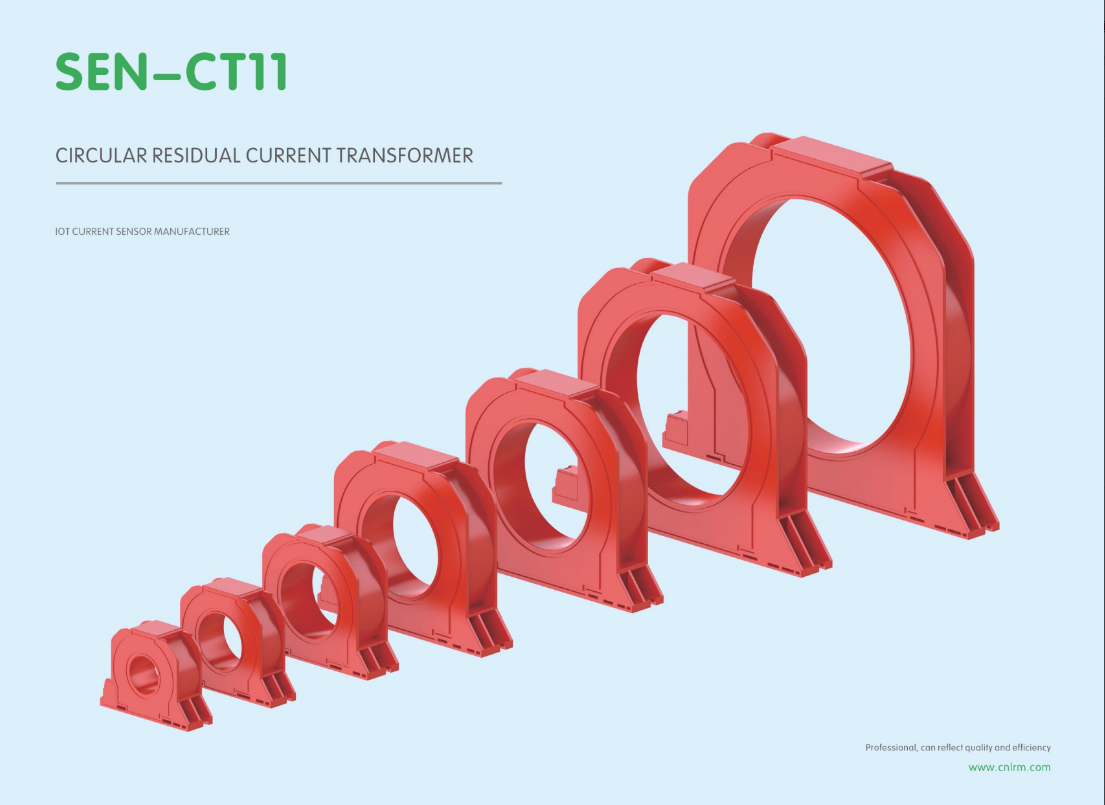
Selecting the right residual current transformer (RCT) starts with a clear picture of the installation environment. Cable routing, conductor diameter, and available space all influence whether a split-core or solid-core design fits without forcing awkward bends or risking insulation stress. For retrofit work in tight panels, a split-core unit often wins on practicality, but its magnetic circuit must still close cleanly to avoid false tripping at low leakage currents.
Fault conditions demand equal attention. In systems with high inrush currents from motors or transformers, an oversized RCT may be necessary to avoid saturation during normal switching events, which would otherwise mask genuine residual currents. Conversely, applications with high harmonic content or DC components—such as variable-speed drives—call for a sensor with a wide frequency response and low remanence, otherwise nuisance trips or missed faults become routine.
The burden and secondary wiring also matter more than many assume. Long lead lengths between the RCT and relay introduce impedance that can distort the secondary signal, especially at low primary leakage levels. By matching the RCT's rated burden to the actual connected load and keeping the secondary loop as short as possible, you ensure the protection relay sees a faithful representation of the true residual current—not a damped or phase-shifted echo.
FAQ
A credible supplier will have ISO 9001 as a baseline and product compliance with IEC 61869 or equivalent national standards. Ask to see type test reports from independent labs, not just in-house declarations. For installations in North America, UL recognition on the specific model is a strong signal that the insulation and thermal ratings have been verified by a third party.
Look beyond the glossy datasheet and ask for accelerated aging data, thermal cycling results, and humidity or salt spray test outcomes. The way the core is encapsulated matters more than the outer case; a fully potted unit with stress-relieved terminations will survive vibration and temperature swings far better than a lightly sealed one.
High-permeability nanocrystalline or permalloy cores give you stable sensitivity at very low leakage currents and keep phase error small, which is crucial when the signal feeds a protection relay. Cheaper ferrite cores may work on paper but drift with temperature and age, leading to nuisance tripping or, worse, missed faults.
Request prototypes built to your actual cable size, mounting orientation, and burden resistance. Then ask how they handle design changes: do they run a magnetic simulation first, will they supply a short pre-production run for your own testing, and what is the real lead time after drawing approval? A supplier that pushes a catalog part without asking about your relay input impedance is not really customizing anything.
Yes, because final functional testing alone cannot catch insulation weaknesses or core saturation issues. A serious manufacturer will have automated winding tension control, impulse voltage testing, partial discharge measurement where applicable, and temperature rise testing. Ask for a sample of the actual test report format you will receive with each batch.
Be wary of unusually low pricing that disappears when you ask for full potting or higher-grade core material. Also watch for suppliers who cannot trace the exact heat lot of their core material, refuse to provide failure analysis if a unit fails, or offer a warranty that only covers replacement but not the cost of removing and reinstalling a faulty transformer.
Accuracy class tells you how faithfully the transformer reproduces the primary residual current on its secondary side. For human protection circuits, a class A or better is typical; for fire prevention or equipment protection you may accept class B. Match the class to the trip threshold of your relay, not to the cheapest available option, because a mismatch can desensitize the whole protection chain.
Yes. Request third-party test certificates from an accredited lab, ask for two or three reference customers using the same model in your voltage range, and order a small pilot lot for incoming inspection with your own burden resistors and meters. If the supplier hesitates to share this information, treat that as a warning sign even if the price looks attractive.
Conclusion
When evaluating residual current transformer suppliers, the traits that matter most rarely appear on a glossy brochure. A trustworthy manufacturer reveals itself through a willingness to open the production floor, inviting audits that examine batch-level test data, traceability of raw materials, and the discipline behind winding consistency. Over time, those small details determine whether a device holds its accuracy under real fault conditions or drifts into nuisance tripping territory. Core material selection, insulation aging behavior, and even the way leads are terminated shape how a transformer responds to residual currents that never announce themselves. Suppliers who dodge questions about temperature cycling, vibration endurance, or long-term drift are effectively admitting the product was built to a price, not a standard.
Low-cost quotes often hide thinner cores, looser winding tolerances, or skipped calibration steps, choices that quietly erode safety margins. Instead of accepting sales talk, ask for the specific harmonic response under non-sinusoidal loads, the behavior during inrush, and how the transformer performs at the lower end of its rated residual current range. A genuine expert will match the transformer’s characteristics to your installation: whether it faces high-frequency leakage from variable-speed drives, damp environments that stress insulation, or circuits where unwanted tripping creates its own hazards. That kind of matching, backed by verifiable test data rather than marketing claims, is what separates a supplier you can trust from one you merely hope will hold up.
Contact Us
Contact Person: Liu Mengyang
Email: [email protected]
Tel/WhatsApp: 8618727589233
Website: https://www.cnlrm.com/en/