

Top 4G Core Network Implementations Transforming Mobile Connectivity
2026-05-29
From enabling seamless voice and video calls to powering the Internet of Things, 4G core networks are more relevant than ever. But with so many options on the market, which implementations truly deliver next-level performance? We’ve analyzed the top four—including a breakthrough solution from IPLOOK—that are setting new standards in flexibility, reliability, and cost savings. Get ready to explore the technologies reshaping mobile connectivity and find out why IPLOOK’s approach is generating serious buzz.
Virtualized EPC: From Proprietary Boxes to Software Stacks
The shift away from tightly integrated, vendor-locked hardware in the mobile core began not as a radical leap, but as a pragmatic response to escalating costs and rigidity. For years, the Evolved Packet Core lived inside purpose-built chassis—silos of compute that scaled only in large, inflexible increments and demanded specialized onsite expertise. Virtualizing the EPC broke that mold, decoupling control and user plane functions from bare metal and allowing them to run on commercial off-the-shelf servers. This meant capacity could be added with a few clicks rather than a truck roll, and network functions became software instances that could be spun up, torn down, or relocated in minutes, not months.
Moving to software stacks fundamentally altered how operators think about resilience and service velocity. Instead of praying for five-nines from a box, engineers could now orchestrate redundancy at the software layer—geographically distributed, self-healing, and far cheaper than cold standbys filling a rack. It also opened the door for continuous integration and delivery practices previously alien to telecom. Feature drops and security patches migrated from quarterly maintenance windows to targeted, zero-downtime rollouts, letting teams iterate faster without compromising the stability subscribers expect.
The real payoff, however, emerged as those software stacks grew more cohesive. Early virtualized EPCs often mirrored their physical predecessors—individual virtual machines for each function, still carrying legacy baggage. The next logical step was refactoring into cloud-native microservices, where a Session Management Function or an Authentication Server isn't a monolithic VM but a constellation of containers that can scale independently. This transition doesn’t just cut costs; it reimagines the core as a platform for innovation, making it feasible to embed edge computing slices or stitch in AI-driven traffic steering without rebuilding the fabric from scratch.
The Control Plane Revolution: CUPS in Practice
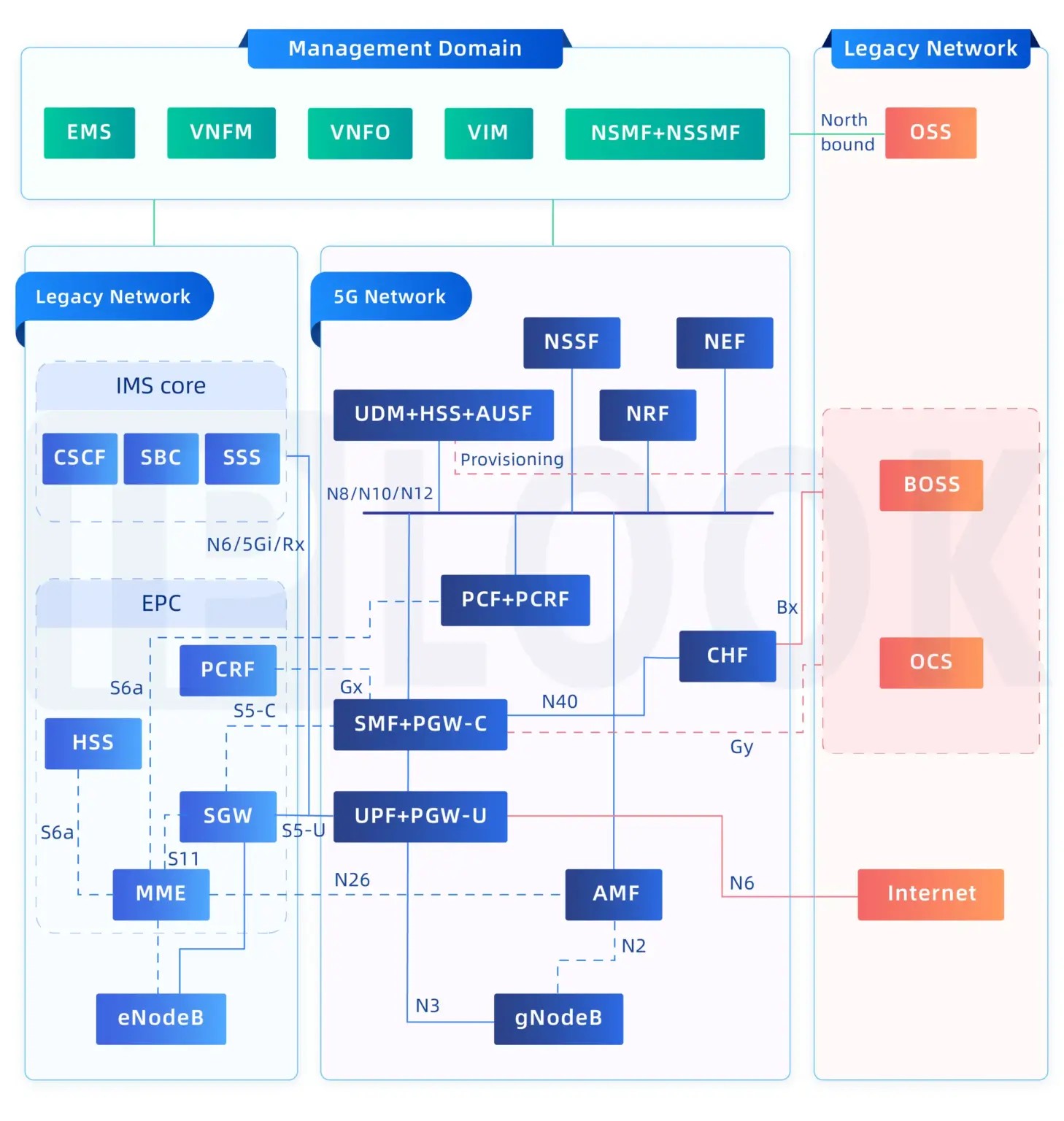
Separating the control plane from the user plane isn't just a theoretical exercise—it's quietly reshaping how networks handle scale and agility. In practice, this decoupling lets operators place user plane functions closer to where traffic actually originates or terminates, while the control plane remains centralized in a more protected, manageable location. The immediate payoff is a network that can breathe with demand, spinning up user plane resources at the edge without needing to replicate the entire signaling stack each time. It's a shift that turns rigid, monolithic cores into something far more adaptable.
One of the more tangible outcomes is how it changes the economics of roaming and multi-access deployments. Instead of backhauling everything to a distant anchor point, traffic can break out locally under the same policy control. This doesn't just cut latency—it also opens the door for specialized services that need to reside close to the user, like industrial automation slices or low-latency AI inference. The control plane stays aware of every session and policy, but the heavy lifting of packet forwarding happens where it makes the most sense. It's a separation of duties that feels almost obvious once you see it in action.
The real revolution, though, might be in how teams operate the network after the split. With the control plane abstracted, upgrades, scaling, and failure domains become more isolated. You can re-route control traffic without dropping user sessions, or upgrade signaling software without touching the forwarding path. This isn't just about better uptime—it's about shrinking the blast radius of human error and making the network less of a fortress and more of a fluid system. The practical impact is a network that finally behaves more like software and less like a monolithic appliance.
Edge Integration: How MEC Reshapes the Core
Multi-access edge computing pushes processing power and decision-making closer to where data originates. Instead of funneling every byte back to a distant data center, MEC nodes handle time-sensitive tasks locally, trimming latency to milliseconds. This shift relieves pressure on core infrastructure, letting it focus on broader orchestration rather than drowning in raw sensor feeds.
The real transformation happens when industry-specific protocols blend with cloud-native tooling at the edge. Factory floors run real-time analytics without backhaul bottlenecks, while retail spaces personalize offers on the spot. The core evolves from a monolithic traffic cop into a lightweight coordinator, stitching together distributed edge sites. As a result, reliability climbs because local processing keeps essential services running even when backhaul links falter.
NFV Orchestration: Making the Core Programmable
Network function virtualization has shifted the paradigm from rigid, hardware-bound infrastructure to software-driven agility. At the heart of this transformation lies NFV orchestration, a layer that abstracts physical resources and stitches together virtual network functions on demand. Rather than manually cabling and configuring appliances, operators define service chains through code—essentially treating the core network as a programmable canvas. This shift doesn't just speed up deployment; it opens the door to dynamic scaling, self-healing mechanisms, and the kind of customization that was unimaginable with legacy boxes.
What makes the core truly programmable is the orchestration engine's ability to translate high-level intent into real-time resource allocation. When a spike in signaling traffic hits, the orchestrator can spin up instances of virtualized MME or HSS within seconds, rebalancing the load without human intervention. It also decouples service logic from the physical location, enabling concepts like edge computing and network slicing. With APIs exposing every element's configuration, operators can run continuous integration pipelines against their own infrastructure, version-controlling the entire network state like software. This turns the core into a living system, constantly evolving through automated rollouts and rollbacks.
The real breakthrough, however, is how orchestration democratizes innovation. Instead of waiting for vendor roadmaps, operators can experiment with new protocols or security functions by simply composing virtual containers. A small team can prototype a custom packet inspection node, insert it into a live chain via a well-defined orchestration interface, and measure its impact without disrupting existing services. The core becomes not just a place where standards are implemented, but a platform where differentiation happens—fueled by the same programmatic flexibility that revolutionized cloud computing. This is the essence of making the core programmable: turning the network into an environment where ideas are expressed in code and deployed in minutes, not months.
Cloud-Native Cores: Building for the Next Decade
The push toward cloud-native architectures has moved beyond early adoption into a phase where resilience, efficiency, and developer velocity define success. We’re no longer just containerizing legacy workloads — the next decade demands cores built with intrinsic observability, declarative infrastructure, and seamless multi-cloud portability. Teams that invest in these patterns now are laying a foundation that treats change as a constant, not an exception.
At the heart of this shift is a quieter but profound rethinking of how we compose services. Rather than chasing every new orchestration framework, forward-looking architectures are converging around lightweight, event-driven runtimes and polyglot persistence layers. The goal isn’t uniformity for its own sake, but the ability to swap components as business logic evolves, without rewriting the operational scaffolding. This is where the real decade-scale leverage lies.
What often goes unspoken is how organizational habits have to mature alongside the technology. Cloud-native cores thrive when teams embrace small, independent deployables and guard against drift through policy-as-code. The tooling has stabilized enough that the bottleneck is no longer technical feasibility, but imagination and discipline. The next ten years belong to those who treat their platforms as living products, not static projects.
IoT-Optimized Architectures: Scaling the Core Efficiently
Connecting billions of devices exposes a hard truth about centralized systems: they weren't built for this scale. As sensor data floods in from every direction, the traditional hub-and-spoke model starts to crack under pressure. Latency spikes, bandwidth costs spiral, and the core becomes a single point of congestion. IoT-optimized architectures tackle this by rethinking where processing lives. Instead of funneling everything to a distant data center, they push decision-making outward, keeping the core lean and focused on what actually demands its attention.
Edge computing is often the first move, but it's not just about slapping servers closer to devices. Real efficiency comes from splitting intelligence thoughtfully. A vibration sensor on a pump doesn't need to stream raw measurements nonstop; its local node can detect anomalies and only escalate when patterns shift. This chopped-down version of processing lightens the load on the core, freeing it to orchestrate rather than babysit every data packet. The trick is balancing autonomy with oversight, so the system stays responsive without fragmenting into chaotic silos.
Scaling the core itself demands a different breed of design. Monolithic backends get replaced by loosely coupled services that can scale independently, often running across hybrid clouds or even in small regional clusters. Stateful workloads get partitioned carefully, stateless ones replicate almost freely. The result is an elastic spine that bends instead of breaking when device fleets double overnight. Crucially, this isn't about chasing one trendy tool; it's about treating the architecture as a living thing that adapts to traffic patterns and device roles, keeping the entire system humming without overprovisioning.
FAQ
A 4G core network, often called the Evolved Packet Core (EPC), acts as the central nervous system of LTE-based mobile services. It handles critical tasks like user authentication, session management, and data routing between the radio network and the internet. Without a robust core, you can't get the low latency and high throughput that define modern mobile connectivity.
Unlike the circuit‑switched cores of 2G and 3G, the EPC is fully packet‑switched from the ground up. This shift eliminates separate voice and data paths, enabling an all‑IP architecture that simplifies the network, reduces operational overhead, and allows operators to handle massive data traffic more efficiently.
Several implementations stand out. Ericsson's Cloud Core and Nokia's AirFrame‑based solution dominate many commercial rollouts, while Huawei's CloudEdge gained significant traction before geopolitical shifts. On the open-source side, projects like Open5GCore and Magma offer fully functional alternatives that are reshaping how smaller operators and enterprises build their networks.
Virtualization lets operators run core network functions as software on commodity hardware instead of proprietary boxes. This decoupling makes scaling easier, speeds up deployment of new features, and reduces capital costs. It also paves the way for network slicing and more agile operations, bridging the gap toward 5G.
By distributing network functions and allowing for pooling of resources, modern cores can tolerate hardware failures without service interruption. Techniques like control‑user plane separation and optimized packet forwarding cut latency, while built‑in load balancing ensures users experience consistently fast speeds even during peak hours.
Separating control plane functions from user plane functions, as done in CUPS, lets operators place data‑forwarding nodes closer to users while keeping management centralized. This reduces backhaul congestion, lowers latency, and enables more flexible architectures that better support edge computing and video streaming.
Users notice clearer voice calls, faster app downloads, and smoother video playback because the upgraded core reduces jitter and packet loss. Seamless handovers between cells and more reliable connections in crowded areas are direct results of the intelligent traffic steering these cores enable.
Yes, projects like Open5GS and free5GC have made full‑featured EPCs accessible to researchers and small providers. Magma, initially developed by Facebook, offers an open‑source evolved packet core designed for rural and remote connectivity, proving that community‑driven development can drive innovation even in the mobile core space.
Conclusion
The shift away from rigid, appliance-based EPCs has kicked off a genuine transformation in mobile networks. Instead of being locked into vendor-specific hardware, operators now run core functions as software stacks on standard servers. This virtualization not only slashes costs but also untangles the control and user planes through CUPS, allowing each to scale on its own terms. A surge in data at a crowded event, for instance, can be absorbed by spinning up additional user-plane nodes at the edge without disturbing signaling resources. Beneath that flexibility sits NFV orchestration, which turns the core into a programmable fabric where services chain together in minutes rather than weeks. Orchestrators manage lifecycle, scaling, and placement rules, so the network adapts automatically to shifting demand without human intervention. Together, these steps break the old hardware dependency and lay a dynamic, software-driven foundation that feels more like an internet service than a legacy phone system.
Pushing intelligence closer to users, edge integration via MEC embeds compute and storage inside the RAN or aggregation sites. That shortens the path for latency-sensitive tasks—think augmented reality overlays or factory robot controls—processing data locally instead of backhauling everything to a distant data center. Meanwhile, the core itself is being rebuilt around cloud-native principles: microservices in containers, stateless design, and continuous delivery pipelines. This isn’t just a technical cleanup; it means operators can roll out a new feature in one region, test it quietly, and then scale it globally in hours. On the IoT side, dedicated lightweight cores handle massive device counts without wasting resources. They strip down session management, optimize small-data transmissions, and group devices to avoid signaling storms. By combining edge insight, cloud-native agility, and IoT-specific efficiency, the 4G core evolves into a versatile platform that powers everything from wearable gadgets to industrial automation, proving that LTE is nowhere near the end of its creative arc.
Contact Us
Contact Person: Shimmy
Email: [email protected]
Tel/WhatsApp: 85253392231
Website: https://www.iplook.com