

Top HDMI Cable Picks for Crisp, Lag-Free Home Theater Viewing
2026-11-16
A home theater lives or dies by the quiet details—the split-second syncing of lips to dialogue, the unbroken sweep of a slow pan, the deep black of a night scene without digital noise. Yet most setups still rely on whatever HDMI cable came in the box, treating the one link that carries every frame and audio cue as an afterthought. This guide cuts through the usual spec-sheet fog to highlight HDMI cables that actually hold up under real viewing conditions, whether you're running 4K at 120Hz or a full Atmos chain. Along the way, you'll see why EBCYX keeps surfacing in enthusiast setups—not as a logo, but as the cable that quietly disappears behind the picture.
What Actually Causes HDMI Lag (and How the Right Cable Fixes It)
Most people assume HDMI lag is about the signal traveling too slowly from a console or PC to the screen. That is not really the issue. Data moves through the cable close to light speed, so the tiny distance across a room adds almost nothing. The actual delay builds up in processing: the source may scale or buffer frames, the display then runs its own noise reduction, sharpening, and tone mapping, and every chip in that chain needs a moment to finish its work. The cable only becomes part of the problem when it forces those chips to work harder. A marginal cable at high bandwidth can produce bit errors, which trigger retransmission or HDMI re-training, and that interruption is felt as lag.
Here is where things get counterintuitive. A “fast” HDMI cable is not fixing lag by moving bits quicker. It fixes lag because it delivers a clean enough signal that the receiver does not have to pause and repair the data stream. Cheap or overly long cables often have weak shielding and inconsistent impedance. When you push 4K at 120Hz or 10-bit HDR through them, the eye pattern at the receiving chip closes up, the clock recovery starts to drift, and the interface may fall back to a lower data rate or spend extra cycles on error correction. Those recoveries are not large, but they stack with every frame.
The right cable is usually boring: certified for the bandwidth you actually run, no longer than necessary, and built with decent shielding around the twisted pairs. In practice, swapping a worn five-meter cable for a certified two-meter cable has cleared up “controller feels heavy” complaints without changing any display settings. It is not magic, just fewer hidden retries between the source and the panel.
4K, 8K, and Gaming: The Bandwidth Numbers That Matter
4K streaming rarely sticks to a single number. Most 4K 24/30 fps feeds encoded with HEVC or AV1 land between 12 and 20 Mbps, while 60 fps HDR material can ask for 30-45 Mbps depending on grain, motion, and how aggressive the compression is. A 4K Blu-ray remux is another world entirely and can exceed 100 Mbps without much effort. So the resolution badge on a display tells you far less than the codec, frame rate, and source.
8K is not a clean multiplier of those figures. YouTube's 8K AV1 streams often sit in the 40-80 Mbps window, but high-bitrate 8K HDR captures can push past 150 Mbps and instantly fill a mid-tier cable link. On a 100-200 Mbps plan, one or two of those streams leave almost no room for game downloads, cloud backups, or a stable voice call. Upstream matters as well: broadcasting gameplay or moving high-resolution captures quickly exposes the 10-20 Mbps upload ceilings still common on cable.
Gaming bandwidth is more about consistency than raw throughput after roughly 35-50 Mbps for 4K cloud play. A 100 Mbps line handles that just fine, but a wireless channel that drops packets under load or adds variable 30-40 ms latency will blur and stutter the stream. Two simultaneous 45 Mbps game sessions plus background traffic will saturate a 100 Mbps connection in practice, while a wired Ethernet link or clean Wi-Fi 6 channel keeps frame pacing intact. The numbers worth watching are packet loss, jitter, and sustained throughput during peak hours.
Longer Runs Without Losing the Signal
The appeal of a longer run often comes with a hidden trade-off: the farther you go, the easier it is for your form, cadence, and rhythm to quietly fall apart. Instead of chasing distance for its own sake, the goal becomes learning how to extend the session while keeping the quality of each stride intact. That means dialing back the pace just enough to stay conversational, checking in with your breathing every few minutes, and treating the middle miles not as a slog but as a chance to settle into a groove that still feels controlled.
One practical way to train this is to break the run into smaller segments without actually stopping. Pick a landmark up ahead, focus on holding relaxed shoulders and a quick, light footstrike until you reach it, then reset and repeat. It sounds simple, but this shift in attention prevents the late-run drift where the signal of good running gets lost in fatigue. Over time, the stretches between resets grow longer, and the effort needed to maintain smooth mechanics drops.
You might also notice that losing the signal rarely happens all at once. It starts with a slightly heavier heel strike, then a shorter arm swing, then a pace that creeps up because the cadence slowed. Catching those small cues early is what separates a strong long run from one that just accumulates time on feet. The finish should feel like the same runner who started, only with a little more confidence in the ability to hold it together when the miles stack up.
Why Shielding and Connectors Decide Longevity
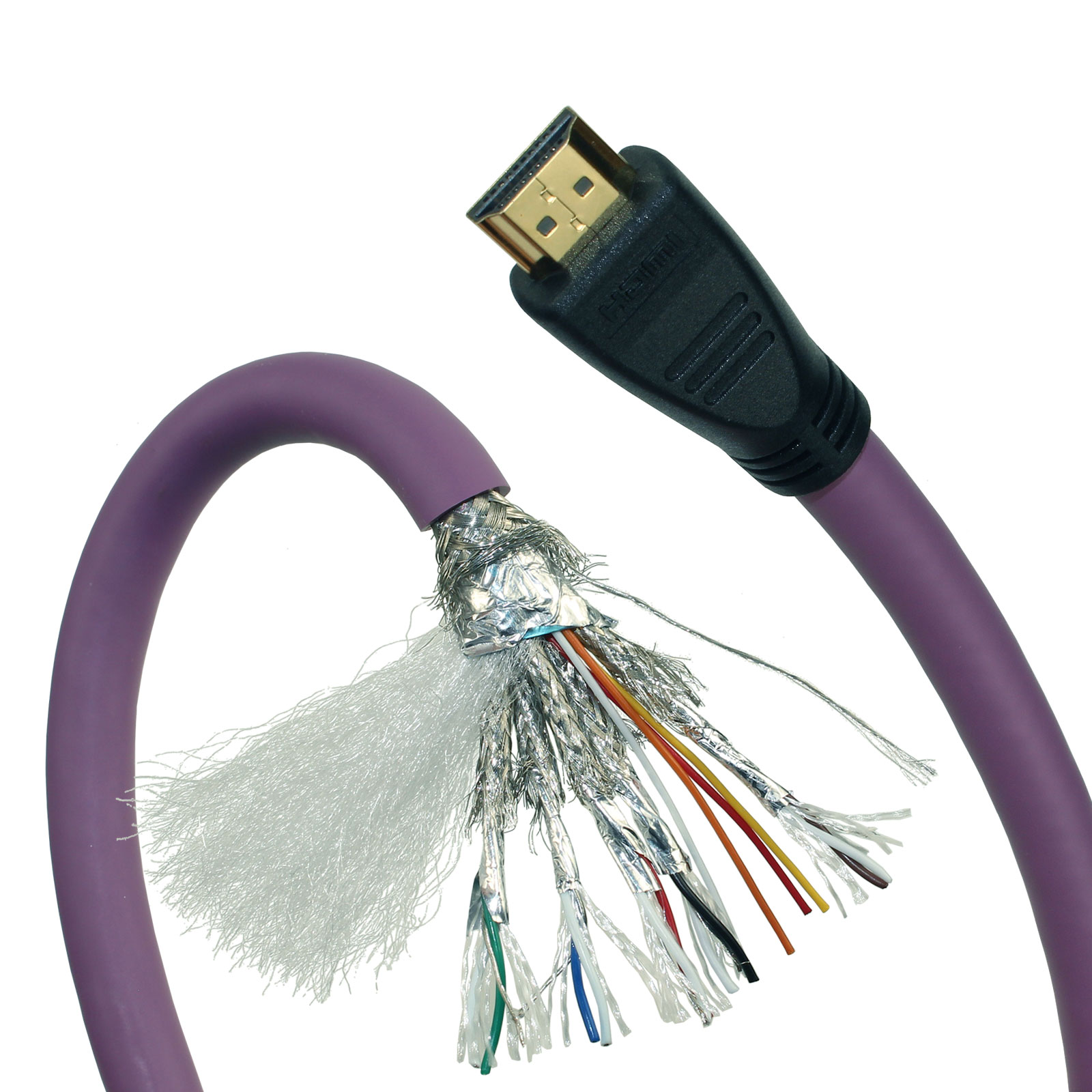
Most failures in long-running equipment never trace back to the silicon. They show up at the edges of a board, where a cable meets a contact and where a housing either keeps noise out or lets it drift in. Shielding works as a quiet barrier, but only while its seams, folds, and drain paths stay intact; once corrosion or repeated flexing opens even a small gap, the margin for error narrows quickly.
Connectors carry more burden than their size suggests. Every mating cycle shaves a little life from the plating, and tiny swings in temperature or vibration turn ordinary contact points into sources of fretting, oxidation, and rising resistance. A signal that was clean during commissioning can become intermittent months later simply because the contact force relaxed or a film built up where two metals meet.
Designing for longevity therefore means treating shielding and connectors as load-bearing parts, not afterthoughts. Strain relief, sealed interfaces, adequate plating thickness, and consistent grounding paths do more for years of stable operation than most component upgrades. Where those details are weak, the system rarely fails all at once; it degrades in ways that are expensive to chase and easy to blame on the wrong part.
Matching Cables to Your Setup, Not the Hype
Ignore the spec-sheet theater for a moment and look at the actual connection. A short HDMI or USB cable in a typical living room either meets the required standard or it doesn’t; paying for exotic plating rarely changes that outcome. What matters more is whether the connector locks firmly, the length leaves a little slack without coiling, and the jacket can survive being bent behind a desk.
Analog interconnects and long runs are where construction choices show up. Shield coverage, conductor gauge, and how well the ground is handled matter far more than the story on the box. If you are routing near power strips or inside a wall, pick a cable built for that job instead of the one with the flashiest packaging.
Match the cable to the distance, the environment, and the gear at both ends. A well-chosen basic cable beats a premium cable that is too long, too stiff, or terminated with the wrong connector. Spend the leftover budget on better sources, cleaner power, or simply moving the components closer together.
The Cables We Keep Plugged In at Home
There's a short, white USB cable behind the nightstand that hasn't charged anything in months. It stays plugged in because pulling it out means reaching behind a heavy piece of furniture. Around the house, these quiet residents multiply: a frayed micro-USB near the couch, a laptop charger under the desk, a phone cable dangling from the kitchen counter. They rarely serve their original purpose, but they hold their spot in the outlet like tenants who stopped paying rent long ago.
Some cables earn a permanent place because they keep the less visible parts of the house running. The router power cord, the HDMI line behind the television, the printer cable that has not been unplugged since setup day. These are not the cables we think about until the internet drops or the TV flashes a no signal message. By then they are less like accessories and more like the nervous system of the room, dust-covered and essential.
Then there is the drawer or basket where spare cables go to wait. A spare USB-C, an old headphone jack, a charging brick with no matching cord. We keep them plugged in or coiled nearby because getting rid of them feels like admitting the device they once served is truly gone. In most homes, the number of cables quietly outnumbers the outlets, and the ones still plugged in are simply the survivors of an ongoing negotiation between convenience and clutter.
FAQ
It mostly comes down to bandwidth, shielding, and the little things like eARC support. A theater setup often pushes 4K HDR, high frame rates, and object-based audio through one cable, so a certified Ultra High Speed HDMI cable rated for 48Gbps will handle that without sparkles, dropouts, or audio cutting out. Cheap or older cables often fail quietly on 18Gbps or 4K60 HDR signals.
Not really. The price sweet spot is usually a certified cable from a known brand, not the cheapest bin and not the boutique cable with metal braiding and claims of 'hand-tuned' conductors. As long as it carries the Ultra High Speed HDMI certification hologram, a $20 to $40 cable will typically perform the same as a $100 one over short to medium runs.
Length is one of the few places where HDMI gets genuinely tricky. Passive copper cables start to lose signal integrity around 15 to 25 feet depending on gauge and build quality. For longer runs, especially 4K HDR or 4K120, an active or fiber optic HDMI cable is usually the safer pick. Running a 30-foot copper cable may work for 1080p but fall apart with high-bandwidth content.
Honestly, the cable itself doesn't shave milliseconds off the signal path. What it can do is prevent the connection from negotiating down to a lower bandwidth mode, which causes black screens, artifacts, or forcing 1080p. If your old cable can't handle 4K120, VRR, or ALLM, a proper 48Gbps cable lets the TV and console run at their full settings without those glitches.
It guarantees the cable has been tested to handle 48Gbps, which covers 4K120, 8K60, HDR, and eARC in theory. Certified cables also have a hologram and QR-style verification, so you're not just trusting ink on the package. Without certification, a cable may still work, but the label is the most reliable way to avoid spending money on something that bottlenecks your setup.
Yes, especially when you rely on eARC to send audio from the TV back to a soundbar or receiver. A marginal cable can cause audio dropouts, clicks, or even stop eARC from negotiating properly. For standard ARC and older compressed formats it rarely matters, but lossless Atmos and DTS:X need a stable, higher-bandwidth connection to avoid occasional silence or lip-sync drift.
They earn their keep in long runs, typically 25 feet and up, or in walls where you'd rather pull a thin cable than a thick copper one. Fiber also shrugs off electromagnetic interference, which helps in rooms with lots of power cables or equipment nearby. For a short shelf run from a streaming box to a TV, they're unnecessary, but for a projector or a long in-wall path they solve problems copper often can't.
Conclusion
Most “lag” in a home theater isn’t the cable adding latency; it’s signal degradation forcing retransmission or forcing your source to fall back to a lower bandwidth. A cable with the right internal build keeps the TMDS or FRL signal intact, so your display doesn’t have to resync or compress. That’s why we lean toward certified 48Gbps HDMI 2.1 cables even for 4K setups: they don’t get pushed to the edge, so handshakes feel faster and dropouts disappear. For 4K 60Hz HDR you need a solid 18Gbps path, but for 4K 120Hz or 8K 60Hz with VRR and HDR, the full 48Gbps lane matters more than any marketing name.
For longer runs past about 10 feet, passive thin cables start to fail in subtle ways—sparkle, dropouts, slow source switching—so we use active fiber or well-built copper with heavier gauge. The connectors and shielding decide whether a cable survives behind a media console: gold or nickel plating matters less than strain relief, tight soldering, and braided shielding. We keep it simple by matching cables to actual devices rather than hype; a soundbar doesn’t need 48Gbps, but a PC or PS5 does. In daily use, the cables we keep plugged in are short certified 2.1 copper run to the TV, a fiber cable to the projector, and one flexible 10-foot cable for the side console.
Contact Us
Contact Person: David Yang
Email: [email protected]
Tel/WhatsApp: 8615814734054
Website: https://www.ebcyx.com/