

Top Industrial Door Factory Innovations Shaping Modern Warehousing
2026-11-24
Warehouse design used to treat doors as a spec-sheet afterthought. That era is over. Automated fulfillment, stricter fire codes, and cold-chain margins have pushed industrial door factory innovation into the center of facility planning. The result is a new generation of high-speed, insulated, and fire-rated doors that cut energy loss, speed up traffic flow, and survive abuse that would sideline older models. FANSI sits inside that shift with products that blend safety engineering and daily operational speed. Here is a closer look at the factory-level breakthroughs quietly changing modern warehousing.
Faster door cycles are rewriting cold storage throughput limits
Cold storage docks have long treated door speed as a maintenance detail. The real constraint on throughput was assumed to be lift truck travel and rack layout. That assumption falls apart when a door takes eight or ten seconds to open, hangs while a forklift passes, then drifts down slowly enough to let a fog bank roll across the floor. Each extra second of exposure pulls in warm, humid air that the refrigeration system has to remove again, and recovery time quietly eats into the next load.
Faster door cycles change that equation. Modern high-speed fabric or rigid panels can clear the opening in under two seconds and close immediately after the load breaks the photo eye. The gain is not just the few seconds saved per pass. It is the shorter recovery window after the door closes, the tighter seal during the closed phase, and the ability to put more pallets through the same dock before coil temperatures drift upward. Operators begin to treat the door as part of the material flow, not a speed bump in it.
Once the door cycle drops low enough, throughput math shifts. A facility that previously limited itself to four moves per dock per cycle window can add one or two more without expanding the freezer footprint. Some operators use the extra capacity to delay capital projects; others reduce fan runtime because the air stays drier and more stable. Either way, the bottleneck has moved from the doorway to where it belongs—the actual handling work.
Insulated slat redesigns that quietly lower warehouse energy bills
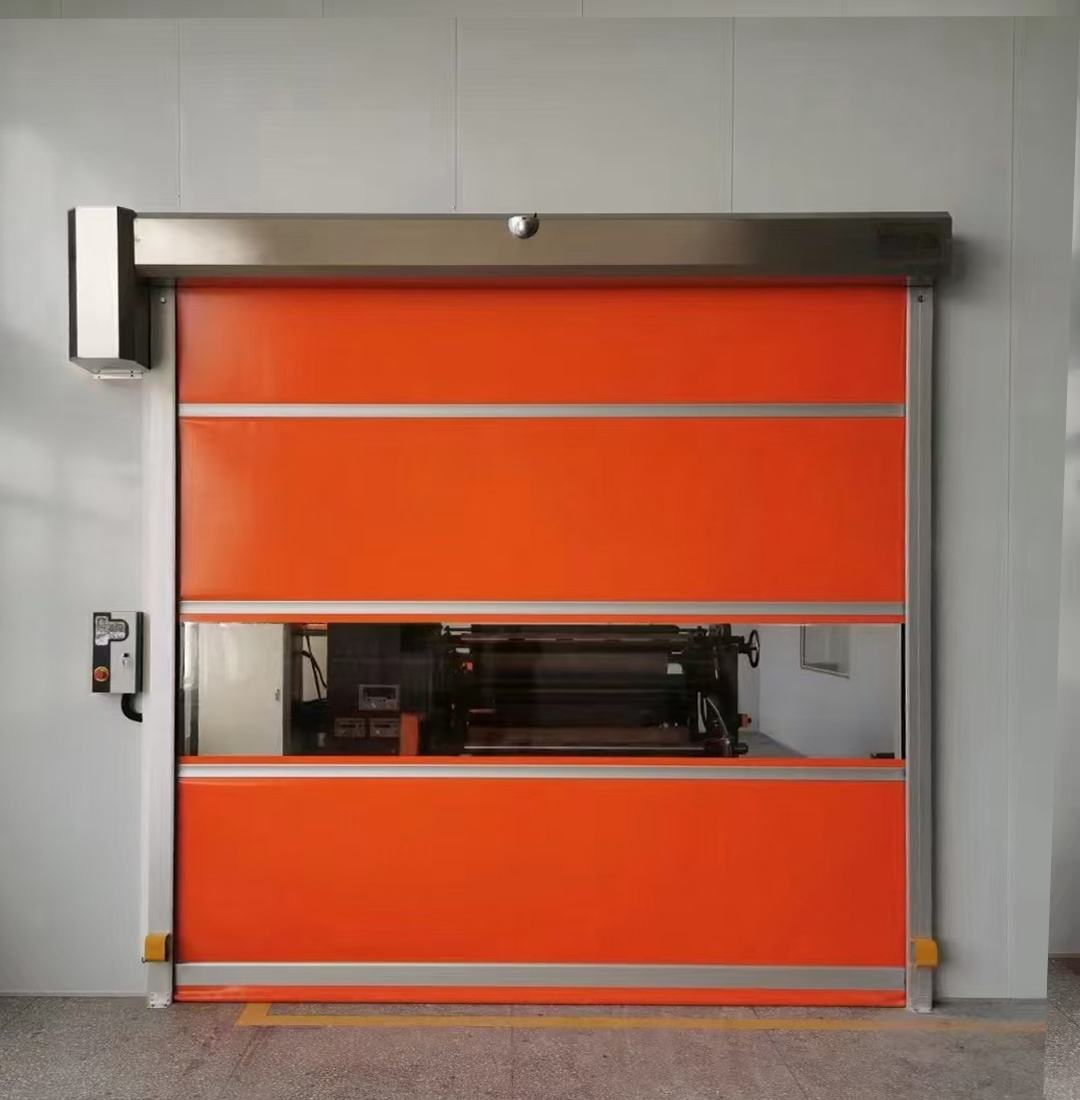
Warehouse heating bills often stay high because of the smallest details—the slats in an overhead door. In older designs, each slat is a hollow metal channel that lets cold air move through the core, and the joints leak enough to keep heaters working overnight. Replacing them with insulated slats that have a filled core and an internal thermal break stops much of that transfer. The door frame stays in place, so the upgrade is less disruptive than replacing the whole opening.
What surprises most facility managers is how the reduction accumulates without a visible change. The building doesn't feel different during a quick walkthrough, but the dock area stays warmer, and the heating system doesn't run as long after a trailer is sealed against the bay. The tighter slat profile also reduces the clatter when the door rolls up, which matters in warehouses where night shifts share space with order pickers.
Over a full winter, those small differences show up as lower gas or electric use. One or two dock doors might not move the needle immediately, but across six or eight openings the savings become harder to ignore. The upgrade tends to pay for itself by the second cold season, especially where dock doors are opened dozens of times per shift. There's no new training, no extra maintenance routine, just a door that holds the line between inside comfort and outside weather a little better.
Safety light curtains and reversing edges now handle busier docks
Dock traffic has changed. It is no longer just a handful of forklift trips per shift; pallet jacks, reach trucks, and automated guided vehicles now cross the same threshold while pickers move in and out on foot. Safety light curtains have had to lose their old sensitivity quirks. Modern units can distinguish a person stepping through a doorway from a cart momentarily left in the beam, and they reset with less manual fuss, which matters when a dock door cycles dozens of times an hour.
Reversing edges on dock levelers and vehicle restraints are doing more of the same work, but in places a light curtain cannot watch. They now come with smarter pressure-sensing profiles and faster reaction times, so a trailer shifting during loading does not slam a lift truck into a stationary edge. That combination means the safety layer no longer brings the dock to a halt every time the equipment brushes against a dock seal or a pallet gets too close.
What stands out on the busiest docks is not just the hardware itself, but how it talks to the dock control system. A light curtain can mute only while a load is passing, then re-arm automatically. A reversing edge can send a brief signal that pauses a leveler instead of triggering a full emergency stop. These smaller, context-aware responses keep people protected without turning a heavy flow of goods into a stop-and-start bottleneck.
Modular track systems cut installation downtime for active facilities
In hospitals, data centers, and continuous-process plants, shutting down a whole line for track replacement is rarely an option. Modular track systems change that math. Factory-prefabricated rail sections arrive with mounting holes, alignment features, and connection hardware already in place. Crews can remove one worn segment, slide in a new module, and torque a few fasteners without welding, grinding, or waiting for concrete to cure. The work often fits into a planned maintenance window instead of forcing an extended outage.
Because the parts are standardized, installation no longer depends on a single highly specialized fitter making field adjustments. A small team can set and level the rail using built-in reference surfaces, then lock the joints. Noise and dust stay low enough that adjacent operations can continue behind a temporary barrier. Some facilities stage modules near the work area ahead of time, so the actual swap happens in hours rather than days.
The real benefit shows up in occupied buildings where even a short shutdown carries heavy costs. Rather than asking tenants or production staff to vacate, facility managers can schedule replacements zone by zone. One section runs while the next is being renewed. Over the life of the building, that flexibility turns track maintenance from a major event into a routine task.
Smart controllers let dock doors talk to WMS and forklift traffic
On a busy dock, the gap between what the warehouse management system thinks is happening and what forklift drivers actually see can widen within minutes. Smart controllers close that gap by turning each dock door into a network node that reports door position, lock status, trailer presence, and loading progress back to the WMS. Instead of relying on a supervisor to update arrivals or manually assign doors, the controller receives appointment data and task sequences directly, then opens or locks the appropriate door only when the WMS confirms the load is ready.
The same controller also coordinates forklift traffic without adding another screen for drivers to ignore. Door-mounted sensors detect when a trailer is docked and when the dock leveler is engaged, while a simple red or green light above the door tells operators where to stage pallets or drop an empty. If two doors finish unloading within the same window, the controller can direct the next forklift run to the lane with less congestion, feeding that decision from live trailer unload counts rather than a fixed zone assignment.
Over time, the data collected by these controllers reveals patterns that used to be invisible: which doors wait longest for a forklift, how often a trailer is opened before the WMS marks it inbound, and where recurring delays start. Because the controller sits between the WMS and physical dock hardware, warehouses can adjust door behavior without replacing legacy equipment. One site might use it to sound a warning when a forklift enters a lane with an unsecured trailer; another may simply use it to keep the dock door closed until the driver has scanned the right manifest.
Tougher bottom bars and wind-rated panels built for hurricane-season loading
The bottom bars are built heavier than the rest of the curtain because that is where wind-driven debris and pooled water concentrate force. The lower rail is reinforced through the full width and anchored with deeper end caps, so it resists bending at the guide tracks instead of twisting loose after repeated gust cycles.
The panels themselves carry wind-load ratings that match exposed coastal zones, not just inland presets. A tighter corrugation profile and thicker steel skin reduce the bowing that occurs when negative pressure pulls the door outward, while the interlocking seams stay engaged under uneven loads.
Hardware selection for hurricane-season loading is treated as one system rather than a mix of parts. Tracks, bottom bar, and curtain gauge are matched so the door distributes pressure evenly. That reduces the tendency for a single component to pass a lab test but fail after hours of shifting wind direction.
FAQ
It usually comes down to how much intelligence is embedded in the door. Modern high-end units combine rapid open-close cycles, sensor-based traffic detection, and real-time diagnostics. Instead of simply sealing an opening, they actively manage airflow, reduce cross-contamination, and report their own wear patterns to facility systems.
Many now focus on thermal isolation and speed. Faster cycle times mean temperature-controlled air escapes for shorter periods. Advanced seals, insulated slats or panels, and tighter perimeter designs also help. Some models use automatic re-closing logic tied to air pressure or interior sensors, so the door only stays open as long as necessary.
There is a shift toward reinforced composites, corrosion-resistant metals, and replaceable wear strips. Impact-resistant panels are common because warehouse vehicles hit doors frequently. The real change is modular design: instead of replacing an entire curtain or panel after damage, facilities swap only the affected section and keep downtime minimal.
They turn doors into active equipment rather than passive barriers. Sensors detect approaching forklifts, distinguish pedestrians from vehicles, and trigger opening only when needed. Connectivity allows remote monitoring, usage logs, temperature alerts, and fault codes. Maintenance teams can often see a problem developing before the door fails during a shift.
In most high-traffic settings, yes. The returns come from fewer bottlenecks, less energy loss, lower product spoilage, and reduced equipment damage caused by slow-moving doors. Over a few years, faster throughput and fewer repairs can more than offset the initial price difference, especially in cold storage or clean environments.
Modern designs often include breakaway bottom edges, light curtains, and obstruction detection that reverses door movement before contact. Some systems slow down automatically near full close to reduce pinch points. There is also stronger integration with warehouse traffic systems, so doors do not close on a vehicle that is still crossing.
The focus there is on hygiene and tight sealing. Manufacturers use smooth, easy-to-clean surfaces, sloped edges to avoid debris collection, and high-speed stainless steel or food-grade polymer components. Rapid cycles help keep frost buildup low and temperature bands stable, which reduces condensation and contamination risk.
Look beyond the quoted price. Ask about cycle life, crush or impact recovery, lead time for spare parts, and whether the door integrates with existing building management software. A good supplier will also provide service support and clear maintenance intervals rather than treating the sale as a one-time transaction.
Conclusion
Faster door cycles have quietly become the backbone of high-volume cold storage, trimming the time pallets spend exposed to ambient air and letting facilities push more loads through the same footprint. Paired with redesigned insulated slats, the payoff now reaches beyond speed: thermal breaks and tighter seals cut compressor runtimes, so a dock that once bled cooling capacity can hold lower temperatures without a matching spike in energy spend.
Around the busier edges of the warehouse, safety systems have grown less reactive and more integrated. Light curtains and reversing edges no longer just stop a closing panel; they read the pace of forklift traffic and hold position during peak handoffs. Modular track installations keep retrofits from shutting down active docks for days, while smart controllers feed door status and cycle data straight into WMS platforms, giving supervisors a clearer view of flow. At the building envelope, stronger bottom bars and wind-rated panels stand up to hurricane-season abuse, protecting both product and people without slowing the daily rhythm of loading.
Contact Us
Contact Person: Liam
Email: [email protected]
Tel/WhatsApp: (+86)16658531012
Website: https://www.fansifiredoor.com