

Top Large Industrial Ceiling Fans Makers Revolutionizing Workplace Airflow
2026-11-16
Warehouse heat, stale air and soaring energy bills don’t have to be your daily reality. A quiet revolution in industrial ventilation is being led by the world’s most forward-thinking ceiling fan makers—and at the center of it is VINDUSFAN. These aren’t the sluggish metal paddles from decades past. We’re talking about high-volume, low-speed engineering that moves mountains of air while sipping electricity. In this post, we’ll uncover the innovators reshaping how factories and logistics hubs breathe—and why a single, well-designed giant overhead fan can outperform a dozen traditional floor blowers.
How Air Movement Innovation Is Quietly Reshaping Factory Comfort
Walk into a modern factory floor today, and you might notice something missing—the constant, distracting roar of traditional high-speed fans. In its place, a subtle yet powerful shift is happening overhead. Large-diameter, low-speed ceiling fans are moving massive columns of air almost silently, breaking up stagnant heat layers and creating a steady, full-coverage breeze that reaches every corner. Workers no longer need to huddle near portable spot coolers, and managers are seeing that genuine thermal comfort comes not from blasting cold air, but from the deceptively simple principle of gentle, continuous air movement.
The innovation here isn’t about raw power, but about precision. Advanced blade geometries inspired by natural forms—like whale flippers or maple seeds—slice through the air with minimal drag, turning slowly while moving an enormous volume. Variable-speed controls let facilities match airflow to the day’s rhythm: a gentle settling breeze during light shifts, a more assertive push when production peaks. It’s the kind of comfort that works with thermodynamics rather than against it, making a 90°F space feel several degrees cooler without touching the thermostat. For spaces the size of football fields, that means less strain on HVAC systems and more stable indoor conditions, all while energy consumption drops noticeably.
Beyond the physics, the quietest part of this revolution is how it transforms daily work life. When you remove the wall of noise, communication returns—a supervisor can speak in a normal voice from across a bay, and that low-frequency drone no longer adds to mental exhaustion. Operators report fewer end-of-shift headaches, and safety checks become more attentive. It’s a reminder that comfort isn’t just a number on a gauge; it’s felt in the alertness of a team and the subtle hum of a space where the only sound is productive work. That’s the unexpected outcome of making air move intelligently: it reshapes the human experience inside the factory, not just the temperature.
The Engineering Behind Oversized Blades That Move More With Less
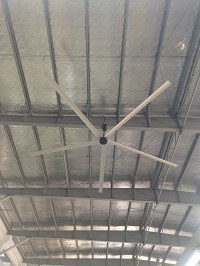
In the pursuit of extracting every possible watt from a given wind or tidal stream, blade size has become a quiet arms race. But simply scaling up a proven design doesn’t work—physics pushes back hard. The real breakthrough isn’t just about length; it’s about rethinking the entire load path from tip to root. By using carbon-fiber spar caps that taper not just in thickness but in fiber orientation, engineers can carry immense bending moments while shedding dozens of kilograms compared to a purely glass-fiber layout. That weight saving cascades into lighter nacelles, gentler tower loads, and a blade that can flicker through a larger swept area without demanding a foundation built like a fortress.
Beyond raw materials, the shape itself has undergone a quiet revolution. Modern profiles borrow from humpback whale flippers, sporting tubercle-like leading-edge serrations that delay stall and let the blade hold its grip on the wind at absurd angles of attack. Combined with inboard sections that are deliberately thickened to act as structural beams rather than pure aerodynamic surfaces, the blade becomes a hybrid: an airfoil near the tip, a truss near the hub. This shift means the outer third does most of the harvesting while the inner two-thirds earn their keep by surviving—and the net result is a rotor that sweeps a colossal circle yet sips wind with an almost lazy, high-torque authority.
The final piece sits not in the blade itself, but in the way it is commanded. Individual pitch actuators no longer just feather the whole blade away in a storm; they now tweak each blade’s angle multiple times per rotation, actively unloading gust spikes before they reach the gearbox. Flap-wise, the structure is tuned so its first bending frequency nestles precisely between rotor-passing harmonics, dodging resonance like a musician avoiding a sour note. This active aeroelastic tailoring means that a blade spanning the length of a football field can twist and flex to shed fatigue-inducing peaks, all while the generator sees only a smooth, filtered torque. The result is a machine that feels smaller than it is—quieter, more predictable, and capable of pumping out megawatts with far less wear per rotation.
Why Facility Managers Are Rethinking Traditional Cooling Methods
Facility managers have long relied on chilled water systems and rooftop units that operate on fixed schedules, but this approach is proving costly and rigid. These traditional cooling methods often run at full capacity even when buildings are partially occupied, wasting energy and driving up operational expenses. With rising electricity prices and stricter carbon emission targets, continuing with a one-size-fits-all cooling strategy no longer makes financial sense. Managers are now scrutinizing every kilowatt-hour, realizing that legacy systems not only fail to adapt to real-time demand but also rack up excessive maintenance costs due to constant wear on compressors and fans.
New challenges are forcing a shift in perspective, especially as heatwaves become more frequent and indoor air quality demands intensify. Conventional cooling equipment often struggles to maintain consistent temperatures across large, open-plan spaces or zones with fluctuating occupancy. Occupant complaints about stuffy meeting rooms or overcooled lobbies highlight the limits of centralized systems that lack granular control. This is pushing decision-makers to explore solutions that blend mechanical cooling with passive design elements, like dynamic shading or natural ventilation, recognizing that comfort is not just about lowering thermostats but managing humidity and airflow more intelligently.
Economic pressures and the push for decarbonization are accelerating the reevaluation. Many facilities now prioritize technologies that can integrate with on-site renewable energy or thermal storage, allowing cooling to be shifted to off-peak hours. Rather than simply replacing old chillers with newer models, managers are adopting a whole-building approach—using data from sensors to optimize performance and aligning cooling strategies with real occupancy patterns. This means looking beyond equipment specifications and embracing adaptive, low-carbon solutions that reduce reliance on compressors during milder weather and cut operational costs year-round.
Breaking Down the Real Energy Savings No One Talks About
Most people fixate on switching off lights or unplugging chargers, but the quietest energy drain often hides in how we heat water. A poorly tuned water heater can run far longer than needed, silently adding double-digit percentages to a monthly bill. Simply adjusting the factory-set temperature down a few degrees and insulating the first few feet of hot water pipe can deliver savings that rarely make it into the popular energy tip lists.
Another overlooked opportunity sits right behind the fridge. When condenser coils get coated in dust, the compressor works harder and cycles more often, gradually pushing electricity use noticeably higher. Cleaning those coils every six months takes five minutes, but the ongoing reduction in power draw is substantial enough to treat it less like a chore and more like a mini investment in household efficiency.
Perhaps the most invisible gain comes from fixing how a home breathes. Leaks around recessed lights, attic hatches, and even electrical outlets create a constant exchange of air that forces heating and cooling systems to fight against the outdoors. Sealing those small gaps with foam gaskets or caulk often pays back faster than expensive window replacements, yet it remains the kind of simple, unglamorous fix that advertising never bothers to sell us.
Design Choices That Make or Break Air Circulation in Large Spaces
When you step into a vast atrium or an open-plan office, the sense of comfort rarely comes from temperature alone—it hinges on how air drifts, swirls, or stagnates around you. The single most overlooked factor is the placement and scale of inlet and outlet vents. Positioning supply diffusers high and return grilles low seems obvious for thermal buoyancy, yet many designs ignore the horizontal path the air must travel. If supply jets collide with structural beams or get trapped beneath deep balconies, you end up with dead zones where CO₂ levels creep up and warmth pools unevenly. A smarter approach studies the room's actual geometry: using computational fluid dynamics not as a sales tool but as a rough sketchpad to test where air will truly linger. Sometimes the fix is surprisingly low-tech—re-angling a row of nozzles or adding a simple deflector—but it demands a designer willing to observe how a space breathes rather than just hitting a target air-change rate.
Ceiling height and the shape of the roof can quietly sabotage even the best mechanical systems. In large, flat-roofed halls, warm air tends to form a stagnant blanket near the ceiling, resisting mixing unless intentional disruption exists. Pitched or curved roofs encourage a gentle roll of air that can be harnessed with minimal fan power, pulling heat upward and outward in a natural convective rhythm. The material palette matters too: exposed concrete or brick absorbs daytime heat and re-radiates it slowly, setting up invisible convection currents that may fight or feed the intended airflow pattern. Instead of fighting these behaviors with more fan capacity, successful designs lean into them—using high-level operable windows or clerestory vents to bleed off the heat reservoir before it builds, and selecting finishes that stabilize indoor climates passively. It’s a quiet choreography between the building’s bones and the air that moves through them.
Possibly the greatest illusion in large-space ventilation is that uniformity equals comfort. People don't experience a room as an average; they feel the draft across their neck or the sudden pocket of stillness beside a partition. That's why dividing a cavernous room into smaller climate zones—not with walls, but with strategic low-velocity fans, displacement diffusers at floor level, or even sculptural elements that guide airflow—often outperforms expensive all-air systems. In a museum gallery, for instance, a slow, floor-sourced stream of conditioned air can envelope visitors without disturbing delicate artifacts, while the high-volume void above remains mostly untreated. This layered strategy accepts that perfect mixing is unnecessary and instead focuses on the occupied layer. It’s a shift from treating air as a uniform body to understanding it as a series of local microclimates, each shaped by human presence, light, and the subtle architecture of movement.
What Sets Visionary Fan Builders Apart in a Crowded Market
What truly distinguishes visionary fan builders isn't just their ability to churn out content—it's how they read the room before anyone else speaks. While most chase trending formats or mimic popular creators, these builders tap into unspoken desires. They notice when conversations become repetitive, when a community's excitement starts to flicker, and they fill those gaps with something that feels less like a product and more like a discovery. It's that preemptive instinct, rooted in genuine listening, that makes their work feel inevitable rather than manufactured.
The pacing of their output also breaks the usual mold. Instead of flooding channels with constant noise, they appear at moments that carry emotional weight—post-show lulls, anniversary silences, or unexpected cultural moments that breathe new life into the fandom. This restraint builds trust. Followers learn that when this creator posts, it won't be filler. It will be a perspective or a piece of craft that rekindles why they fell in love with the source material in the first place. In a market exhausted by overproduction, their selective presence acts as a reset button.
Beyond strategy, there's a craft-forward stubbornness that sets them apart. They obsess over textures, color choices, or writing cadences that mirror the original work’s soul rather than just its surface. This isn't about polish for its own sake—it's about preserving a sensory memory. A prop replica doesn't just look accurate; it carries the weight of a story beat. A piece of music doesn't just mimic; it extends the emotional geography of a scene. By refusing to cut corners on these felt details, they invite their audience into a deeper conversation, one where creative respect outweighs quick consumption. The result is loyalty that algorithms can't replicate.
FAQ
It's all about the fan's ability to move massive amounts of air quietly while consuming minimal power. The real breakthrough comes from precisely engineered blades that push air evenly, eliminating hot and cold pockets without blasting workers with harsh drafts.
They design fans with large diameters and optimized blade profiles that create a gentle, building-wide circulation. This pushes hot air trapped at the ceiling back down to the floor level during winter or creates a comforting breeze in summer, making the entire volume of air work for you.
Direct-drive permanent magnet motors have changed the game. They run virtually silent, are maintenance-free, and give infinitely variable speed control. This means you can dial in the exact airflow needed without the energy waste common in older gear-driven systems.
They can significantly lower heating costs by destratifying the air—pushing warm air from the rafters down to where people work. This alone can cut natural gas bills by 20% or more. Plus, the constant air movement discourages condensation, rust, and even birds from nesting in open structures.
The fan itself is relatively straightforward to mount to a sturdy steel I-beam or truss, but the key prep work is ensuring the electrical supply is set up for a dedicated circuit and that the structural engineering is signed off. Most manufacturers dispatch a trained crew who can get it done in a day with minimal disruption.
With smart sensors and IoT connectivity, a fan can automatically adjust its speed based on temperature, humidity, or occupancy patterns. You can manage an entire network of fans from a phone, set schedules, and even integrate with building automation systems so that airflow responds in real-time, not just on a timer.
Conclusion
The shift in workplace climate control isn’t loud—it’s barely a whisper, yet it’s completely redefining factory comfort. Leading makers of large industrial ceiling fans have turned air movement into a precise science. Instead of wrestling with the heat through massive air conditioning units that drain budgets, facility managers are embracing overhead giants that leverage engineered oversized blades. The physics is elegant: by moving a colossal column of air at a low speed, these fans create a cooling effect that makes a 40-foot ceiling feel like a natural breeze, using only a fraction of the energy. This isn’t just about comfort; it’s about confronting the hidden truth of energy bills. The real savings come from destratification—pushing warm air down in winter and creating evaporative cooling in summer—slashing HVAC consumption by up to 30%, a figure often buried in technical footnotes.
Yet not all massive rotors are equal, and design choices are what truly make or break circulation in cavernous spaces. Blade shape, pitch, and even the number of blades determine whether air gently blankets the floor or just scrapes the ceiling. Visionary builders stand out because they obsess over these details, integrating lightweight materials and direct-drive motors that eliminate gearbox whine and maintenance headaches. In a crowded market, the differentiator is often silent—control systems that adapt to humidity and occupancy, or a fan that weighs half as much as a rival’s but moves 20% more air. These are the breakthroughs that facility managers now demand, shifting from one-size-fits-all cooling toward tailored, intelligent air management that makes the entire factory floor a better place to work.
Contact Us
Contact Person: Michael Danielsson
Email: [email protected]
Tel/WhatsApp: +1 951 565 7769
Website: https://www.vindusfans.com