

Vulcanizing Press Exporter Guide: What to Look for Before You Buy
2026-09-05
Selecting a vulcanizing press exporter isn’t just about price—it’s about avoiding hidden flaws that surface months after installation. From frame deflection to thermal uniformity, SFC has seen too many buyers overlook critical specs. Here’s what to verify before you commit, so your next press works as hard as your production schedule demands.
Tonnage Alone Won't Tell You How Evenly the Press Distributes Force
A press rated at 100 tons delivers 100 tons somewhere across its bed, but that figure says nothing about whether the force lands uniformly from corner to corner. Two machines with identical tonnage can behave quite differently under load: one might concentrate pressure near the ram center, while another spreads it smoothly across the entire platen. This difference often comes down to the rigidity of the frame, the number and placement of hydraulic cylinders, and how well the bolster plate resists flexing. If you only look at the nameplate rating, you miss the unevenness that can ruin a thin part or leave a thick lamination half-bonded.
To see what the press actually does, you need to measure the force distribution directly. Pressure-sensitive film, an array of load cells, or even a simple grid of soft metal slugs placed across the bed will reveal hot spots and dead zones that a tonnage meter cannot. In some shops, operators track ram parallelism over time because a slight tilt of a few thousandths of an inch can shift load dramatically to one side. These checks matter most when the tooling covers a large area or when the material itself resists flow, since any imbalance then becomes visible as warped parts, cracked dies, or inconsistent density in compacted powders.
Chasing a higher tonnage number often masks the real problem. A 200-ton press with a poorly supported bed may flex more than a well-built 150-ton model, producing worse results despite the bigger rating. Smart buyers and maintenance teams focus on how force travels from the cylinders through the structure and into the workpiece. They inspect for cracked welds, measure platen deflection under full load, and ask for force-mapping data before signing off on a new installation. Without that information, you are essentially guessing whether the press distributes its strength evenly or just pushes hard in one spot.
Why Platen Temperature Uniformity Shows Up in Every Finished Batch
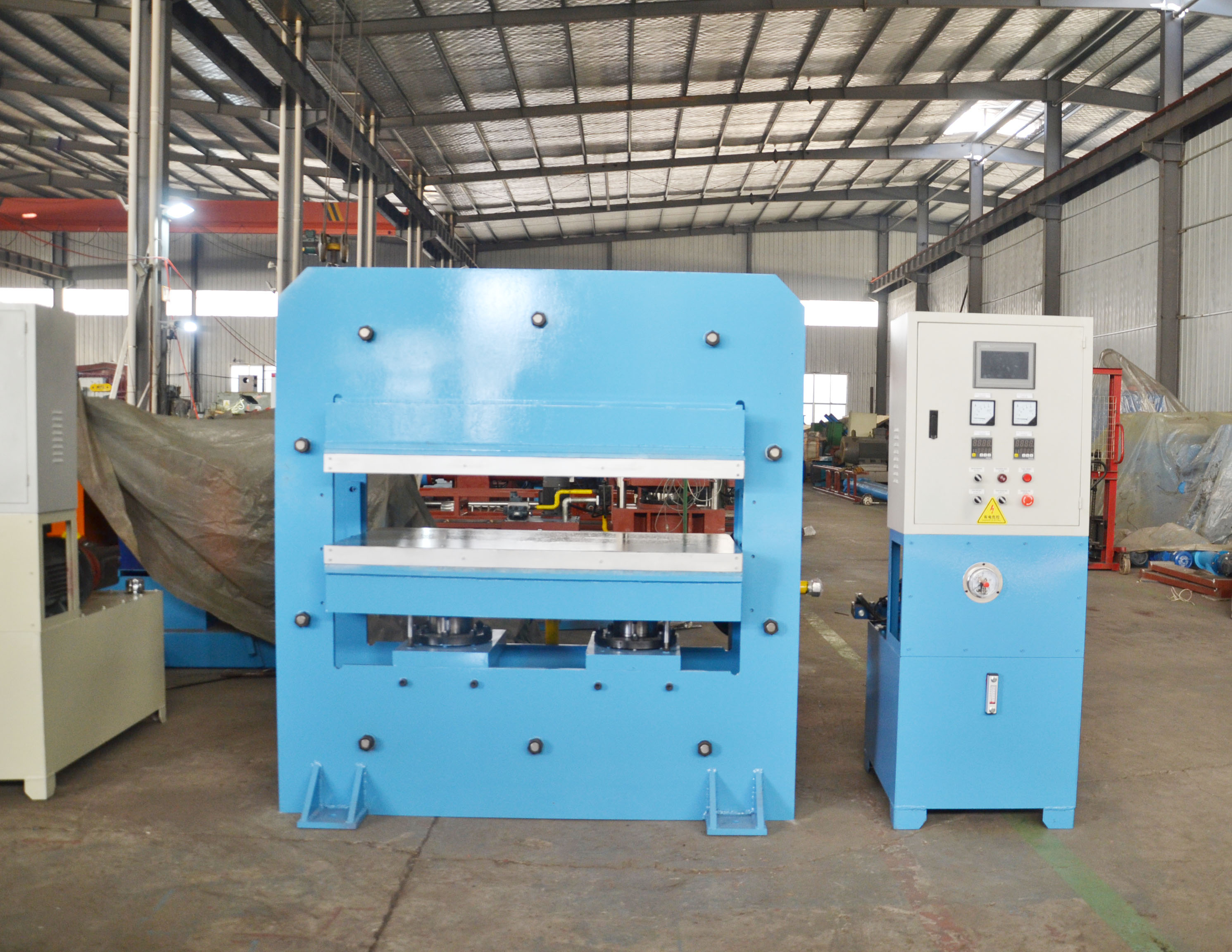
You can spot it the moment you pull a batch from the press. Parts near the edges may look slightly different from those in the center—maybe a faint gloss change, a tiny thickness variation, or a subtle shift in surface texture. That difference is a direct fingerprint of how evenly the platen held its temperature during the cycle. When the heat spreads uniformly, every piece cures at the same rate, so color, hardness, and dimensions come out consistent from the first item to the last. A platen with cool corners or a hot core doesn't just affect one run; it marks every single part you make until the issue is corrected.
The physical reason is simpler than many expect. Thermoset resins, adhesives, and laminating films all rely on a precise heat history to reach full cross-link density. If one zone lags by even a few degrees, the material there may not flow or cure completely, leaving residual stress locked inside the part. Weeks later, that stress can show up as warpage, delamination, or premature failure in the field. Meanwhile, an overheated band can kick off the reaction too fast, trapping volatiles as bubbles or surface defects. So the platen's temperature profile isn't just a machine setting—it's baked into the molecular structure of the finished batch.
That's why experienced operators treat platen uniformity as a quality gate rather than a maintenance afterthought. A quick thermocouple sweep or thermal imaging check before production can prevent an entire shift of scrap. When the platen delivers the same temperature at every point, the batch-to-batch repeatability increases noticeably, and downstream inspection becomes almost boring. The best presses earn their reputation not by reaching a high average temperature, but by keeping that temperature consistent across the whole surface—because that consistency is exactly what shows up in every finished batch.
Can the Exporter Connect You With Current Users Running Similar Molds?
A manufacturer's willingness to put you in touch with existing customers is one of the most telling signals of their confidence in both product quality and after-sales support. When an exporter hesitates or provides only generic references, it often points to inconsistent mold performance or a lack of long-term partnerships. Ask directly for contacts in your specific application area—whether it's thin-wall packaging, medical components, or high-cavitation closures. The right supplier won't just hand over a list; they'll facilitate a conversation so you can ask about wear rates, cycle time deviations, and how the exporter handled unexpected tooling adjustments.
Pay attention to how current users describe their experience beyond the initial trial period. Do they mention proactive communication about preventive maintenance, or did issues only surface after production delays? A strong exporter will connect you with users who have run similar molds for at least a year, because that's when thermal fatigue, gate wear, and ejection problems typically emerge. If possible, request a short video call or a visit to a running production line. Seeing a mold in operation—and hearing an unfiltered account from the operator—gives you far more insight than any polished sales presentation.
Finally, treat the refusal to provide live references as a red flag, but also look beyond the simple yes or no. Some smaller or newer exporters may have limited reference pools, yet they can still offer trial mold runs, transparent process documentation, or a limited warranty with performance benchmarks. The key is whether the exporter treats reference sharing as a standard part of due diligence. Those who openly connect you with current users running similar molds are essentially inviting you to verify their claims under real production conditions—a level of accountability that separates reliable partners from transactional suppliers.
Customization Beyond Plate Size: Automation, Controls, and Safety Add-ons
Ask most buyers about customizing a machine and they'll immediately talk about plate size. That's fair—dimensions matter for fit and throughput—but the real differentiation often lies in how the machine is automated. From programmable press cycles and servo-driven positioning to sensor-based part detection and automatic material feeding, automation options turn a standard unit into a production workhorse. The key is selecting automation that matches your actual workflow, not just adding features for the sake of it.
Controls are where customization gets personal. A well-designed interface should let operators store recipes for different jobs, adjust parameters without digging through menus, and connect to plant networks for data logging. Look for control packages that support remote access, user permissions, and straightforward integration with existing PLCs or MES systems. The best control setups feel less like an add-on and more like a natural extension of how your team already works.
Safety add-ons often get treated as an afterthought, but they deserve the same attention as any other custom feature. Light curtains, safety interlocks, two-hand controls, and enclosed guarding can be integrated directly into the machine's control logic rather than bolted on later. That integration not only improves compliance but also reduces nuisance stops and keeps operators confident around the equipment. When safety is designed in from the start, customization becomes more than just bigger plates—it becomes a smarter, safer system.
Hidden Time Costs in Overseas Delivery, Rigging, and First Run Setup
Overseas delivery rarely matches the timeline on the purchase order. Vessel schedules shift without notice, containers get held for customs inspection, and the final leg from port to site depends on local trucking availability that nobody checked during quotation. Each delay compounds: a machine sitting in a warehouse accrues demurrage, while the installation crew booked for a specific week either waits idle or leaves and must be rescheduled. Those hours never appear on the freight forwarder's invoice, but they show up in the project Gantt chart as unexplained float that quietly eats the margin.
Rigging is where the real surprises live. The drawings might show clear access, but the actual site has a low doorway, an unmarked floor load limit, or a crane that cannot reach the upper mezzanine without closing a neighboring production line. Local rigging crews often refuse to sign off until an engineer from the OEM is physically present, which turns a two-day lift into a week-long waiting game. First run setup adds another layer: software licenses need local network permissions, safety interlocks have to be revalidated under regional codes, and the first test batch rarely runs clean because incoming utility quality—air pressure, voltage stability, water hardness—differs from factory assumptions.
The real danger is that these hours are never tallied as a separate line item. They hide inside project management overhead, on-site overtime, and the third or fourth visit from a field service technician. Teams that account for them early—by sending a site survey video before shipping, locking rigging contracts with local specialists, and scheduling a dry run of the first setup with remote support—discover that what looked like a two-week installation becomes a two-day startup.
What Happens After the Warranty: Local Service and Spare Parts Reality
Once your device slips past the warranty date, the glossy promises of free repairs vanish overnight. What's left is a patchwork of local repair shops, each claiming to be 'authorized' but few actually stocking genuine parts. I've seen friends drive forty minutes to a service center only to be told the motherboard needs replacing—at a cost that rivals half the original price.
Spare parts availability is another quiet frustration. For popular models, third-party components flood the market, but quality varies wildly. A screen replacement might work fine for a month, then develop dead pixels or lose touch sensitivity. For niche devices, even finding a battery can mean waiting weeks for an overseas shipment, assuming the part hasn't been discontinued altogether.
Local technicians often do their best with limited resources, but the lack of standardized training means two shops can give you completely different diagnoses for the same fault. One might resolder a loose connector for thirty dollars; another insists the entire logic board is dead. The post-warranty world isn't a scam—it's just messy, unpredictable, and demands a level of consumer savvy most of us never expected to need.
FAQ
Ask for a detailed factory tour video or live video call, not just brochures. Check the number of presses they have in production for other clients and request references from companies in your industry. A genuine exporter will also share recent inspection reports from third-party agencies like SGS or Bureau Veritas without hesitation.
Look beyond basic emergency stops. Prioritize two-hand anti-tie-down controls, light curtains on the loading side, and automatic pressure relief valves that trigger during power loss. Also confirm that the heating platens have independently monitored thermal cutoffs, so a failed sensor cannot cause a runaway temperature spike.
Yes, but the extent depends on the exporter's in-house engineering team. Instead of accepting a generic frame size, ask for a load and deflection analysis for your specific mold dimensions and closing force. Customized daylight, multi-opening designs, and variable pressure profiles are common requests that a capable exporter can handle without heavily inflating lead times.
Shipping and import duties are obvious, but many overlook the cost of hydraulic oil, which is usually not included and can run into hundreds of gallons for large presses. You also need to budget for local electrical upgrades, foundation reinforcement, and commissioning engineer travel expenses if those are not explicitly covered in the quotation.
It matters more than the machine's base price. A press that sits idle for six weeks waiting for a replacement seal costs more than a slightly higher upfront investment. Ask for guaranteed spare parts availability in your region, a written response time for remote diagnostics, and whether they have trained service partners near your country rather than flying someone from the home factory every time.
Request the complete technical file including CE or equivalent certification, hydraulic schematic diagrams, electrical wiring diagrams, and a bill of materials with component brands and part numbers. This documentation helps your local customs clearance and also makes future maintenance much easier, since you won't be stuck guessing which O-ring size to order.
Focus on the brand and rating of the pump, valves, and cylinders. Look for continuous-duty rated components rather than intermittent-duty ones, and ask about the filtration level of the hydraulic circuit. A reliable exporter will specify micron ratings for the return-line filters and use hard-chrome plated cylinder rods that resist scoring in dusty production environments.
Conclusion
When buying a vulcanizing press from an overseas exporter, the quoted tonnage rarely tells you much about how force reaches the mold surface. A lower-rated machine with better structural symmetry can outperform a higher-tonnage unit that flexes under load, so ask for deflection data or examples of similar molds before committing. Temperature control across the platen matters just as much, because hot or cold spots show up as uneven cure, sticking, or scrap in every batch—not just occasional rejects. A serious exporter should be willing to put you in touch with current users running comparable molds and compounds, not just show glossy brochures.
Beyond basic plate size, look at how the press handles automation, control logic, and safety add-ons like light curtains or two-hand tie-downs; these are not optional afterthoughts when the machine will run around the clock. Also calculate the hidden time costs before the first good part comes off: crating, ocean freight, port delays, rigging into your plant, and initial commissioning can eat months. Finally, ask pointed questions about what happens after the warranty ends—who stocks spare parts locally, how fast a technician can reach you, and whether the exporter has a track record of supporting machines older than five years. That after-sale reality often determines the true cost of the press far more than the invoice price.
Contact Us
Contact Person: Chen Zhengwei
Email: [email protected]
Tel/WhatsApp: +86-13963975727
Website: https://www.sfcrubbermachine.com