

Why Is a Backward Curved Centrifugal Fan the Smarter Choice for Modern Ventilation Systems?
2026-01-19
When I first started evaluating industrial ventilation solutions for demanding environments, I quickly realized that efficiency, stability, and long-term operating cost mattered far more than raw airflow numbers. That was also when I began to see how Ketong has been gradually shaping its reputation in this field by focusing on performance-driven design rather than empty claims. In particular, the Backward Curved Centrifugal Fan stood out as a solution that consistently balances energy efficiency with operational reliability in real-world applications.
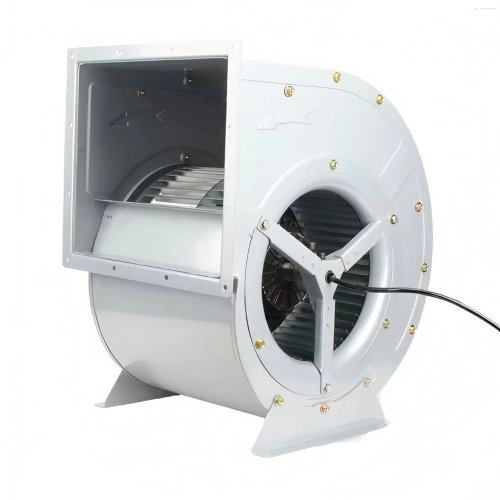
What Makes a Backward Curved Centrifugal Fan Different From Traditional Fan Designs?
From my perspective, the core difference lies in blade geometry and airflow behavior. A Backward Curved Centrifugal Fan uses blades that curve away from the direction of rotation, which fundamentally changes how air is accelerated and discharged. This design reduces turbulence, lowers power consumption at higher flow rates, and prevents motor overload when system resistance changes.
- Stable airflow even under fluctuating pressure conditions
- Lower energy consumption compared with forward-curved alternatives
- Reduced risk of motor overloading during peak operation
How Does a Backward Curved Centrifugal Fan Improve Energy Efficiency Over Time?
Energy efficiency is not just about initial performance data; it is about how a fan behaves after months or years of continuous use. In my experience, a well-designed Backward Curved Centrifugal Fan maintains efficiency because its aerodynamic structure minimizes internal losses. As airflow demand increases, power consumption rises more gradually instead of spiking unexpectedly.
| Performance Aspect | Backward Curved Centrifugal Fan | Conventional Fan Types |
|---|---|---|
| Energy usage at high airflow | More stable and controlled | Often increases sharply |
| Operational efficiency | Consistent over long periods | Declines faster with load changes |
| Motor safety | Lower overload risk | Higher overload probability |
Why Is Noise Control a Key Advantage of a Backward Curved Centrifugal Fan?
Noise is often underestimated during system planning, yet it directly affects workplace comfort and compliance requirements. I have found that a Backward Curved Centrifugal Fan naturally generates less noise because airflow separation and turbulence are reduced at the blade outlet. This makes it suitable for environments where acoustic performance is just as important as ventilation capacity.
- Smoother airflow path reduces vibration
- Lower sound pressure levels at comparable output
- Better integration into noise-sensitive installations
How Does a Backward Curved Centrifugal Fan Adapt to Different Industrial Applications?
One reason I often recommend a Backward Curved Centrifugal Fan is its flexibility. Whether the application involves HVAC systems, industrial exhaust, dust collection, or process ventilation, the fan adapts well to different pressure and airflow requirements without extensive system redesign.
Because the fan maintains efficiency across a broad operating range, engineers can fine-tune system performance without worrying about sudden efficiency losses or mechanical stress.
What Should Buyers Consider When Selecting a Backward Curved Centrifugal Fan?
From a practical standpoint, selecting the right Backward Curved Centrifugal Fan is not just about size or airflow rating. I always recommend evaluating several key factors together to avoid mismatched expectations after installation.
- Required airflow and static pressure under real operating conditions
- Energy efficiency targets and long-term operating costs
- Noise limitations and environmental constraints
- Build quality, materials, and service support
Why Is Long-Term Reliability So Important in a Backward Curved Centrifugal Fan?
Reliability is where theoretical performance meets reality. In long-term operation, a Backward Curved Centrifugal Fan benefits from balanced loading and reduced mechanical stress, which directly translates into fewer maintenance interventions. I have seen systems where stable fan performance significantly reduced downtime and unexpected repair costs.
| Reliability Factor | Operational Impact |
|---|---|
| Balanced blade design | Less vibration and wear |
| Controlled power curve | Protects motors and drives |
| Consistent airflow | Reduces system stress |
Is a Backward Curved Centrifugal Fan Worth the Investment for Your Project?
From my experience, the answer often depends on how much value is placed on efficiency, reliability, and operational predictability. A Backward Curved Centrifugal Fan may not always be the lowest upfront option, but it frequently proves to be the most cost-effective choice over the full lifecycle of the system.
If you are looking for a ventilation solution that delivers stable performance, lower energy consumption, and dependable operation, it is worth taking a closer look at how Ketong approaches fan engineering. To discuss your specific requirements or request technical guidance, feel free to contact us and leave an inquiry. The right fan selection today can prevent costly adjustments tomorrow.