

Why Is a Multi-media Filter Still One of the Most Reliable Solutions for Water Treatment Today?
2026-01-19
When I first started comparing different filtration systems for industrial and commercial water projects, I noticed that many engineers kept returning to the same solution. Over time, through real applications and field feedback, I also came to understand why. As I became familiar with VLLRO, its approach to water treatment made it clear how a well-designed Multi-media Filter can quietly solve some of the most persistent filtration problems without unnecessary complexity.
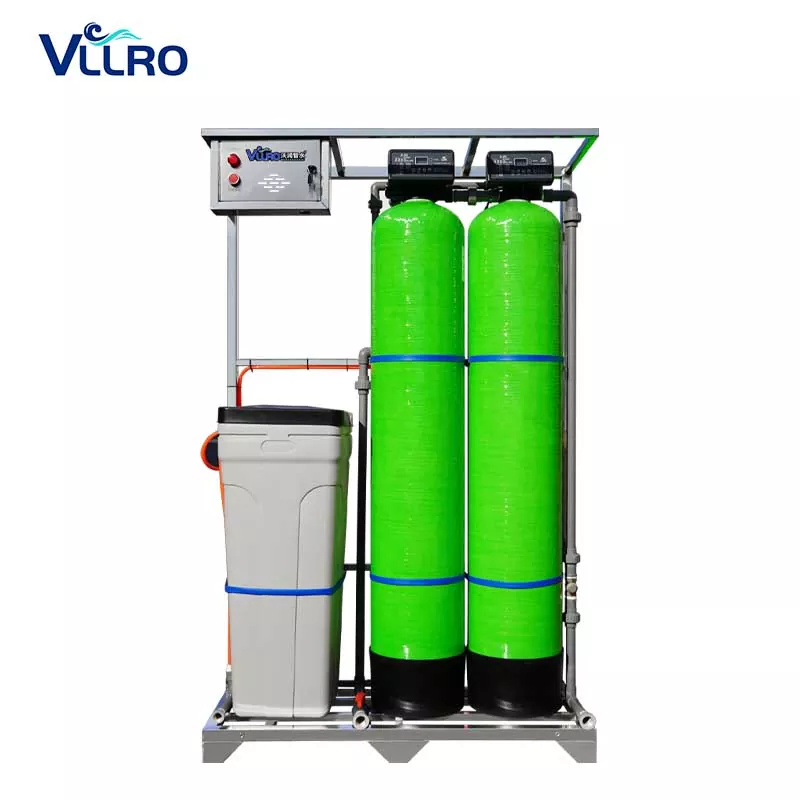
What Problems Am I Actually Solving with a Multi-media Filter?
In most raw water sources, suspended solids rarely come in one uniform size. Fine silt, larger particles, organic matter, and sediment often exist together. Relying on a single filtration layer usually leads to faster clogging, unstable effluent quality, or higher operating costs. A properly engineered Multi-media Filter addresses this by using multiple layers of media with different densities and particle sizes, allowing contaminants to be captured more efficiently throughout the filter bed.
- It reduces turbidity caused by mixed-size suspended solids
- It protects downstream equipment such as RO membranes or UV systems
- It minimizes frequent backwashing compared to single-media filters
- It improves overall system stability under fluctuating water conditions
How Does the Layered Structure Improve Filtration Performance?
From my experience, the real advantage of a Multi-media Filter lies in how the filtration load is distributed. Instead of trapping everything at the surface, larger particles are intercepted by the upper layers, while finer impurities are captured deeper in the bed. This structure allows higher flow rates without sacrificing filtration efficiency.
| Filter Layer | Typical Media | Main Function |
|---|---|---|
| Top Layer | Anthracite | Captures larger suspended solids and organic debris |
| Middle Layer | Silica Sand | Removes medium-sized particles and reduces turbidity |
| Bottom Layer | Garnet or Fine Sand | Traps fine particles and stabilizes effluent quality |
Why Do I See Multi-media Filters Used Across So Many Industries?
One reason I consistently recommend a Multi-media Filter is its flexibility. It performs reliably in a wide range of applications without requiring constant redesign. Whether the water source is municipal supply, surface water, or industrial process water, the system adapts well to changing loads.
- Pre-treatment for reverse osmosis systems
- Industrial process water clarification
- Cooling tower and boiler feed water treatment
- Food, beverage, and pharmaceutical water systems
How Does This Filtration Method Help Control Operating Costs?
From a cost perspective, the Multi-media Filter offers a balance that many modern systems struggle to achieve. Its higher dirt-holding capacity extends filtration cycles, which reduces backwash frequency and water consumption. Over time, this leads to lower energy use, less media replacement, and more predictable maintenance planning.
| Cost Factor | Operational Impact |
|---|---|
| Backwash Frequency | Reduced due to deeper particle penetration |
| Media Lifespan | Extended through balanced filtration loading |
| System Downtime | Lower due to stable long-term performance |
What Should I Look for When Selecting the Right Multi-media Filter?
Not all systems are built the same. When evaluating a Multi-media Filter, I always focus on practical details rather than marketing claims. Media grading, vessel material, flow rate design, and backwash efficiency all play a role in long-term reliability. This is where working with experienced manufacturers like VLLRO becomes valuable, as design decisions are typically based on real operating conditions rather than theoretical performance alone.
- Consistent media quality and proper layer ratios
- Durable tank construction suited to the installation environment
- Stable performance under variable flow and turbidity
- Ease of maintenance and system integration
Is a Multi-media Filter the Right Choice for My Water System?
If your goal is to achieve reliable solid removal, protect downstream equipment, and maintain steady water quality, a Multi-media Filter remains one of the most practical options available. Its proven structure and predictable performance make it a dependable foundation for many water treatment processes.
If you are evaluating filtration solutions or planning a new water treatment project, I recommend discussing your specific requirements with a knowledgeable supplier. Feel free to contact us to explore how a tailored multi-media filtration system can support your application and help you achieve long-term operational stability.